



Assumere solo sotto controllo medico
L'Estrone è un ormone steroideo appartenente al gruppo degli estrogeni. È uno dei principali ormoni sessuali femminili e gioca un ruolo cruciale nello sviluppo e nella regolazione del sistema riproduttivo femminile. È presente in piccole quantità negli uomini e nelle donne e può essere utilizzato anche come terapia ormonale sostitutiva.
Composizione Chimica e Struttura
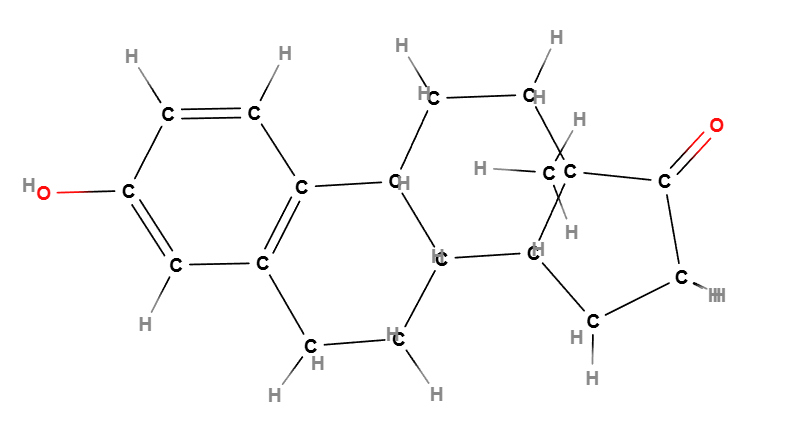
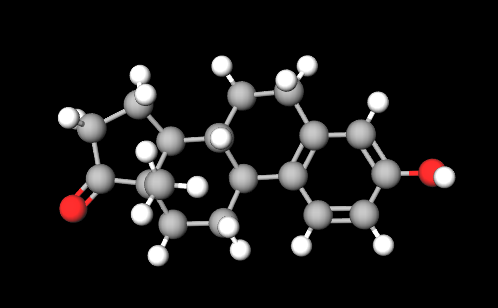
- Struttura Chimica: C18H22O2. La sua struttura chimica comprende un nucleo steroideo con un gruppo chetone nel carbonio 3 e un gruppo idrossilico nel carbonio 17.
La struttura chimica dell'estrone include un anello steroideo con vari gruppi funzionali che contribuiscono alla sua attività biologica.
Proprietà Fisiche
- Aspetto: In forma pura, l'estrone si presenta come una polvere bianca o cristalli.
- Odore: Generalmente neutro.
- Solubilità: Solubile in solventi organici come alcol e cloroformio; solubilità limitata in acqua.
- pH: Non applicabile per polvere o cristalli puri, ma il pH di soluzioni può variare.
- Stabilità: Stabilità chimica alle condizioni di stoccaggio consigliate; deve essere protetto da luce e calore eccessivi.
Processo di Produzione
- Sintesi: L'estrone può essere sintetizzato chimicamente a partire da precursori steroidei o estratto da fonti naturali, come l'urina di donne gravide.
- Purificazione: Viene purificato per rimuovere contaminanti e sottoprodotti.
- Formulazione: Può essere formulato in vari preparati, come compresse, creme o gel per l'uso terapeutico.
- Controllo Qualità: Test di qualità per garantire purezza e concentrazione del prodotto finale.
Applicazioni
- Mediche: Utilizzato nella terapia ormonale sostitutiva per alleviare i sintomi della menopausa e trattare disturbi ormonali. Può anche essere utilizzato per il trattamento di alcuni tipi di tumori ormono-dipendenti e nel trattamento della ricrescita dei capelli (1)
- Cosmetici: Talvolta utilizzato in formulazioni cosmetiche anti-invecchiamento per migliorare l'elasticità e l'idratazione della pelle.
- Alimentare e Uso Industriale: Non tipicamente utilizzato in alimenti o applicazioni industriali.
Considerazioni Ambientali e di Sicurezza
L'estrone è generalmente considerato sicuro per l'uso secondo le linee guida mediche. Tuttavia, può comportare effetti collaterali come mal di testa, nausea e cambiamenti nel ciclo mestruale. È importante utilizzarlo sotto la supervisione di un medico per evitare effetti indesiderati. La produzione deve essere controllata per garantire la qualità e l'assenza di contaminanti.
Come tutti i farmaci può causare effetti collaterali. Consultare sempre il medico.
 |  |
Molecular Formula C18H22O2
Molecular Weight 270.4 g/mol
CAS 53-16-7
UNII 2DI9HA706A X9XKA379T9
EC Number 200-164-5
Synonyms:
Oestrone
Theelin

