



Tuber magnatum (Tuberaceae) – white truffle
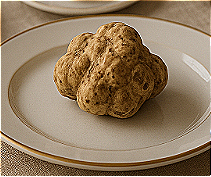
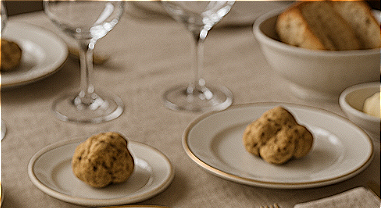
Tuber magnatum, commonly known as the white truffle, is one of the most valued hypogeous fungi in the world, both gastronomically and culturally. It belongs to the family Tuberaceae and is an ectomycorrhizal fungus, forming a tight symbiotic association with the roots of various broad-leaved trees, including species of Quercus, Populus, Salix, Tilia, Corylus and Fagus. Through this association, the fungus enhances water and mineral uptake (especially phosphorus and micronutrients) for the host tree, while receiving photosynthetically derived carbon in return. This mutualistic relationship is fundamental for both the development of the underground mycelium and the production of fruiting bodies.
 |  |
Ecologically, Tuber magnatum is highly specialised. It requires well-drained, aerated soils, generally calcareous or marl–calcareous, with neutral to slightly alkaline pH and relatively stable moisture. Many productive sites correspond to alluvial or colluvial terraces, where fine-textured horizons coexist with an adequate fraction of coarse material, allowing both water retention and drainage. The fungus tends to occur in discrete productive patches, where the combination of soil chemistry, microbial community, host tree physiology and local climate is particularly favourable. Studies on soil and fruiting bodies have shown that T. magnatum can efficiently accumulate certain mineral elements, such as K, P, S, Ca and Mg, with specific patterns that may differ from other truffle species and reflect the underlying geochemical context.
The ecological role of the white truffle extends beyond its interaction with host trees. As with other truffles, the spore dispersal strategy is linked to animals that feed on the fruiting bodies. The complex volatile organic compounds (VOCs) emitted by T. magnatum attract mammals and invertebrates, which dig out and consume the truffles, dispersing spores through their faeces. The fungus therefore acts as a functional node in forest ecosystems, connecting soil microorganisms, higher plants and animal communities.
One of the most distinctive features of Tuber magnatum is its aroma, which is intense, highly characteristic and strongly linked to its culinary reputation. The volatile profile is dominated by sulfur-containing compounds, in particular 2,4-dithiapentane (also known as bis(methylthio)methane), alongside a complex mixture of alcohols, aldehydes, ketones and other sulfur volatiles. This mixture, which may include more than 60 VOCs, defines the sensory identity of the white truffle, although only a subset of these compounds are present at concentrations above the human odour threshold. Recent studies have shown that geographical origin, season and storage conditions can significantly influence the quantitative composition of these volatiles, helping to explain why white truffles from different regions (for example, Alba versus other Italian areas) may exhibit distinct aromatic nuances even within the same species.
On the nutritional side, the white truffle has a very low energy density, with a composition dominated by water, small amounts of proteins and fibre, and modest levels of lipids and carbohydrates. It contains minerals such as potassium, phosphorus, calcium and magnesium, and various bioactive molecules, including peptides, phenolic compounds and natural antioxidants. However, given the very small quantities typically consumed as a condiment, the nutritional impact of T. magnatum on the overall diet is marginal; its main contribution to human health is more indirect, through the enhancement of sensory pleasure and the promotion of gastronomically rich dietary patterns, rather than through a direct functional or therapeutic effect.
From a health and safety perspective, white truffle is generally regarded as a safe food, although there are isolated reports of intolerance or allergic-like reactions in sensitised individuals. A more relevant issue is the quality and authenticity of products on the market. Because of the high economic value of Tuber magnatum, there are documented cases of adulteration, including substitution with other, less valuable truffle species and artificial aroma enhancement using synthetic sulfur compounds such as bis(methylthio)methane. These practices can mislead consumers and, in some cases, raise toxicological and regulatory concerns, especially when non-food-grade aroma chemicals are used at inappropriate levels.
The cultural and economic relevance of Tuber magnatum is particularly prominent in Italy, where historic production areas include parts of Piedmont (Alba and surrounding regions), Acqualagna, Tuscany, Umbria, Marche and other Apennine districts. The white truffle has become a symbol of regional identity, associated with local fairs, culinary festivals and a specialised market with high price variability depending on size, aroma quality, season and annual availability. Truffle hunting with trained dogs is not only a traditional practice but also an integral component of local intangible heritage, regulated by national and regional laws that seek to balance resource exploitation with ecosystem conservation.
Attempts to cultivate Tuber magnatum through controlled mycorrhization of nursery plants and plantation establishment are ongoing, but the results are much less predictable than for other truffle species such as Tuber melanosporum. The strict ecological requirements, the complex soil microbiome and the subtle interplay of climatic factors make artificial production challenging, so that the white truffle still relies largely on natural truffle grounds. This dependence on wild habitats reinforces both its rarity and its economic value, while also highlighting the importance of sustainable forest and soil management to safeguard future production.
Taxonomic classification (fungi)
| Category | Data |
|---|---|
| Common name | white truffle, Alba white truffle |
| Scientific name | Tuber magnatum Picco |
| Kingdom | Fungi |
| Phylum | Ascomycota |
| Class | Pezizomycetes |
| Order | Pezizales |
| Family | Tuberaceae |
| Genus | Tuber |
| Species | Tuber magnatum Picco |
Indicative nutritional values per 100 g (fresh fruiting body of Tuber magnatum)
Values refer to whole fresh white truffle; they may vary with origin, ripeness and storage conditions.
| Component | Approximate value per 100 g |
|---|---|
| Energy | ~ 30–35 kcal |
| Water | ~ 80 g |
| Total carbohydrates | ~ 0.7 g |
| — of which sugars | ~ 0.7 g |
| Dietary fiber | ~ 9–10 g |
| Proteins | ~ 6 g |
| Total lipids | ~ 0.5 g |
| — of which saturated fatty acids (SFA) | ~ 0–0.1 g |
| — monounsaturated fatty acids (MUFA) | traces |
| — polyunsaturated fatty acids (PUFA) | traces |
| Sodium (as total salt) | ~ 0.1–0.8 g (mainly naturally occurring sodium) |
| Other minerals | small amounts of potassium and other trace elements |
At typical serving sizes (around 5–10 g of fresh truffle shaved raw over a dish), the contribution of energy, macronutrients and sodium is very low. The interest is almost entirely sensory (aroma and flavour) and partly related to volatile and phenolic compounds, rather than to nutritional impact in the strict macronutrient sense.
Lipid profile note
White truffle has an extremely low fat content:
Saturated fatty acids (SFA) are present only in minimal amounts; when they predominate in the overall diet over unsaturated fats, they are generally considered less favourable for cardiovascular balance.
Monounsaturated (MUFA) and polyunsaturated fatty acids (PUFA) are present only as traces and, in the case of truffle, have no meaningful impact on dietary fat intake.
In practice, even when dishes are enriched with white truffle, any effect on fats, energy and fatty-acid intake is negligible compared with the other ingredients in the recipe (eggs, butter, oil, cheese, etc.).
Chemical Composition and Structure
The white truffle contains several key compounds contributing to its aroma and flavor:
- Volatile Organic Compounds (VOCs): Includes various aldehydes, ketones, and sulfur compounds that produce its characteristic scent.
- Terpenes: Such as β-caryophyllene and limonene, which contribute to its complex fragrance.
- Amino Acids: Including glutamic acid, which enhances umami flavor.
- Lipids: Present in the truffle, contributing to its rich texture and flavor.
Cultivation
Tuber magnatum is not cultivated in the traditional sense but rather harvested from the wild, where it forms mycorrhizal relationships with the roots of host trees. Successful truffle cultivation requires specific soil conditions, including well-drained, calcareous soils and a suitable climate with cold winters and warm, dry summers. Trained dogs or pigs are used to locate mature truffles underground.
Uses and Benefits
Culinary: The primary use of Tuber magnatum is in high-end gastronomy. It is shaved or grated over dishes to impart its unique flavor and aroma. It is used in a variety of dishes, including pasta, risotto, and meat preparations.
Aromatic: Its strong, distinctive aroma is used in the production of gourmet food products and truffle-infused oils.
Applications
Culinary: Incorporated into gourmet dishes for its exceptional flavor and aroma. Often used fresh or preserved in oils and sauces.
Cosmetics - INCI Functions:
Tuber Magnatum Oil Extract
Skin conditioning agent - Humectant. Humectants are hygroscopic substances used to minimise water loss in the skin and to prevent it from drying out by facilitating faster and greater absorption of water into the stratum corneum of the epidermis. The epidermis is the most superficial of the three layers that make up the human skin (epidermis, dermis and hypodermis) and is the layer that maintains hydration in all three layers. In turn, the epidermis is composed of five layers: corneum, the most superficial, lucidum, granulosum, spinosum and basale. Humectants have the ability to retain in the stratum corneum the water they attract from the air and have the function of moisturising the skin. It is better to use them before emollients that are oil-based.
Tuber Magnatum Extract
Skin conditioning agent. It is the mainstay of topical skin treatment as it has the function of restoring, increasing or improving skin tolerance to external factors, including melanocyte tolerance. The most important function of the conditioning agent is to prevent skin dehydration, but the subject is rather complex and involves emollients and humectants that can be added in the formulation.
Aromatic: Used in the creation of truffle-infused products and specialty foods.
Environmental and Safety Considerations
Tuber magnatum is generally safe for consumption. However, due to its high value and rarity, it is subject to regulations and standards to prevent fraud and ensure quality. Sustainable harvesting practices are essential to protect natural truffle habitats and maintain ecological balance.

