



Quercus robur (Fagaceae), English oak / pedunculate oak,
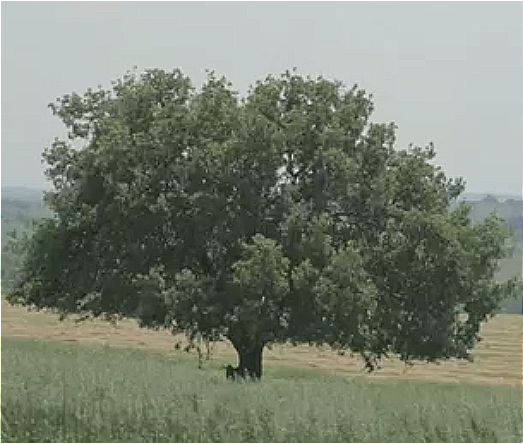
Quercus robur, commonly known as English oak or pedunculate oak, is one of the most emblematic temperate forest trees in Europe and holds exceptional historical, ecological and cultural significance. Belonging to the family Fagaceae, it is a majestic, long-lived tree, capable of exceeding 30–40 metres in height and surviving for several centuries, in some cases even close to a millennium. Its powerful trunk and wide, irregular crown make it a true structural pillar of many lowland and riparian forests in central and northern Europe.
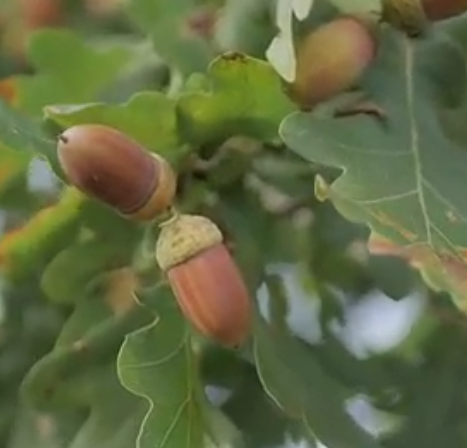
Morphologically, Quercus robur develops a massive bole, often deeply furrowed in mature individuals, with a thick, dark grey bark that becomes increasingly fissured with age. The leaves are deciduous and relatively short-stalked, with a blade that is characteristically deeply lobed, the lobes broad and rounded, giving the species a very recognisable foliar outline. During the growing season, the leaves are a deep green, turning to yellowish or brownish tones in autumn before abscission. The male flowers are grouped in long, pendulous catkins that appear in spring, while the female flowers, more discreet and solitary or in small clusters, give rise to the typical acorns, the fruits that are central to the species’ ecological cycle.
 |  |
From an ecological standpoint, Quercus robur is one of the characteristic trees of lowland oak forests and riparian woodlands. It favours fresh, deep, well-drained soils with good moisture availability, although it can adapt to a fairly wide range of edaphic and climatic conditions. English oak acts as a foundation species in many forest ecosystems, supporting an exceptionally rich biodiversity. Numerous ecological surveys have shown that a single mature oak can host hundreds of associated species, including insects, fungi, lichens, mosses and epiphytic plants, effectively functioning as a complex microhabitat platform. The acorns are a key food resource for many animals, such as birds, small mammals and ungulates, and play a major role in zoochorous seed dispersal and in the natural regeneration of oak-dominated stands.
Historically and culturally, Quercus robur has long been associated with ideas of strength, endurance and longevity, and is deeply rooted in European symbolism, from Norse mythology to medieval and modern literature. Its wood, notable for being hard, heavy and highly durable, has been extensively used for shipbuilding, construction, high-quality furniture and, in particular, for casks used in the ageing of wines and spirits. In cooperage, oak wood contributes a range of aromatic and phenolic compounds, notably tannins and ellagitannins, which influence the flavour, structure and ageing potential of beverages stored in oak barrels.
Chemically and from a phytotherapeutic point of view, Quercus robur is characterised by a high content of tannins, especially ellagitannins, concentrated predominantly in the bark, but also present to a lesser extent in the leaves and outer layers of the acorn. Oak bark has a long tradition of use in herbal medicine for its astringent, anti-inflammatory and mildly antimicrobial properties. Topical preparations based on bark extracts have been employed in cases of minor skin irritations, small wounds, dermatitis and mucosal disorders, where the tannins help precipitate proteins, reduce exudation and support the restoration of irritated or inflamed surfaces.
The acorns, once properly processed to remove excess bitterness due to tannins, have been used in various traditional cultures as an emergency food or as a flour ingredient for bread and porridges. In recent years there has been renewed interest in acorn flours from a nutritional and gastronomic perspective, due to their content of complex carbohydrates, dietary fibre and selected bioactive molecules, although this remains a relatively niche use.
Botanical classification (APG IV system)
| Category | Data |
|---|---|
| Common name | oak, English oak, pedunculate oak |
| Botanical name | Quercus robur L. |
| Kingdom | Plantae |
| Clade | Angiosperms → eudicots → rosids |
| Order | Fagales |
| Family | Fagaceae |
| Genus | Quercus |
| Species | Quercus robur L. |
Indicative nutritional values per 100 g (oak acorns, including Quercus robur)
Values refer to raw acorns and are indicative for the genus Quercus; composition can vary considerably with species, maturity and environment.
| Component | Approximate value per 100 g |
|---|---|
| Energy | ~ 380–390 kcal |
| Total carbohydrates | ~ 40–45 g |
| — of which sugars | few grams (starch is the main carbohydrate) |
| Dietary fiber | ~ 6–10 g (highly variable) |
| Proteins | ~ 6–7 g |
| Total lipids | ~ 23–24 g |
| — of which saturated fatty acids (SFA) | ~ 3 g |
| — monounsaturated fatty acids (MUFA) | ~ 15 g |
| — polyunsaturated fatty acids (PUFA) | ~ 4–5 g |
| Sodium | very low |
| Main minerals (order of magnitude) | phosphorus, potassium, calcium, magnesium in appreciable amounts; traces of iron, zinc, manganese and other trace elements |
| Vitamins | small amounts of fat-soluble vitamins (e.g. vitamin E) and traces of other vitamins; levels vary |
In typical traditional uses (for example 20–30 g of acorn flour mixed with cereal flours, after proper processing), the caloric contribution is high relative to the serving, with energy coming mainly from starch and lipids.
Plant Characteristics
Quercus robur can grow up to 40 meters (130 feet) tall and has a wide, spreading canopy. The leaves are lobed with rounded edges and turn yellow-brown in the autumn. It produces small, greenish flowers that develop into acorns with a distinctive cup-shaped base. The tree's bark is deeply ridged and fissured, providing a rough texture.
Chemical Composition and Structure
The oak tree, particularly its bark and acorns, contains various beneficial compounds:
- Tannins: Found in the bark and acorns, tannins have astringent properties and are used in traditional medicine and tanning processes.
- Triterpenoids: Found in the bark and acorns
- Flavonoids: Includes compounds such as quercetin, which have antioxidant properties.
- Saponins: Present in the acorns, these compounds have potential antimicrobial and anti-inflammatory effects.
- Phenolic Acids: Contribute to the tree's antioxidant properties and are found in the bark and leaves.
Cultivation
Quercus robur thrives in a range of soil types, from clay to sandy soils, and prefers well-drained conditions. It is suitable for a variety of climatic conditions but does best in temperate zones. The tree is propagated from acorns and requires ample space for growth. It benefits from occasional pruning to maintain a strong structure and to manage its large size. It is relatively low-maintenance once established but can be susceptible to pests and diseases.
Uses and Benefits
Wood: The wood of Quercus robur is highly durable and used in construction, furniture making, and for making barrels, especially for aging wine and spirits.
Medicinal: Oak bark and acorns have been used in traditional medicine for their astringent, anti-inflammatory, and antimicrobial properties. They are often used in herbal remedies for skin conditions and digestive issues.
Cosmetics:
INCI Functions:
Skin conditioning agent. It is the mainstay of topical skin treatment as it has the function of restoring, increasing or improving skin tolerance to external factors, including melanocyte tolerance. The most important function of the conditioning agent is to prevent skin dehydration, but the subject is rather complex and involves emollients and humectants that can be added in the formulation.
Cosmetic astringent. This ingredient exerts a direct effect on the skin by tightening dilated pores by contracting stratum corneum cells and removing superfluous oil.
Antioxidant agent. Ingredient that counteracts oxidative stress and prevents cell damage. Free radicals, pathological inflammatory processes, reactive nitrogen species and reactive oxygen species are responsible for the ageing process and many diseases caused by oxidation.
Ecological: The tree supports a wide range of wildlife, including birds, insects, and fungi, making it an important component of forest ecosystems.
Applications
Woodworking: Used in the production of high-quality furniture, flooring, and construction materials due to its strength and durability.
Medicinal: Incorporated into herbal remedies and traditional medicine for its therapeutic properties.
Ecological: Planted in reforestation projects and conservation efforts to support biodiversity.
Environmental and Safety Considerations
Quercus robur is generally safe for use in woodworking and traditional medicine. However, care should be taken when using oak bark and acorns, as their high tannin content can cause irritation if not used properly. Sustainable harvesting and management practices should be employed to ensure the health of oak populations and their ecosystems.

