



White mulberry, Morus alba (Moraceae) –
White mulberry, is a deciduous tree of the family Moraceae, native to East Asia and especially China, from where it has spread widely to Europe and many other temperate and subtropical regions. It is a fast-growing, relatively long-lived tree which, under favourable conditions, can reach 10–15 metres or more in height, with an irregularly branched trunk and a dense, broad, rounded crown. The root system is robust and deep, with extensive lateral branching, a feature that favours soil stabilisation but makes the species somewhat sensitive to excessively dry soils if not adequately watered.
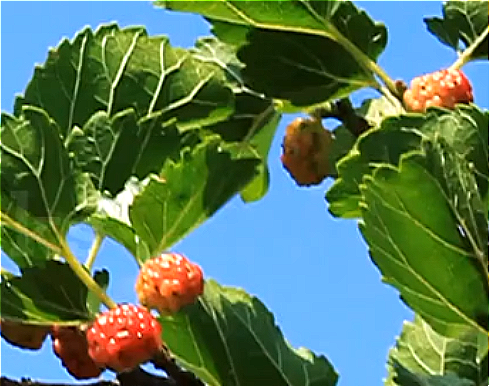 |  |
The leaves, deciduous and alternate, are markedly polymorphic: they may be ovate-acute, sometimes cordate, entire or three-lobed, especially on vigorous suckers. The margin is serrated, the apex acute and the base slightly cordate. The upper surface is usually glabrous and glossy light green in spring and summer, turning bright yellow in autumn, while the lower surface is paler and may be slightly pubescent along the veins. Rich in chlorenchyma, the leaves represent the principal food source for the silkworm (Bombyx mori), a role that has been crucial in the development of sericulture and the historical mulberry–silkworm farming system, with profound economic and cultural impact from Asia to the Mediterranean.
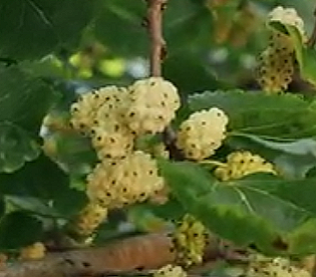
The flowers of Morus alba are small, inconspicuous and grouped in distinct male and female catkins, reflecting the variable sexual systems of the species (monoecious, dioecious or polygamous depending on population and clone). After pollination, the plant produces characteristic fleshy pseudofruits, which are in fact infructescences known botanically as soroses: aggregates of small druplets fused together into an elongated, soft, juicy structure. The colour ranges from white-cream to pink and sometimes darker shades in selected forms. The ripe fruits are edible, with a sweet, delicate flavour, and are eaten fresh or processed into juices, jams and other products, although their high perishability and delicate texture limit large-scale commercial distribution compared with other fruits.
From an ecological standpoint, white mulberry is a heliophilous species that prefers sunny or semi-shaded sites and well-drained soils, from moderately acidic to slightly alkaline. It is often used as a pioneer tree in traditional agro-forestry systems, planted in rows, shelterbelts and field margins, where it provides shade, wind protection and organic matter. Its considerable ecological plasticity has favoured naturalisation in many extra-Asian regions. The fruits constitute a food source for birds and small mammals, which ensure zoochorous seed dispersal, while the dense crown offers refuge and nesting sites for various organisms.
On the chemical–nutritional and phytochemical level, Morus alba is rich in secondary metabolites distributed throughout the plant. The fruits contain simple sugars, organic acids, vitamin C, dietary fibre and a polyphenolic profile that includes anthocyanins (more abundant in dark-fruited forms), flavonols and phenolic acids, which contribute to their antioxidant activity. The leaves are particularly noteworthy for their content of flavonoids, simple phenols, phytosterols and, above all, the iminosugar alkaloid 1-deoxynojirimycin (DNJ), a potent α-glucosidase inhibitor. DNJ and related compounds have attracted considerable attention for their potential hypoglycaemic effects, especially in the context of type 2 diabetes, by modulating postprandial glucose absorption.
A growing body of experimental and clinical research indicates that extracts of mulberry leaves may exert antidiabetic, antioxidant, anti-inflammatory, hypolipidaemic and more generally cardiometabolic-supporting effects. In animal models and early clinical trials, leaf preparations have been associated with improvements in blood glucose control, lipid profile, and oxidative stress markers, supporting their traditional use as complements to standard therapy in metabolic disorders, particularly in parts of Asia where mulberry leaf teas and extracts are widely consumed. Nevertheless, full elucidation of mechanisms, optimal dosing, long-term safety and drug–herb interactions remains an active area of research, and leaf extracts should not be regarded as substitutes for evidence-based medical treatment of diabetes or other chronic diseases.
From the perspective of everyday diet, moderate consumption of fresh fruits and leaf-based preparations (such as mulberry leaf teas) can reasonably be integrated into a balanced dietary pattern, where they may contribute micronutrients and bioactive compounds. The situation is different for high-dose supplements or concentrated extracts, in which the levels of DNJ and other constituents are greatly increased: in such cases, careful evaluation of standardisation, duration of use and potential adverse effects is essential, particularly for individuals already receiving pharmacological treatment for diabetes, dyslipidaemia or other chronic conditions.
Historically and culturally, white mulberry is inseparable from the development of silkworm rearing and the silk trade routes, serving as the botanical foundation of an agro-industrial system that linked agriculture, craftsmanship and long-distance commerce over many centuries. In European rural landscapes, especially in Italy and other Mediterranean countries, rows of mulberry trees were once a familiar feature, providing leaves for silkworms, fruit for human and animal consumption, shade, wind protection and landscape value. Today, interest in Morus alba is being renewed thanks to its nutritional value, phytotherapeutic potential and its role in more sustainable agro-food chains, including integrated systems that combine leaf production, fruit harvesting and environmental services such as erosion control and biodiversity support.
Botanical classification (APG IV system)
| Category | Data |
|---|---|
| Common name | white mulberry |
| Botanical name | Morus alba L. |
| Kingdom | Plantae |
| Clade | Angiosperms → eudicots → rosids |
| Order | Rosales |
| Family | Moraceae |
| Genus | Morus |
| Species | Morus alba L. |
Indicative nutritional values per 100 g (fresh fruits of Morus alba)
Values refer to fresh white mulberries; they may vary with cultivar, ripeness and growing conditions.
| Component | Approximate value per 100 g |
|---|---|
| Energy | ~ 40–45 kcal |
| Water | ~ 87–88 g |
| Total carbohydrates | ~ 9.5–10 g |
| — of which sugars | ~ 8–9 g |
| Dietary fiber | ~ 1.5–2 g |
| Proteins | ~ 1.4 g |
| Total lipids | ~ 0.4 g |
| — of which saturated fatty acids (SFA – Saturated Fatty Acids) | ≈ 0.03–0.05 g |
| — monounsaturated fatty acids (MUFA – MonoUnsaturated Fatty Acids) | traces |
| — polyunsaturated fatty acids (PUFA – PolyUnsaturated Fatty Acids) | small amounts (≈ 0.1–0.2 g) |
| Sodium | very low (≈ 5–10 mg) |
| Main minerals | potassium, calcium, magnesium, iron (small to moderate amounts) |
| Relevant vitamins | vitamin C (≈ 30–35 mg), small amounts of vitamin K and B-group vitamins |
At typical serving sizes (around 40–80 g of fresh fruits), white mulberries provide a low–moderate energy intake, almost entirely from carbohydrates, together with vitamin C, a modest amount of dietary fiber, and small quantities of minerals.
Lipid profile note
Fresh white mulberries have a very low fat content. Saturated fatty acids (SFA) are present only in trace amounts; when SFA dominate over unsaturated fats in the overall diet, they are generally considered less favourable for cardiovascular health. The small lipid fraction contains very small amounts of MUFA and PUFA, which are usually regarded as more favourable when they replace part of dietary SFA. In the case of Morus alba, however, the absolute fat intake from typical portions is so low that its impact on total dietary fat balance is negligible.
Plant Characteristics:
Morus alba is a deciduous tree that can grow up to 10-15 meters in height. It has a broad, spreading canopy with large, ovate leaves that can be smooth or lobed. The tree produces small, inconspicuous flowers, and the fruit is a multiple fruit composed of small drupelets. The berries transition from white to pink to dark purple as they ripen and are known for their sweet, juicy flavor.
Chemical Composition and Structure:
The white mulberry fruit and leaves contain a range of beneficial compounds:
Vitamins: High in Vitamin C and some B vitamins.
Minerals: Contains potassium, calcium, magnesium, and iron.
Antioxidants: Rich in anthocyanins, flavonoids, and polyphenols, which contribute to its antioxidant properties.
Dietary Fiber: High in fiber, supporting digestive health.
Organic Acids: Includes various organic acids that contribute to its health benefits.
How to Cultivate It:
- Climate: Prefers temperate and subtropical climates. It thrives in regions with mild winters and warm summers.
- Soil: Grows well in well-drained, loamy soils with a slightly acidic to neutral pH.
- Sunlight: Requires full sun to partial shade for optimal growth and fruit production.
- Watering: Needs regular watering, particularly during dry periods. Ensure good drainage to prevent root rot.
- Pruning: Regular pruning is necessary to maintain the tree’s shape, remove dead or diseased wood, and promote healthy growth.
Uses and Benefits:
- Culinary Uses: The fruit can be consumed fresh or dried and is used in jams, juices, and desserts. The leaves are used in traditional dishes.
- Medicinal Uses: In traditional medicine, the leaves are used to manage blood sugar levels, support cardiovascular health, and improve overall wellness. The fruit has anti-inflammatory and antioxidant properties.
- Economic Uses: The leaves are crucial for silk production, providing food for silkworms.
Cosmetic Uses:
- Antioxidants: The fruit and leaf extracts have powerful antioxidant properties that help protect the skin from damage caused by free radicals, reducing signs of aging.
- Skin Lightening: White mulberry extracts are known for their skin-lightening effects, helping to even out skin tone and reduce dark spots and discolorations.
- Hydration: The nutrients in the fruit and leaves help keep the skin hydrated and soft.
- Anti-inflammatory: The extracts have anti-inflammatory properties that can soothe irritated skin, reduce redness, and calm inflammation.
- Collagen Production: Antioxidants and vitamins in the extracts may boost collagen production, enhancing skin elasticity and reducing wrinkles.
Applications:
- Skincare Products: Used in creams, lotions, serums, and masks to improve skin hydration, reduce pigmentation, and provide anti-aging benefits.
- Anti-aging Treatments: Incorporated into products aimed at reducing wrinkles and improving skin texture.
- Brightening Products: Used in formulations designed to lighten skin tone and address uneven pigmentation.
INCI Functions:
Skin conditioning agent. It is the mainstay of topical skin treatment as it has the function of restoring, increasing or improving skin tolerance to external factors, including melanocyte tolerance. The most important function of the conditioning agent is to prevent skin dehydration, but the subject is rather complex and involves emollients and humectants that can be added in the formulation.
Antifoaming agent. The constituent factors for foam stabilisation are the concentration of nanoparticles and hydrophobicity. Foam, even when used in separation operations such as fractionation or flotation, can cause a decrease in density and a deterioration in quality in cosmetic products. The defoaming agent (non-polar oil, silicone oils, hydrophobic solid particles or mixtures of both) is strongly influenced by viscosity and, to an almost directly proportional extent, concentration. However, defoamers can carry an irreversible source of contamination.
Cosmetic astringent. This ingredient exerts a direct effect on the skin by tightening dilated pores by contracting stratum corneum cells and removing superfluous oil.
Humectant. Hygroscopic compound used to minimise water loss in the skin and to prevent it from drying out by facilitating faster and greater absorption of water into the stratum corneum of the epidermis. The epidermis is the most superficial of the three layers that make up human skin (epidermis, dermis and hypodermis) and is the layer that maintains hydration in all three layers. In turn, the epidermis is composed of five layers: horny, the most superficial, granular, spinous, shiny, and basal. Humectants have the ability to retain the water they attract from the air in the stratum corneum and have the function of moisturising the skin. They are best used before emollients, which are oil-based.
Environmental and Safety Considerations:
- Pests and Diseases: Susceptible to pests like scale insects and diseases such as powdery mildew. Regular monitoring and management are required.
- Invasive Potential: Generally not considered invasive but can spread rapidly in favorable conditions.
- Safety: Generally regarded as safe for topical application. However, like all extracts, it should be used in accordance with established guidelines to avoid potential allergic reactions or skin irritations.

