Theobroma cacao
Description
Theobroma cacao is an evergreen tree species belonging to the botanical family Malvaceae, native to the humid tropical regions of Central America and the Amazon basin. It is generally a small to medium-sized tree (around 4–8 m in cultivation), with a relatively dense crown and a growth habit typical of an understorey species, adapted to develop under partial shade provided by taller trees.
The trunk is erect, with main branches originating relatively low, forming a tiered framework. The bark is thin, brown–greyish, and often covered with lichens and mosses in very humid environments. The leaves are alternate, simple, entire, with an elliptic–oblong blade, leathery texture, acuminate apex, entire margin and prominent venation; young leaves frequently show a reddish–bronze tint, gradually turning glossy green at full maturity.
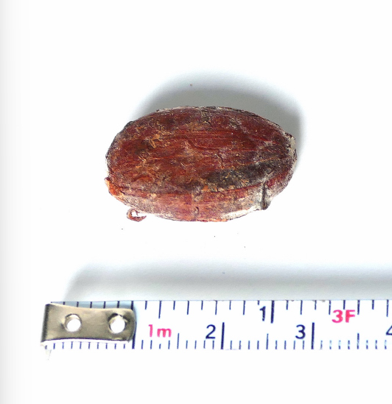 | 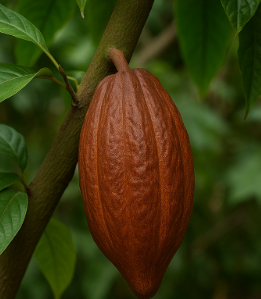 |
A distinctive morphological feature of the species is cauliflory: small flowers are produced in clusters directly on the trunk and on older branches. These flowers are small and not very conspicuous, with pale perianth segments, and only a limited proportion sets fruit after pollination, which is carried out mainly by tiny insects such as midges.
The fruit, commonly called cacao pod or cabossa, is an elongated berry, ovoid to obovate, with a thick, fibrous rind and longitudinal ridges. At maturity its colour ranges from yellow–orange to red or purplish, depending on variety and growing conditions. Each pod contains 20–60 seeds (cocoa beans), embedded in a whitish, sugary, aromatic pulp. After fermentation and drying, the seeds form the raw material for cocoa and chocolate, while the pulp is increasingly being used as a by-product for juices, beverages and other food preparations.
In its natural habitat Theobroma cacao behaves as a shade-adapted understorey species of tropical rainforests, preferring warm, humid and shaded environments. In modern agriculture it is cultivated across the humid tropics, especially in West Africa, Latin America and Southeast Asia, often within agroforestry systems where shade management, soil fertility and plant health are key determinants of yield and quality.
Botanical classification (APG IV system)
| Category | Data |
|---|
| Common name | Cocoa |
| Botanical name | Theobroma cacao L. |
| Kingdom | Plantae |
| Clade | Angiosperms → Eudicots → Rosids → Malvids |
| Order | Malvales |
| Family | Malvaceae |
| Genus | Theobroma |
| Species | Theobroma cacao L. |
Indicative energy values per 100 g – different cocoa forms
| Product | Energy (kcal/100 g) | Notes |
|---|
| Cocoa beans / roasted nibs | ~570–620 kcal | High fat content naturally present in the seed |
| Cocoa mass (cocoa liquor) | ~580–650 kcal | Similar to ground beans: ~52–56% fat |
| Cocoa powder 10–12% fat | ~220–260 kcal | Low-fat powder: high fibre, reduced lipids |
| Cocoa powder 20–22% fat | ~360–450 kcal | Powder with higher residual cocoa butter |
| Cocoa butter | ~880–900 kcal | Almost 100% fat → very high energy density |
| Unsweetened ready-to-drink cocoa beverage | ~0–15 kcal | Depends on dissolved solids; very diluted |
Plant Characteristics:
- Growth Form: The cacao tree is a small to medium-sized evergreen tree, typically reaching heights of 4-8 meters (13-26 feet). It has a dense, bushy canopy.
- Leaves: The leaves are large, elliptical, and dark green, with a leathery texture. They are arranged alternately on the branches and are typically 15-30 cm (6-12 inches) long.
- Flowers: Cacao flowers are small, fragrant, and bloom directly on the trunk and older branches in clusters. They are generally pale pink to white and are pollinated by tiny midges.
- Fruit: The tree produces large, oblong pods (cacao pods) that are 15-30 cm (6-12 inches) long. The pods are initially green, turning yellow to orange as they ripen. Each pod contains 20-50 cacao beans embedded in a sweet-tasting pulp.
Chemical Composition and Structure:
- Cacao Beans: The beans are rich in various bioactive compounds, including:
- Theobromine: A methylxanthine alkaloid with stimulant properties similar to caffeine.
- Caffeine: A stimulant that can boost energy levels and alertness.
- Flavanols: A type of flavonoid with antioxidant properties that contribute to cardiovascular health.
- Polyphenols: Compounds with antioxidant and anti-inflammatory effects.
- Fatty Acids: Such as oleic, stearic, and palmitic acids, which contribute to the rich, smooth texture of chocolate.
- Sugars: Present in the form of the pulp surrounding the beans, providing a sweet flavor.
How to Cultivate It:
- Soil: The cacao plant prefers rich, well-drained soils with a high organic content. It thrives in slightly acidic to neutral pH levels.
- Climate: Cacao requires a tropical climate with temperatures ranging from 20-30°C (68-86°F). It needs high humidity and frequent rainfall, ideally between 1,500-2,500 mm (59-98 inches) annually.
- Shade: The cacao tree grows best under the canopy of taller trees that provide shade, mimicking its natural rainforest habitat.
- Watering: Regular watering is essential, particularly during dry periods. However, the soil should be well-drained to prevent waterlogging.
- Propagation: Cacao can be propagated from seeds or by using tissue culture techniques. Seedlings are usually grown in nurseries and then transplanted to the field.
Uses and Benefits:
- Culinary: The primary use of cacao beans is in the production of cocoa powder, chocolate, and other confectionery products. The beans are fermented, dried, roasted, and processed to produce these products.
- Health Benefits: Cacao has been associated with various health benefits due to its rich antioxidant content. It may improve cardiovascular health, enhance mood, and provide cognitive benefits. Theobromine and caffeine can also act as mild stimulants.
- Traditional Medicine: In some cultures, cacao is used in traditional remedies for its potential anti-inflammatory and mood-enhancing properties.
Applications:
- Food and Beverage: Cacao is a key ingredient in chocolate and various other sweet treats. It is also used to flavor beverages such as hot chocolate and some alcoholic drinks.
- Cosmetics: Cacao butter is used in skincare products for its moisturizing properties. It is a common ingredient in lotions, creams, and lip balms.
- Pharmaceuticals: Theobromine and other compounds derived from cacao are used in some medicinal formulations for their stimulant and vasodilatory effects.
Environmental and Safety Considerations:
- Environmental Impact: Cacao cultivation can have significant environmental impacts, including deforestation and habitat destruction. Sustainable practices, such as agroforestry and organic farming, are promoted to mitigate these effects.
- Safety: Consuming cacao and chocolate in moderation is generally safe. However, excessive intake can lead to side effects such as headaches or digestive issues due to theobromine and caffeine content. Individuals with certain medical conditions should consult with a healthcare provider before consuming large amounts of cacao.
References__________________________________________________________________________
Montagna MT, Diella G, Triggiano F, Caponio GR, De Giglio O, Caggiano G, Di Ciaula A, Portincasa P. Chocolate, "Food of the Gods": History, Science, and Human Health. Int J Environ Res Public Health. 2019 Dec 6;16(24):4960. doi: 10.3390/ijerph16244960.
Abstract. Chocolate is well known for its fine flavor, and its history began in ancient times, when the Maya considered chocolate (a cocoa drink prepared with hot water) the "Food of the Gods". The food industry produces many different types of chocolate: in recent years, dark chocolate, in particular, has gained great popularity. Interest in chocolate has grown, owing to its physiological and potential health effects, such as regulation of blood pressure, insulin levels, vascular functions, oxidation processes, prebiotic effects, glucose homeostasis, and lipid metabolism. However, further translational and epidemiologic studies are needed to confirm available results and to evaluate other possible effects related to the consumption of cocoa and chocolate, verifying in humans the effects hitherto demonstrated only in vitro, and suggesting how best to consume (in terms of dose, mode, and time) chocolate in the daily diet.
Ferri C, Desideri G, Ferri L, Proietti I, Di Agostino S, Martella L, Mai F, Di Giosia P, Grassi D. Cocoa, blood pressure, and cardiovascular health. J Agric Food Chem. 2015 Nov 18;63(45):9901-9. doi: 10.1021/acs.jafc.5b01064.
Abstract. High blood pressure is an important risk factor for cardiovascular disease and cardiovascular events worldwide. Clinical and epidemiological studies suggest that cocoa-rich products reduce the risk of cardiovascular disease. According to this, cocoa has a high content in polyphenols, especially flavanols. Flavanols have been described to exert favorable effects on endothelium-derived vasodilation via the stimulation of nitric oxide-synthase, the increased availability of l-arginine, and the decreased degradation of NO. Cocoa may also have a beneficial effect by protecting against oxidative stress alterations and via decreased platelet aggregation, decreased lipid oxidation, and insulin resistance. These effects are associated with a decrease of blood pressure and a favorable trend toward a reduction in cardiovascular events and strokes. Previous meta-analyses have shown that cocoa-rich foods may reduce blood pressure. Long-term trials investigating the effect of cocoa products are needed to determine whether or not blood pressure is reduced on a chronic basis by daily ingestion of cocoa. Furthermore, long-term trials investigating the effect of cocoa on clinical outcomes are also needed to assess whether cocoa has an effect on cardiovascular events. A 3 mmHg systolic blood pressure reduction has been estimated to decrease the risk of cardiovascular and all-cause mortality. This paper summarizes new findings concerning cocoa effects on blood pressure and cardiovascular health, focusing on putative mechanisms of action and "nutraceutical " viewpoints.
Jean-Marie E, Jiang W, Bereau D, Robinson JC. Theobroma cacao and Theobroma grandiflorum: Botany, Composition and Pharmacological Activities of Pods and Seeds. Foods. 2022 Dec 8;11(24):3966. doi: 10.3390/foods11243966.
Abstract. Cocoa and cupuassu are evergreen Amazonian trees belonging to the genus Theobroma, with morphologically distinct fruits, including pods and beans. These beans are generally used for agri-food and cosmetics and have high fat and carbohydrates contents. The beans also contain interesting bioactive compounds, among which are polyphenols and methylxanthines thought to be responsible for various health benefits such as protective abilities against cardiovascular and neurodegenerative disorders and other metabolic disorders such as obesity and diabetes. Although these pods represent 50-80% of the whole fruit and provide a rich source of proteins, they are regularly eliminated during the cocoa and cupuassu transformation process. The purpose of this work is to provide an overview of recent research on cocoa and cupuassu pods and beans, with emphasis on their chemical composition, bioavailability, and pharmacological properties. According to the literature, pods and beans from cocoa and cupuassu are promising ecological and healthy resources.
Tan TYC, Lim XY, Yeo JHH, Lee SWH, Lai NM. The Health Effects of Chocolate and Cocoa: A Systematic Review. Nutrients. 2021 Aug 24;13(9):2909. doi: 10.3390/nu13092909.
Abstract. Chocolate has a history of human consumption tracing back to 400 AD and is rich in polyphenols such as catechins, anthocyanidins, and pro anthocyanidins. As chocolate and cocoa product consumption, along with interest in them as functional foods, increases worldwide, there is a need to systematically and critically appraise the available clinical evidence on their health effects. A systematic search was conducted on electronic databases such as MEDLINE, EMBASE, and Cochrane Central Register of Controlled Trials (CENTRAL) using a search strategy and keywords. Among the many health effects assessed on several outcomes (including skin, cardiovascular, anthropometric, cognitive, and quality of life), we found that compared to controls, chocolate or cocoa product consumption significantly improved lipid profiles (triglycerides), while the effects of chocolate on all other outcome parameters were not significantly different. In conclusion, low-to-moderate-quality evidence with short duration of research (majority 4-6 weeks) showed no significant difference between the effects of chocolate and control groups on parameters related to skin, blood pressure, lipid profile, cognitive function, anthropometry, blood glucose, and quality of life regardless of form, dose, and duration among healthy individuals. It was generally well accepted by study subjects, with gastrointestinal disturbances and unpalatability being the most reported concerns.
Schwan RF, Wheals AE. The microbiology of cocoa fermentation and its role in chocolate quality. Crit Rev Food Sci Nutr. 2004;44(4):205-21. doi: 10.1080/10408690490464104.
Abstract. The first stage of chocolate production consists of a natural, seven-day microbial fermentation of the pectinaceous pulp surrounding beans of the tree Theobroma cacao. There is a microbial succession of a wide range of yeasts, lactic-acid, and acetic-acid bacteria during which high temperatures of up to 50 degrees C and microbial products, such as ethanol, lactic acid, and acetic acid, kill the beans and cause production of flavor precursors. Over-fermentation leads to a rise in bacilli and filamentous fungi that can cause off-flavors. The physiological roles of the predominant micro-organisms are now reasonably well understood and the crucial importance of a well-ordered microbial succession in cocoa aroma has been established. It has been possible to use a synthetic microbial cocktail inoculum of just 5 species, including members of the 3 principal groups, to mimic the natural fermentation process and yield good quality chocolate. Reduction of the amount of pectin by physical or mechanical means can also lead to an improved fermentation in reduced time and the juice can be used as a high-value byproduct. To improve the quality of the processed beans, more research is needed on pectinase production by yeasts, better depulping, fermenter design, and the use of starter cultures.
Cárdenas A, Mojica L, Coronado-Cáceres L, Castillo-Herrera GA. Unlocking the Alkaloid Biological Potential of Chili Pepper (Capsicum spp.), Cacao (Theobroma cacao L.), and Coffee (Coffea spp.) Byproducts: Characterization, Non-Conventional Extraction, Applications, and Future Perspectives. Molecules. 2025 Sep 18;30(18):3795. doi: 10.3390/molecules30183795.
Abstract. Chili peppers (Capsicum spp.), cacao (Theobroma cacao L.), and coffee (Coffea spp.) are important crops worldwide. Nearly 35%, 80%, and 45% of the respective fruits are underutilized or discarded, representing a considerable economic loss. This work reviews and analyzes the environmental factors that influence the concentration of the main alkaloids in these crops, including capsaicin, theobromine, and caffeine. Their reported anti-inflammatory, cardioprotective, neuroprotective, and cytotoxic properties are also reviewed. This work explores strategies for the revalorization of these crops, comparing alkaloid extraction methods that use non-conventional techniques, including supercritical fluid extraction (SFE), ultrasound-assisted extraction (UAE), high-pressure and -temperature extraction (HPTE), pressurized liquid extraction (PLE), pressurized hot water extraction (PHWE), enzyme-assisted extraction (EAE), and pulsed electric field-assisted extraction (PEFAE), and their combination to enhance the recovery of capsaicin, theobromine, and caffeine, leading to sustainable and innovative uses of these crops' byproducts. Capsaicin, theobromine, and caffeine alkaloids are promising ingredients for the development of functional foods, cosmeceuticals, and pharmaceuticals.
Díaz-Valderrama JR, Leiva-Espinoza ST, Aime MC. The History of Cacao and Its Diseases in the Americas. Phytopathology. 2020 Oct;110(10):1604-1619. doi: 10.1094/PHYTO-05-20-0178-RVW.
Abstract. Cacao is a commodity crop from the tropics cultivated by about 6 million smallholder farmers. The tree, Theobroma cacao, originated in the Upper Amazon where it was domesticated ca. 5450 to 5300 B.P. From this center of origin, cacao was dispersed and cultivated in Mesoamerica as early as 3800 to 3000 B.P. After the European conquest of the Americas (the 1500s), cacao cultivation intensified in several loci, primarily Mesoamerica, Trinidad, Venezuela, and Ecuador. It was during the colonial period that cacao diseases began emerging as threats to production. One early example is the collapse of the cacao industry in Trinidad in the 1720s, attributed to an unknown disease referred to as the "blast". Trinidad would resurface as a production center due to the discovery of the Trinitario genetic group, which is still widely used in breeding programs around the world. However, a resurgence of diseases like frosty pod rot during the republican period (the late 1800s and early 1900s) had profound impacts on other centers of Latin American production, especially in Venezuela and Ecuador, shifting the focus of cacao production southward, to Bahia, Brazil. Production in Bahia was, in turn, dramatically curtailed by the introduction of witches' broom disease in the late 1980s. Today, most of the world's cacao production occurs in West Africa and parts of Asia, where the primary Latin American diseases have not yet spread. In this review, we discuss the history of cacao cultivation in the Americas and how that history has been shaped by the emergence of diseases.
Martin MÁ, Ramos S. Impact of cocoa flavanols on human health. Food Chem Toxicol. 2021 May;151:112121. doi: 10.1016/j.fct.2021.112121. Epub 2021 Mar 13. PMID: 33722594.
Kerimi A, Williamson G. The cardiovascular benefits of dark chocolate. Vascul Pharmacol. 2015 Aug;71:11-5. doi: 10.1016/j.vph.2015.05.011. Epub 2015 May 27. PMID: 26026398.




