



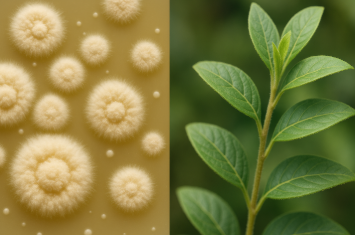
Pseudozyma epicola is a yeast belonging to the family Ustilaginaceae, a group of fungi that includes both plant-pathogenic and non-pathogenic species. Pseudozyma epicola is among the non-pathogenic species and is considered an environmental yeast, often isolated from plant surfaces, soils and decomposing organic material. It appears as oval or ellipsoidal cells that reproduce by budding, forming smooth, creamy colonies.
In the food and biotechnology sectors, Pseudozyma epicola is not used as a direct ingredient, but may be employed as a microbial processing aid in experimental fermentations or for enzyme production. Some related species in the genus Pseudozyma are known for their ability to produce natural biosurfactants, such as mannosylerythritol lipids (MEL), compounds valued in food, cosmetic and industrial applications for their emulsifying properties. However, the use of Pseudozyma epicola is less common than that of other species in the genus and is mainly studied in applied microbiology and research contexts.
Botanical Classification:
Kingdom: Fungi
Division: Ascomycota
Class: Saccharomycetes
Order: Saccharomycetales
Family: Pseudozymaceae
Genus: Pseudozyma
Species: Pseudozyma epicola
Plant Characteristics:
Pseudozyma epicola is characterized by:
Morphology: Yeast cells are typically oval to round and may form pseudohyphae under certain conditions. They are generally larger than many other yeasts.
Colony Appearance: On solid media, colonies of Pseudozyma epicola are usually smooth and can vary in color depending on the growth conditions and the medium used.
Growth Conditions: It grows well at various temperatures, often in the range of 20-30°C. It is capable of growing on a wide range of substrates, including those rich in carbohydrates and other organic materials.
Chemical Composition and Structure:
The chemical composition of Pseudozyma epicola includes:
Cell Wall Polysaccharides: Contains polysaccharides such as glucans and mannan, which contribute to the structural integrity of the yeast cell wall.
Proteins: Includes a variety of proteins involved in metabolism and stress responses.
Lipids: Contains lipid molecules that are essential for cellular membrane integrity and function.
Secondary Metabolites: Produces various secondary metabolites, which may have potential biotechnological applications.
Uses and Benefits:
Biotechnological Applications: Pseudozyma epicola is used in the production of various bioproducts, including enzymes and bioactive compounds, due to its unique metabolic pathways.
Industrial Applications: Potential applications in the food and beverage industry for fermentation processes, as well as in the production of biofuels and other chemicals.
Environmental Applications: May be utilized in bioremediation processes to degrade pollutants or waste products, thanks to its metabolic capabilities.
Applications:
Biotechnological: Used in the production of enzymes and other biochemicals in industrial processes. It plays a role in biotechnology for the development of novel products.
Industrial Fermentation: Applied in the fermentation industry for the production of various products, including alcoholic beverages and biofuels.
Environmental Management: Investigated for potential use in bioremediation to address environmental pollution and waste management issues.
Cosmetics
Pseudozyma Epicola/Rosa Canina Fruit Oil Ferment Extract
Pseudozyma epicola/meadowfoam seed oil ferment extract filtrate
Environmental and Safety Considerations:
Environmental Impact: Generally considered environmentally safe and can contribute to sustainable biotechnological processes. Its use in bioremediation may help reduce environmental pollution.
Safety: As a non-pathogenic yeast, Pseudozyma epicola is generally safe to handle. However, proper laboratory practices should be followed to avoid contamination and ensure accurate handling.

