



Rubus coreanus root extract: pros and cons, INCI functions and safety
General description
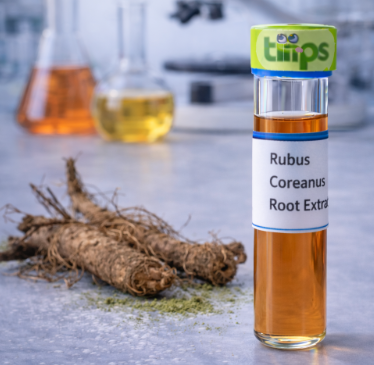
Rubus Coreanus Root Extract is an extract obtained from the roots of Rubus coreanus, a plant belonging to the Rosaceae family. The extract is valued for its functional and bioactive properties, which support its use mainly in cosmetics and in medical/traditional contexts. Its complex phytochemical profile makes it of interest for formulations aimed at protection, soothing, and supporting skin physiology.
Chemical composition and structure
The chemical composition of Rubus Coreanus Root Extract includes a variety of bioactive compounds responsible for its functional properties:
Flavonoids: compounds with a phenolic structure, associated with antioxidant activity
Tannins: complex polyphenols with astringent activity
Phenolic acids: aromatic molecules with hydroxyl groups, contributing to oxidative stability
Saponins: glycosides with potential soothing and cleansing effects
Alkaloids: nitrogen-containing compounds, typically in trace amounts, with targeted biological activity
| Compound class | Chemical structure | Functional role |
|---|---|---|
| Flavonoids | Phenolic | Antioxidant |
| Tannins | Complex polyphenolic | Astringent |
| Phenolic acids | Hydroxylated aromatic | Oxidative protection |
| Saponins | Glycosidic | Soothing |
| Alkaloids | Nitrogen-containing | Biological activity |
Physical properties
Rubus Coreanus Root Extract generally presents as:
Appearance: liquid ranging from pale yellow to brown
Odor: mild and earthy, characteristic
Taste: slightly bitter, attributed to tannins and alkaloids
pH: typically 4.5 to 7.0, from slightly acidic to neutral
Solubility: water-soluble, readily incorporable into aqueous systems
| Parameter | Indicative value |
|---|---|
| Color | Pale yellow – brown |
| pH | 4.5 – 7.0 |
| Solubility | Water |
| Odor | Mild, earthy |
Production process
The production of Rubus Coreanus Root Extract involves a controlled sequence of steps:
Harvesting and selection of Rubus coreanus roots
Cleaning to remove soil and contaminants
Drying to reduce moisture content
Crushing and maceration to promote the release of active compounds
Extraction using water or water-based solvents
Filtration and purification to remove solids and impurities
Concentration (optional) to increase the level of active constituents
Sterilization of the final product to ensure microbiological safety
| Step | Objective |
|---|---|
| Drying | Raw material stability |
| Extraction | Recovery of bioactive compounds |
| Filtration | Extract purity |
| Sterilization | Microbiological safety |
Applications
Medicine
Rubus Coreanus Root Extract is used in traditional medicine for its:
Anti-inflammatory properties
Antioxidant activity
Antimicrobial effects
It is used to address gastrointestinal issues, infections, and skin inflammations.
Cosmetics
In cosmetics, it is valued for:
Soothing effects
Anti-inflammatory activity
Rejuvenating properties
It is commonly included in face creams, serums, lotions, and masks.
Other uses
Personal care products (shampoos, conditioners), due to soothing and antimicrobial properties.
INCI functions
Skin conditioning agent
It plays a central role in topical treatments by helping to restore, improve, and maintain skin tolerance to external factors, including melanocyte tolerance.
Its primary function is the prevention of skin dehydration, working in synergy with emollients and humectants that may be present in the formulation.
Environmental and safety considerations
Environmental impact
The production of Rubus Coreanus Root Extract generally has a low environmental impact, especially when paired with sustainable agricultural practices. The use of natural or aqueous solvents helps minimize the release of harmful chemicals into the environment.
Safety
The extract is considered safe for topical and oral use at concentrations typically used in consumer products. It is essential to ensure:
Absence of contaminants and pathogens
Microbiological control
Allergic reactions are rare, but cannot be entirely excluded, particularly in sensitive individuals.
For more information and studies:

