



Verbascum thapsus leaf extract: properties, uses, pros, cons, safety
(Verbascum thapsus; Scrophulariaceae / Plantaginaceae)
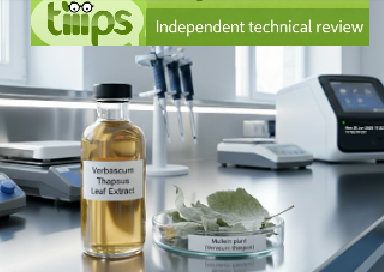
Verbascum thapsus leaf extract is a botanical extract obtained from the leaves of Verbascum thapsus (common name: mullein). In cosmetics it is mainly used as a skin conditioning ingredient, frequently included in “botanical” formulations where sensoriality, natural positioning, and organoleptic consistency are important. Practical performance depends significantly on the commercial grade (solvent/carrier, extract strength, filtration, color/odor, and microbiological requirements).
Definition
It is a variable-composition mixture: not a single molecule, but a set of components extracted from the botanical matrix. Final composition depends on the origin and quality of the raw material, harvesting and drying conditions, extraction method (solvent, time, temperature), any concentration and stabilization steps, and the manufacturer’s specifications.
From a formulation standpoint, operational parameters include: batch-to-batch repeatability, compatibility with the base (aqueous, hydroalcoholic, emulsion), stability (color/odor/haze), and consistency of specifications (markers and impurity limits when available).
Chemical Composition and Structure
Verbascum Thapsus Leaf Extract contains a variety of bioactive compounds that contribute to its beneficial properties:
Flavonoids: Known for their antioxidant and anti-inflammatory effects.
Saponins: Possess antimicrobial properties and aid in skin cleansing.
Mucilage: Provides soothing and emollient effects, helping to moisturize and protect the skin.
Tannins: Have astringent properties, which help to tighten and tone the skin.
Iridoids: Contribute to the anti-inflammatory and antimicrobial activities of the extract.
Physical Properties
Verbascum Thapsus Leaf Extract typically appears as a yellow to brown liquid or powder. It is soluble in water and alcohol, making it suitable for various cosmetic formulations. The extract has a mild, characteristic herbal scent.
Cosmetic and Personal Care Applications
Soothing: Provides a calming effect on irritated and inflamed skin.
Anti-inflammatory: Helps to reduce redness, swelling, and discomfort associated with skin conditions.
Antimicrobial: Protects the skin from harmful microorganisms and helps prevent infections.
Astringent: Tightens and tones the skin, making it appear firmer and smoother.
Moisturizing: The mucilage content helps to retain moisture in the skin, providing hydration and protection.
INCI Functions
Skin conditioning agent. It is the mainstay of topical skin treatment as it has the function of restoring, increasing or improving skin tolerance to external factors, including melanocyte tolerance. The most important function of the conditioning agent is to prevent skin dehydration, but the subject is rather complex and involves emollients and humectants that can be added in the formulation.
Cultivation
The reference plant is Verbascum thapsus. In literature and some historical repertories the species is often associated with Scrophulariaceae, while modern taxonomic updates place many species of the genus within Plantaginaceae. In cosmetic practice, industrial management focuses on specifications, acceptance criteria, and consistency of the extract profile more than on agronomic variability alone.
Key constituents
Composition is process-dependent and linked to the solvent/carrier. In general terms, Verbascum thapsus leaves are associated with compound classes such as iridoids (for example aucubin and catalpol), saponins, flavonoids, and phenylethanoid glycosides, as well as polysaccharide/mucilage fractions depending on the extraction process. Operationally, formulators focus on: consistency of the declared profile, color stability, residual odor, and compatibility with the matrix (preservatives, polymers, electrolytes).
Nutritional use note and bioactive compounds
In a cosmetic context it is not a “nutritional” ingredient. Technical interest relates to skin conditioning and to grade quality (markers/impurities, stability, and repeatability). Any finished-product performance claims must be supported by relevant experimental evidence.
Identification data and specifications
| Characteristic | Value |
|---|---|
| INCI name | Verbascum thapsus leaf extract |
| INCI functions | skin conditioning |
| CAS number | 90064-13-4 |
| EC/EINECS number | 290-074-2 |
| Substance type | Variable-composition botanical extract (mixture) |
| Molecular formula | Not applicable (mixture) |
| Molecular weight | Not applicable as a single value (mixture) |
| Typical plant part | Leaves |
| Typical preparation | Extract (solvent extract), grade-dependent |
Indicative physico-chemical properties
| Characteristic | Indicative value | Note |
|---|---|---|
| Chemical nature | Complex variable-composition mixture | Depends on raw material and process |
| Solubility | Solvent/carrier-dependent | Check the grade technical sheet |
| pH stability | Matrix-dependent | Extreme pH may influence color and haze |
| Light/oxygen stability | Variable | Possible organoleptic drift; suitable packaging may help if relevant |
| Thermal stability | Sensitive to prolonged stress | Prefer controlled-temperature addition when possible |
| Critical parameters | Color, odor, haze, micro limits, markers (if present) | Drivers for repeatability and acceptance |
Functional role and practical mechanism of action
In formula, the main contribution is skin conditioning, with an operational effect linked to sensoriality and product “feel”, as well as botanical positioning. Performance depends on dose, matrix (pH, aqueous/oil phase, surfactants/polymers), and grade quality (filtration, carrier, and organoleptic consistency).
Formulation compatibility
Common attention points include: risk of haze/precipitation in the presence of electrolytes or specific polymers (carrier-dependent), potential color impact in clear formulas, preservative-system compatibility (critical for aqueous/high water-activity extracts), and variability across batches/suppliers. In leave-on products, tolerability should be managed with a prudent approach and finished-product validation.
Use guidelines
Use levels depend on the grade and formulation objective. Good practice is to define targets for color/odor/clarity, validate through accelerated stability and final-packaging tests, and set batch acceptance criteria (organoleptic and, when applicable, analytical marker criteria).
Quality, grades, and specifications
Supplier variability can be significant. Robust control includes: solvent/carrier specifications, extract strength/DER when declared, microbiological limits aligned with the application (leave-on vs rinse-off), impurity and heavy metal limits where relevant, traceability, and storage conditions. Adoption of GMP (good manufacturing practice; benefit: reduces variability and contamination) supports repeatability and quality control.
Safety, regulatory, and environment
Verbascum Thapsus Leaf Extract is generally considered safe for use in cosmetic and personal care products when used within recommended concentrations. It is biodegradable and environmentally friendly. Sustainable harvesting practices are important to ensure the preservation of the Mullein plant and its natural habitats.
Safety must be assessed on the finished product considering concentration, use area, and target population. For variable-composition botanical extracts, operational topics include impurity control, managing variability through specifications, microbiological robustness, and verification of stability and tolerability.
Allergen.
It is not typically classified as an allergen (in the sense of fragrance allergens). However, as a botanical extract it may contain components that can be irritating or sensitizing in predisposed individuals; practical management relies on supplier specifications and finished-product safety assessment.
Contraindications (brief).
Use caution on very sensitive or reactive skin and on delicate areas; avoid use on compromised skin if risk assessment and tolerability testing indicate concerns.
Formulation troubleshooting
Haze or precipitation.
Action: verify the grade carrier/solvent, optimize order of addition and pH, evaluate a more filtered grade or a different carrier system, and confirm via accelerated stability.
Color/odor drift over time.
Action: select a grade with more stable organoleptic specifications, reduce light/oxygen stress (packaging), and define tighter tolerances in the specification.
Perceptible batch-to-batch variability.
Action: tighten specifications (organoleptic criteria and markers when available), implement incoming controls, and agree on standardization strategies with the supplier.
Conclusion
Verbascum thapsus leaf extract is a mullein leaf extract used in cosmetics mainly for skin conditioning, with a use profile driven by grade quality, organoleptic stability, and matrix compatibility. Reliable use requires robust specifications, microbiological control, and a finished-product safety assessment including a concise note on sensitization potential and practical contraindications.
Mini-glossary
UVCB. Substances of unknown or variable composition, complex reaction products, or biological materials.
Marker. Measurable component(s) (or classes of compounds) used to control extract consistency and standardization.
GMP. Good manufacturing practice; benefit: improves traceability and reduces contamination/variability.

