



Ascophyllum nodosum (Ascophyllum nodosum (L.) Le Jolis)
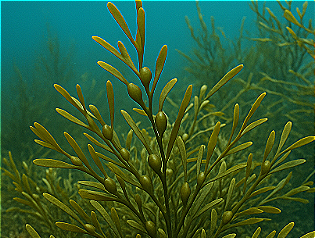
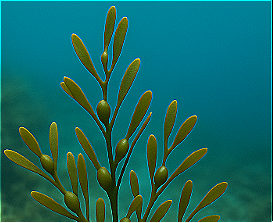
Ascophyllum nodosum is a brown macroalga of the family Fucaceae, typical of cold to cool temperate rocky shores in the North Atlantic. It forms dense stands in the intertidal zone, where it often becomes a dominant canopy-forming species. The thallus consists of long, strap-like, tough and leathery fronds, olive to olive-brown in colour, lacking a distinct midrib and characterised by large nodular air bladders arranged in series along the main axis. Fronds generally reach 0.5–2 m in length under normal conditions and are attached to the substrate by a disc-shaped holdfast firmly anchored to rocks and boulders.
From an ecological standpoint, Ascophyllum nodosum typically colonises sheltered or moderately exposed rocky shores, including bays, fjords and estuarine environments with normal or slightly reduced salinity. It is a slow-growing, long-lived species capable of forming a continuous canopy that provides habitat, shelter and feeding grounds for numerous invertebrates and small fish. Distribution, frond length and morphology are influenced by wave exposure, tidal range, salinity, temperature and substrate characteristics. In particularly clear waters, stands may extend into the shallow subtidal zone. As a structural engineer species in intertidal communities, it contributes significantly to shoreline complexity and biodiversity.
From a compositional perspective, Ascophyllum nodosum biomass displays a very high water content, with the dry matter dominated by structural and storage carbohydrates. Major polysaccharides include alginates, fucoidans and laminarans, together with mannitol and other soluble sugars. The polyphenolic fraction is rich in phlorotannins, which contribute to antioxidant capacity and are involved in chemical defence against herbivores and environmental stress. The protein fraction is moderate, while the lipid content is relatively low but may include long-chain fatty acids of technological interest. The mineral profile is marked by high levels of iodine, potassium, calcium, magnesium and other trace elements, reflecting the ionic composition of seawater. Overall composition and concentration of constituents depend strongly on geographical origin, season of harvest, depth, and the trophic and physicochemical conditions of the site.
In terms of applications, Ascophyllum nodosum is one of the most important brown seaweeds industrially. The biomass is widely used for the production of alginates and for liquid or powdered extracts applied as agricultural biostimulants, used on arable crops, fruit trees and horticultural species as seaweed-based amendments and fertilising products. It is also processed as meal or extract for inclusion in animal feeds and feed additives, where the combination of polysaccharides, minerals and bioactive compounds is of interest. In the food and nutraceutical sectors, standardised extracts are investigated and used as functional ingredients in certain foods, supplements and health-oriented products, within the framework of regulatory and safety constraints. The polysaccharide and polyphenolic fractions are further studied for applications in cosmetics, gelling and thickening systems, and biorefinery processes aimed at producing bioethanol, biogas and other bioproducts.
Quality assessment of Ascophyllum nodosum biomass intended for processing typically considers residual moisture, ash content, quantity and quality of polysaccharides (especially alginates and fucoidans), polyphenol levels, microbial load, and the presence of metals or environmental contaminants. Batch purity is also critical, with attention to the absence or minimal presence of other macroalgae, excessive sediment, and unwanted macro-epiphytes. Reliable traceability of the harvesting area, adoption of sustainable harvesting practices (cutting height, rotation of harvesting zones, regeneration time), and controlled drying, storage and transport conditions are essential to preserve the chemical–physical properties, functionality and technological performance of the raw material.
 |  |
Physical characteristics
Size: It can grow up to 2 meters in length.
Fronds: Flattened, leathery, olive-green or brown, with large air vesicles distributed along the stipe.
Attachment: Firmly anchors to rocks or substrates through a thallus (holdfast).
Habitat: Lives in sheltered intertidal zones, often forming dense mats along rocky shores.
Chemical composition
Ascophyllum nodosum is rich in bioactive compounds that make it a valuable resource:
Polysaccharides:
Alginate: Used in the food, pharmaceutical, and cosmetic industries.
Fucoidan: Known for its anti-inflammatory, antioxidant, and immunomodulating properties.
Minerals: High levels of iodine, calcium, potassium, magnesium, and zinc.
Vitamins: Contains vitamins A, B12, C, D, and E.
Phenolic compounds: Powerful antioxidants.
Proteins and amino acids: Provides essential amino acids.
Habitat and ecology
Geographical distribution: Native to the cold waters of the North Atlantic Ocean, found along the coasts of Europe and North America.
Ecological role:
Provides habitat and food for marine fauna, including mollusks, crustaceans, and fish.
Acts as a natural carbon sink, contributing to the health of marine ecosystems.
Protects coastlines by reducing wave energy.
How to harvest Ascophyllum nodosum
The sustainable harvesting of Ascophyllum nodosum is essential to preserve its ecological role:
Timing: Harvested during low tide, when the fronds are exposed.
Method: Manual cutting to allow regrowth, avoiding damage to the thallus.
Sustainability: Rotational harvesting ensures a healthy and stable population.
Uses and benefits
Ascophyllum nodosum offers numerous applications:
Agriculture:
Fertilizers: Used as an organic soil conditioner and fertilizer; it improves soil health and plant growth thanks to its mineral content and bioactive compounds.
Animal feed: Added to feed to improve the health and productivity of livestock.
Health and nutrition:
Dietary supplements: Rich in iodine, it supports thyroid health and metabolism.
Gut health: Fucoidan and alginates improve digestive tract health and act as prebiotics.
Weight management: Some compounds may reduce fat absorption and appetite.
Cosmetic and Personal Care Applications
Moisturizing: The polysaccharides in Ascophyllum Nodosum Extract help to maintain skin hydration, keeping it soft and supple.
Skin Soothing: The extract has skin-soothing properties, making it ideal for calming irritated or sensitive skin.
Anti-Aging: By promoting collagen production and improving skin elasticity, the extract helps to reduce the signs of aging such as fine lines and wrinkles.
Antioxidant Protection: The antioxidants in the extract help to protect the skin from free radical damage and environmental stressors.
Skin conditioning agent. It is the mainstay of topical skin treatment as it has the function of restoring, increasing or improving skin tolerance to external factors, including melanocyte tolerance. The most important function of the conditioning agent is to prevent skin dehydration, but the subject is rather complex and involves emollients and humectants that can be added in the formulation.
Hair Care: In haircare products, the extract helps to nourish and strengthen the hair, improving its texture, manageability, and shine.
Ascophyllum Nodosum Extract is generally considered safe for use in cosmetic and personal care products. It is non-irritating and suitable for most skin types. As a naturally derived ingredient, it poses minimal risk to the environment when sourced and disposed of responsibly. Utilizing Ascophyllum Nodosum Extract supports sustainable practices by promoting the use of renewable marine resources.
Industry:
Food industry: Alginate is used as a thickener and stabilizer in products such as ice cream, sauces, and dairy alternatives.
Pharmaceuticals: Fucoidan is being studied for its potential anticancer and immune-stimulating effects.
Applications
Medicine:
Emerging research highlights its potential in the management of inflammation, cardiovascular health, and metabolic disorders.
Its natural iodine content is essential for preventing deficiencies.
Environment:
Used in bioremediation projects to absorb heavy metals and pollutants from water.
Shows potential for carbon sequestration, contributing to the fight against climate change.
Culinary use:
Occasionally used in traditional cuisines, especially in soups and as a flavoring agent.
Added to food products as a natural source of umami flavor.
Environmental and safety considerations
Environmental benefits:
Contributes to marine biodiversity by providing shelter and food for many species.
Acts as a natural barrier against coastal erosion.
Sustainability:
Overharvesting can lead to habitat destruction. It is essential to adopt sustainable harvesting practices.
Safety:
Generally safe for consumption, but excessive intake of iodine-rich products can cause thyroid imbalances.
It is important to ensure that the seaweed is harvested from uncontaminated waters to avoid heavy metals or toxins.
Research and future potential
The biochemical properties of Ascophyllum nodosum continue to be an active field of research in nutrition, agriculture, and environmental science. Ongoing studies are exploring its applications in functional foods, pharmaceuticals, and sustainable agricultural practices. Its ability to sequester carbon and contribute to bioremediation underscores its importance in combating climate change and conserving marine ecosystems.

