



Coptis japonica rhizome extract: properties, uses, pros, cons, safety
(Coptis japonica; Ranunculaceae)
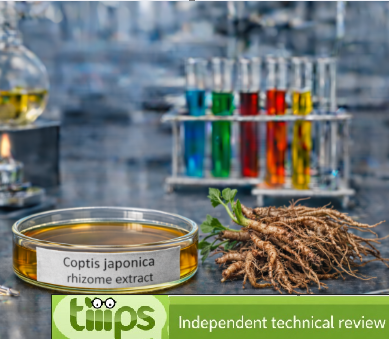
Coptis japonica rhizome extract is a botanical extract obtained from the rhizome (root stock) of Coptis japonica (common name: Japanese goldthread). In cosmetics it is mainly used for antimicrobial and skin conditioning functions, with a use profile strongly dependent on the commercial grade (solvent/carrier, standardization, color/odor, microbiological limits, and supplier-declared impurities).
Definition
It is a variable-composition mixture: not a single molecule, but a set of constituents extracted from the botanical matrix. Final composition depends on raw material origin, the plant part used (rhizome), the extraction method, and the producer’s specifications.
From a formulation standpoint, the operational parameters are: batch-to-batch reproducibility, compatibility with the base (aqueous, hydroalcoholic, emulsion), stability (color/odor/haze), and consistency of specifications (markers and impurity limits when available).
Chemical Composition and Structure
Coptis Japonica Rhizome Extract contains a variety of bioactive compounds, including alkaloids, flavonoids, and berberine. These compounds contribute to its beneficial effects on the skin, such as providing antimicrobial protection, soothing inflammation, and enhancing overall skin health. The specific composition includes:
Alkaloids: Known for their antimicrobial properties.
Flavonoids: Provide antioxidant and anti-inflammatory benefits.
Berberine: A potent antimicrobial agent that also offers soothing and skin conditioning properties.
Physical Properties
Coptis Japonica Rhizome Extract typically appears as a yellow to brown liquid or powder with a characteristic bitter aroma. It is soluble in water and alcohol, making it easy to incorporate into various cosmetic formulations.
Cosmetic and Personal Care Applications
Used in face/body products and “purifying” or “blemish-prone” concepts where an antimicrobial support and skin conditioning contribution are desired. The antimicrobial function should be interpreted operationally: performance depends on concentration, matrix, and the finished product’s preservative strategy.
INCI Functions
Antimicrobial agent. This ingredient is able to suppress or inhibit the growth and replication of a broad spectrum of microorganisms such as bacteria, fungi and viruses by making the stratum corneum temporarily bactericidal and fungicidal.
Skin conditioning agent. It is the mainstay of topical skin treatment as it has the function of restoring, increasing or improving skin tolerance to external factors, including melanocyte tolerance. The most important function of the conditioning agent is to prevent skin dehydration, but the subject is rather complex and involves emollients and humectants that can be added in the formulation.
Soothing: Berberine in the extract helps to soothe and calm the skin, providing relief from irritation and discomfort.
Identification data and specifications
| Characteristic | Value |
|---|---|
| INCI name | Coptis japonica rhizome extract |
| INCI functions | antimicrobial; skin conditioning |
| CAS number | 223748-66-1 |
| EC/EINECS number | Not indicated as a unique value in the consulted public sources; verify grade SDS |
| Botanical family | Ranunculaceae |
| Substance type | Variable-composition botanical extract (mixture) |
| Molecular formula | Not applicable (mixture) |
| Molecular weight | Not applicable as a single value (mixture) |
| Typical plant part | Rhizome (root stock) |
| Typical preparation | Extract (solvent extract), grade-dependent |
Indicative physico-chemical properties
| Characteristic | Indicative value | Note |
|---|---|---|
| Chemical nature | Complex variable-composition mixture | Depends on raw material and process |
| Solubility | Solvent/carrier-dependent | Check the grade technical sheet |
| pH stability | Matrix-dependent | Extreme pH may affect color and stability |
| Light/oxygen stability | Variable | Possible color/odor drift; appropriate packaging may help if relevant |
| Thermal stability | Sensitive to prolonged stress | Prefer controlled-temperature addition when possible |
| Critical parameters | Markers (if declared), color, odor, haze, impurity/micro limits | Drivers for repeatability and acceptance |
Functional role and practical mechanism of action
In formula, the main role supports an antimicrobial function and skin conditioning. Operationally, perceived or measured effects depend on dose, matrix (pH, surfactants, polymers), presence of other actives, and preservative strategy. If the target is “microbiome-friendly” or “blemish-prone”, it is essential to distinguish ingredient function from finished-product claims and validate with relevant testing.
Formulation compatibility
Common points of attention include: interactions with polymer systems (risk of haze/precipitation), potential chromatic contribution (yellowing/browning) in clear formulas, compatibility with preservatives and chelants, and variability linked to the carrier system. In leave-on products, stability and tolerability must be controlled in line with the target population.
Use guidelines
Use levels depend on the grade and objective. Good practice is to define measurable targets (color, clarity, markers if present, sensory performance), validate via accelerated stability and final-packaging tests, and set batch acceptance criteria (organoleptic and, when applicable, analytical).
Quality, grades, and specifications
Supplier variability can be significant. Robust control includes: solvent/carrier specifications, markers and ranges (when declared), impurity and heavy metal limits aligned with the supply chain, microbiological requirements, traceability, and storage conditions. Adoption of GMP (good manufacturing practice; benefit: reduces variability and contamination) is a positive indicator for repeatability and quality control.
Safety, regulatory, and environment
Coptis Japonica Rhizome Extract is generally considered safe for use in cosmetic and personal care products. It is non-irritating and suitable for all skin types. As a natural and biodegradable ingredient, it poses minimal risk to the environment when disposed of properly. Utilizing Coptis japonica rhizome extract also supports sustainable practices by promoting the use of plant-based ingredients.
Safety must be assessed on the finished product considering concentration, exposure area, and target population. For variable-composition botanical extracts, operational topics include impurity control, management of compositional variability through specifications, preservative-system compatibility, and stability verification.
Allergen.
It is not typically classified as an “allergen” per se; however, as a botanical extract it may contain potentially sensitizing components in predisposed individuals. Practical management relies on supplier specifications and finished-product safety assessment.
Contraindications
Use caution on very sensitive or reactive skin, on delicate areas, and on compromised skin if risk assessment and tolerability tests indicate concerns.
Formulation troubleshooting
Haze or precipitation.
Action: evaluate the grade carrier, optimize order of addition, pH, and compatibility with electrolytes/polymers; consider a more filtered grade or an alternative solvent system.
Color drift over time.
Action: select a grade with more stable color specifications, optimize packaging and storage conditions, and define color tolerances in the specification.
Perceptible batch-to-batch variability.
Action: tighten specifications (marker/range when available, organoleptic criteria), implement incoming controls, and agree on standardization strategies with the supplier.
Conclusion
Coptis japonica rhizome extract is a rhizome-derived extract used in cosmetics mainly for antimicrobial and skin conditioning functions. Reliable use requires grade selection, quality control (markers/organoleptics/microbiology), matrix compatibility, and a finished-product safety assessment including a concise note on sensitization potential and operational contraindications.
Mini-glossary
UVCB. Substances of unknown or variable composition, complex reaction products, or biological materials.
Skin conditioning. Cosmetic function aimed at keeping the skin in good condition.
Antimicrobial. Cosmetic function aimed at helping control microbial growth (ingredient-level; finished-product performance requires validation).
GMP. Good manufacturing practice; benefit: improves traceability and reduces contamination/variability.

