



Buddleja davidii, (Loganiaceae)commonly known as butterfly bush, is a plant species native to China. It is renowned for its attractive flowers and its ability to attract butterflies. The plant has also been recognized for its various therapeutic and cosmetic applications due to its bioactive compounds.
Botanical classification
Common name: butterfly bush, buddleja
Scientific name: Buddleja davidii
Family: Scrophulariaceae (sometimes placed in Buddlejaceae in older classifications)
Genus: Buddleja
Origin: central and western China, introduced and naturalised in many temperate regions
Growth habit: deciduous or semi-evergreen shrub, very branched, usually 2–4 m tall, with long arching shoots and pendulous panicle-like flower spikes
Cultivation and growing conditions
Climate
Prefers temperate climates with warm summers and moderately cold winters.
Quite hardy, tolerating frosts down to about –15 °C, especially in well-drained soil.
In very cold areas the aerial parts may be damaged, but it usually sprouts again from the base in spring.
Exposure
Loves full sun, essential for abundant and long-lasting flowering.
Tolerates light partial shade, but with fewer flowers.
In deep shade it tends to become leggy and to flower poorly.
Soil
Adapts to many soil types, but prefers well-drained, moderately fertile to moderately poor soils.
Tolerates slightly acidic, neutral and even calcareous soils.
Does not like prolonged waterlogging; avoid very compact clays unless improved with sand or other draining material.
In containers, use an all-purpose potting mix with added sand or pumice.
Irrigation
Once well established it is fairly drought-tolerant.
In the first year after planting and during very dry summers, regular watering is advisable, allowing the soil to dry slightly between waterings.
In pots it needs more frequent watering than in open ground.
Temperature
Optimal growth between 18 and 28 °C.
Tolerates hot summers well if soil moisture is adequate.
In colder regions, a light mulch around the base in winter helps protect the crown.
Fertilization
Moderate nutrient requirements.
In spring, one application of mature organic fertilizer or a slow-release granular fertilizer for flowering shrubs is usually sufficient.
Excess nitrogen promotes lush vegetative growth at the expense of flowering.
Cultivation care
Requires regular pruning to maintain a compact shape and stimulate the production of new flowering shoots.
Usually pruned at the end of winter/early spring, cutting back the previous year’s growth quite hard (often down to 30–50 cm from the ground, depending on age and vigor).
Remove spent flower spikes (deadheading) to prolong flowering.
In some countries it is considered potentially invasive: where necessary, limit self-seeding by removing faded inflorescences.
Generally robust; only occasionally attacked by aphids or powdery mildew, especially under stress.
Harvest
Flower spikes are mainly appreciated for ornamental purposes, in the garden or as short-lived cut flowers.
To attract butterflies and pollinators, simply leave them on the plant while they are in full bloom.
There is no real “productive” harvest as with fruit crops, but flowering stems can be cut for fresh arrangements.
Propagation
By semi-woody or hardwood cuttings: the simplest and most common method; take semi-woody cuttings in late summer or hardwood cuttings at the end of winter, and root them in a light, well-drained substrate kept moist.
By seed: possible, with good germination, but seedlings may vary in characteristics (flower colour, vigor).
By division of old clumps: less common but feasible on very large, mature plants.
Chemical Composition and Structure
Buddleja davidii contains several bioactive compounds, including:
- Flavonoids: The plant is rich in flavonoids such as quercetin and luteolin, which are known for their antioxidant and anti-inflammatory properties.
- Phenolic acids: Includes phenolic acids that contribute to the plant's antioxidant effects.
- Saponins: Contains saponins that can have soothing and skin-conditioning properties.
- Vitamins: Provides vitamins like vitamin C, which supports skin health and offers protection against oxidative stress.
The chemical structure of Buddleja davidii encompasses a range of polyphenolic and phytochemical compounds, contributing to its various beneficial effects.
Physical Properties
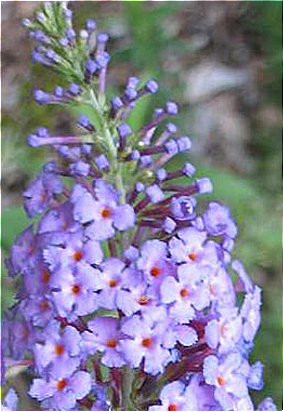
Buddleja davidii is characterized by its vibrant, fragrant flowers which are typically purple, pink, or white. The plant has a distinctive appearance with lance-shaped leaves and a shrub-like growth habit. The extract of the plant is usually a dark or deep-colored liquid, with a vegetal aroma.
Production Process
The production process for Buddleja davidii involves several key steps:
- Cultivation and Harvesting: Buddleja davidii is grown in suitable climates and harvested when the plant is in full bloom to maximize the concentration of bioactive compounds.
- Preparation: The plant material is cleaned and prepared for extraction, removing any debris or contaminants.
- Solvent Extraction: The plant material is soaked in solvents like alcohol or water to extract the active compounds. This method yields a concentrated extract.
- Ultrasound or CO2 Supercritical Extraction: Advanced extraction methods such as ultrasound-assisted extraction or supercritical CO2 extraction may be used to enhance the efficiency and quality of the extract.
- Purification: The extracted solution is purified to remove impurities and obtain a high-quality extract. This may involve filtration and concentration processes.
- Formulation: The purified extract is incorporated into various products, including cosmetics, pharmaceuticals, and personal care items. It is combined with other ingredients to optimize its effectiveness.
- Quality Control: The final product undergoes rigorous quality control to ensure it meets safety, efficacy, and performance standards. This includes checks on purity, stability, and compatibility with other ingredients.
- Storage: The extract is stored in airtight containers, protected from light, moisture, and heat, to maintain its stability and effectiveness.
Applications
Medical: Buddleja davidii has been used in traditional medicine for its anti-inflammatory and antioxidant properties (1). It may be employed in treatments for inflammatory conditions and to support skin health.
Cosmetic: In cosmetics, Buddleja davidii is valued for its soothing, antioxidant, and conditioning effects. It is used in products like creams, lotions, serums, and masks to enhance skin health and protect against environmental damage.
Other: The plant and its extracts can also be used in other personal care products and potentially in other therapeutic applications.
Cosmetics - INCI Functions
Skin conditioning agent. It is the mainstay of topical skin treatment as it has the function of restoring, increasing or improving skin tolerance to external factors, including melanocyte tolerance. The most important function of the conditioning agent is to prevent skin dehydration, but the subject is rather complex and involves emollients and humectants that can be added in the formulation.
Environmental and Safety Considerations
Buddleja davidii is generally considered safe for use in cosmetics and pharmaceuticals when used according to recommended guidelines. It is a natural ingredient with a low risk of irritation or allergic reactions. Environmentally, the cultivation of Buddleja davidii is relatively sustainable, but responsible agricultural practices should be followed to minimize environmental impact.

