



Olive oil polyglyceryl-4 esters: properties, uses, pros, cons, safety
Olive oil polyglyceryl-4 esters is a chemical compound, an emulsifier derived from olive oil and polyglycerol. These esters are used in various formulations to improve the texture, stability, and sensory properties of products.
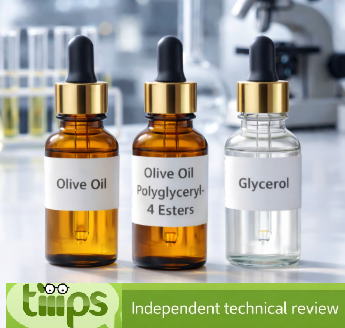
Chemical Composition and Structure
Olive oil polyglyceryl-4 esters are composed of olive oil fatty acids esterified with polyglycerol (specifically, polyglycerol-4). The structure includes a glycerol backbone with multiple glycerol units linked by ester bonds to fatty acids from olive oil. This structure contributes to the emulsifying properties of the esters, allowing them to stabilize oil-in-water and water-in-oil emulsions.
Physical Properties
The esters typically appear as a clear to slightly yellow liquid or a solid, depending on the formulation and concentration. They are soluble in oil and can be emulsified in water, providing a smooth and silky texture to formulations. The esters have a mild, neutral odor, and are non-irritating to the skin.
Production Process
The production of olive oil polyglyceryl-4 esters involves the following key steps:
- Synthesis Olive oil fatty acids are reacted with polyglycerol in a controlled chemical process. The reaction typically occurs in the presence of a catalyst under specific temperature and pressure conditions to form the ester bonds between the fatty acids and the polyglycerol.
- Purification The reaction mixture is then purified to remove any residual reactants, catalysts, and by-products. This step may involve filtration, washing, and other purification techniques to ensure a high-purity final product.
- Formulation The purified esters are incorporated into various formulations. They may be combined with other ingredients to create emulsions, creams, lotions, and other cosmetic or pharmaceutical products.
- Quality Control The final product undergoes quality control testing to ensure it meets safety, efficacy, and performance standards. This includes checking for consistency, stability, and compatibility with other ingredients.
- Storage The esters are stored in airtight containers, protected from light, moisture, and heat, to maintain their stability and effectiveness.
Applications
Medical Olive oil polyglyceryl-4 esters may be used in pharmaceutical formulations as emulsifiers to improve the stability and delivery of active ingredients. They are also used in topical treatments to enhance skin feel and moisturizing properties.
Cosmetics In cosmetic formulations, these esters are valued for their emulsifying and skin-conditioning properties. They are commonly used in creams, lotions, and serums to stabilize emulsions, provide a smooth application, and improve skin texture.
Others The esters can be incorporated into various personal care products, including sunscreens, shampoos, and conditioners, to enhance their performance and user experience.
Cosmetics - INCI Functions
- Surfactant - Cleansing agent. Cosmetic products used to cleanse the skin utilise the surface-active action that produces a lowering of the surface tension of the stratum corneum, facilitating the removal of dirt and impurities.
Environmental and Safety Considerations
Olive oil polyglyceryl-4 esters are generally considered safe for use in cosmetics and pharmaceuticals when used according to recommended guidelines. They are biodegradable and derived from renewable sources, contributing to their favorable environmental profile. However, it is important to ensure that the production process follows sustainable practices to minimize ecological impact. Safety considerations include monitoring for potential allergic reactions or sensitivities in some individuals.

