



Betula platyphylla japonica bark extract: properties, uses, pros, cons, safety
(Betula platyphylla var. japonica; Betulaceae)
Betula platyphylla japonica bark extract is an extract obtained from the bark of Japanese white birch (Asian/Japanese white birch). In cosmetics it is used mainly as a skin conditioning ingredient, typically in face/body products and, in some cases, in formulas positioned for skin comfort and sensorial stability.
Synonyms: Japanese white birch bark extract; Asian white birch bark extract (descriptive).
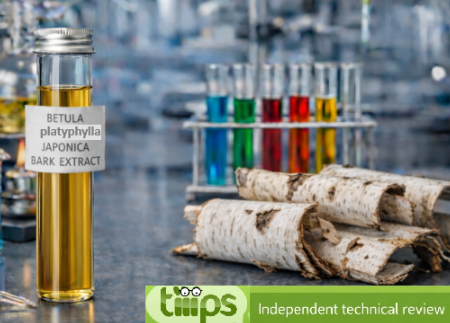
Definition
Betula platyphylla japonica bark extract is defined as an extract (typically a solvent extract) obtained from the bark of Betula platyphylla var. japonica (family Betulaceae). It is not a single chemical substance but a mixture/UVCB: composition depends on the raw material, season, extraction process, solvent system, purification level, and the supplier’s standardization approach.
From a technical formulation standpoint, the extract is selected and qualified primarily through functional specifications (compatibility, stability, repeatability, organoleptic profile) rather than through a unique chemical “formula.” In literature focused on the bark of Betula platyphylla var. japonica, constituent families typical of birch bark (notably triterpenes) are reported and may support a cosmetic “conditioning” rationale and, in preclinical contexts, biological interest; however, these elements do not replace finished-product safety assessment and do not imply automatic claims.
Chemical Composition and Structure
As a bark extract, it may contain fractions typical of birch bark. In literature, for Betula platyphylla var. japonica bark and for birch bark in general, triterpenes such as betulin and other triterpenes (with possible presence of lupeol and betulinic acid in triterpene-oriented extracts) are frequently cited, along with phenolic fractions depending on the solvent system and extraction profile. The actual composition of a commercial grade must be evaluated via the supplier’s technical sheet and analytical controls.
Betula Platyphylla Japonica Bark Extract contains a variety of bioactive compounds, including triterpenes, flavonoids, and polyphenols. These compounds contribute to its beneficial effects on the skin, such as anti-inflammatory, soothing, and antioxidant activities. The specific composition can vary depending on the extraction method used, but it generally includes:
Triterpenes: Known for their anti-inflammatory and soothing properties.
Flavonoids: Known for their antioxidant and skin-protecting effects.
Polyphenols: Contribute to the extract's ability to neutralize free radicals and protect the skin from oxidative stress.
Physical Properties
Betula Platyphylla Japonica Bark Extract typically appears as a clear to slightly yellow liquid or a fine powder, depending on the form in which it is processed. It is soluble in water and can be easily incorporated into various cosmetic formulations.
Main uses
Cosmetic and Personal Care Applications
INCI Functions
Skin conditioning agent. It is the mainstay of topical skin treatment as it has the function of restoring, increasing or improving skin tolerance to external factors, including melanocyte tolerance. The most important function of the conditioning agent is to prevent skin dehydration, but the subject is rather complex and involves emollients and humectants that can be added in the formulation.
CAS: 223748-09-2
Anti-Inflammatory: Betula Platyphylla Japonica Bark Extract is widely used in skincare products for its anti-inflammatory properties. It helps to soothe irritated and inflamed skin, making it ideal for sensitive skin types.
Soothing: The extract's soothing properties make it beneficial for calming and comforting the skin. It is often included in products designed to reduce redness and irritation.
Antioxidant: Rich in antioxidants, Betula Platyphylla Japonica Bark Extract helps to protect the skin from environmental stressors and free radical damage, which can lead to premature aging. It is frequently used in anti-aging formulations to help maintain youthful, healthy skin.
Moisturizers and Creams: The extract is included in moisturizers and creams to enhance their soothing and protective effects. It helps to maintain the skin's moisture balance and improve its barrier function.
Sunscreen and After-Sun Care: Due to its soothing and antioxidant properties, Betula Platyphylla Japonica Bark Extract is also used in sunscreen and after-sun care products to provide additional protection and comfort to the skin.
Serums and Essences: In serums and essences, Betula Platyphylla Japonica Bark Extract acts as a potent active ingredient, delivering concentrated benefits to the skin. It enhances the overall effectiveness of these products by providing soothing and antioxidant protection.
Identification data and specifications
| Characteristic | Value |
|---|---|
| INCI name | betula platyphylla japonica bark extract |
| Common name | Japanese white birch bark extract |
| Botanical source | Betula platyphylla var. japonica |
| Botanical family | Betulaceae |
| CAS number | 223748-09-2 |
| EC/EINECS number | not available/Not uniquely assigned for this INCI (often not reported for specific UVCB extracts) |
| CosIng reference (indicative) | 54759 |
| Molecular formula | not applicable (mixture/UVCB) |
| Molecular weight | not applicable as a single value (mixture/UVCB) |
| Typical preparation type | extract (solvent extract) |
| Typical commercial form | solution (water/alcohol/glycols) or powder (carrier-dependent) |
Physico-chemical properties (indicative)
| Characteristic | Value | Note |
|---|---|---|
| Chemical nature | mixture/UVCB | variable composition, process-dependent |
| Water solubility | variable | depends on carrier and grade |
| Alcohol/glycol solubility | often good | typical for hydroalcoholic/glycolic extracts |
| Color/odor | variable | influenced by raw material and deodorization/purification |
| Oxygen/light stability | variable | some fractions may oxidize; barrier packaging helps |
| Process thermal stability | moderate | avoid prolonged stress if preserving organoleptics is critical |
| Critical parameters | markers (if any), microbiology, solvent residues, metals | define quality and repeatability |
Functional role and practical mechanism of action
In cosmetics, the main role is skin conditioning, i.e., contributing to keeping skin in good condition. Operationally, perceived effect depends on extract type (carrier and concentration), compatibility with the base (emulsion/gel/surfactant system), and packaging stability. In formulas seeking botanical cues, it may support narrative and texture, but performance must be assessed in the context of the finished product and its cosmetic evaluation.
Formulation compatibility
Compatibility depends strongly on the carrier: hydro-glycolic/hydroalcoholic extracts typically integrate more easily into aqueous bases, while more resinous or concentrated extracts may require solubilization or pre-dilution. Practical aspects to control include haze/precipitation, color/odor drift over time, viscosity and emulsion stability impact, and preservative compatibility (pH and organic load).
Use guidelines (indicative)
Use levels are grade- and project-dependent; in practice, low ranges are common and optimization is performed through stability testing (heat/cool, centrifugation, packaging compatibility) and sensorial trials. Supplier documentation is essential (technical data sheet, SDS, statements on allergens/residual solvents, microbiology) and must be integrated into the finished-product safety assessment.
Quality, grades, and specifications
Key quality drivers include botanical traceability, extraction-process control, contaminant and residual-solvent limits, microbiological specifications, and batch-to-batch repeatability (color/odor and performance). If the grade is standardized on markers, assay consistency is a key control point. Implementation of GMP (good manufacturing practice; benefit: reduces variability and contamination) supports supply-chain robustness for botanical extracts.
Safety, regulatory, and environment
Betula Platyphylla Japonica Bark Extract is generally considered safe for use in cosmetic and personal care products. It is non-irritating and suitable for all skin types, including sensitive skin. As a natural ingredient, it is biodegradable and poses minimal risk to the environment when disposed of properly. However, it is important to use it within the recommended guidelines to ensure product safety and efficacy.
As a cosmetic ingredient, safety is assessed on the finished product depending on concentration, application area, and user population. For botanical/UVCB extracts, practical watchpoints include grade quality and purity (residual solvents, contaminants), stability (oxidation and organoleptic drift), and management of potential sensitization/irritation linked to the overall mixture. In the EU, database functional framing is typically skin conditioning; regulatory compliance requires documentation and a safety assessment consistent with applicable cosmetic legislation.
Formulation troubleshooting
Haze or precipitation in emulsions/gels.
Typical cause: carrier incompatibility or presence of poorly soluble fractions. Action: pre-dilution, selection of a more compatible grade (different carrier), optimization of solubilization system and pH.
Color/odor drift over shelf-life.
Typical cause: oxidation of sensitive fractions or batch variability. Action: more barrier-type packaging, a compatible antioxidant strategy, supplier qualification, and tighter specifications.
Conclusion
Betula platyphylla japonica bark extract is a Japanese white birch bark extract used primarily as a skin conditioning ingredient. Its technical management focuses on grade selection (carrier and standardization), formulation compatibility and stability (color/odor), microbiological quality, and compliance documentation. In cosmetic projects, robustness typically comes more from proper grade qualification and finished-product stability testing than from a single, unique chemical “formula,” as is typical for UVCB materials.
Mini-glossary
UVCB: substances of unknown or variable composition, complex reaction products, or biological materials.
Standardization: controlling/adjusting parameters (e.g., markers) to ensure batch-to-batch repeatability.
GMP: good manufacturing practice; benefit: improves quality control and reduces contamination/variability.

