



Chromium Hydroxide also known as chromium (III) hydroxide, is chemically classified as an inorganic colorant. This pigment is widely used in various industrial and cosmetic applications due to its distinctive color properties and chemical stability.
Chemical Name
Chromium (III) hydroxide
chromium(3+);oxygen(2-);dihydrate
Chemical Composition and Structure
Chromium Hydroxide is an inorganic compound with the chemical formula Cr(OH)3. It consists of chromium (Cr) and hydroxide (OH) ions, forming chromium (III) hydroxide. This compound is characterized by its green color, which is derived from the trivalent chromium ions in the hydroxide matrix.
Physical Properties
This pigment typically appears as a fine green powder. It has a high density and good covering power. Chromium Hydroxide is known for its chemical stability and resistance to light and heat, making it suitable for long-lasting applications. Its hydroxide structure provides the pigment with specific properties that enhance its performance in various uses.
Chemical Industrial Synthesis Process
- Preparation of reagents. The main raw materials include chromium (III) sulfate (Cr₂(SO₄)₃) and sodium hydroxide (NaOH).
- Synthesis of chromium (III) hydroxide. The production of Chromium Hydroxide begins with the reaction between chromium (III) sulfate and sodium hydroxide in an aqueous solution. This reaction forms a precipitate of chromium (III) hydroxide.
- Filtration. The resulting suspension is filtered to separate the solid chromium (III) hydroxide from the aqueous solution.
- Washing. The chromium (III) hydroxide is washed with deionized water to remove any soluble impurities such as sodium sulfate.
- Drying. The washed chromium (III) hydroxide is dried at controlled temperatures to remove residual moisture and obtain a dry powder.
- Grinding. The dried chromium (III) hydroxide is ground to obtain a fine and uniform powder. This step may involve the use of ball mills or other grinding machinery.
- Classification. The dried powder is classified to ensure a uniform particle size. This step may involve sieving or the use of air classifiers.
- Stabilization. The Chromium Hydroxide powder is stabilized to ensure its stability during transportation and storage, preventing aggregation and degradation.
- Quality control. The Chromium Hydroxide undergoes rigorous quality testing to ensure it meets standards for purity, color intensity, and safety. These tests include chemical analysis, spectroscopy, and physical tests to determine particle size and rheological properties.
What it is used for and where
Cosmetics
Restricted cosmetic ingredient as IV/130 a Relevant Item in the Annexes of the European Cosmetics Regulation 1223/2009. Substance or ingredient reported:
- Chromium (III) hydroxide
Cosmetics - INCI Functions
Colorant. This ingredient has the function of colouring the solution in which it is inserted in a temporary, semi-permanent or permanent manner, either alone or in the presence of the complementary components added for colouring.
Chromium Hydroxide is used in cosmetic products such as eyeshadows, eyeliners, and nail polishes due to its green color and opacity.
Industrial Applications
Paints and Coatings: In the paint industry, chromium (III) hydroxide is used to achieve green shades and enhance the stability of paints. Its stability makes it ideal for both decorative and protective coatings.
Plastics and Polymers: This pigment is employed in the production of plastics and polymers to improve color uniformity and resistance to degradation from UV light and heat.
Ceramics and Glass: Chromium Hydroxide is used in the production of ceramics and glass to achieve stable green colors. It is particularly valued for its resistance to high-temperature processes.
Inks: The pigment is also used in printing inks to produce vibrant and durable green colors, ensuring high-quality prints.
Safety
Chromium Hydroxide is mentioned in some studies as a dye with contraindications (1) and, in general, chromium is a heavy metal that can create toxicity to the environment (2)
Chromium Hydroxide is generally considered safe for use in consumer products when handled according to proper safety procedures. It is important to avoid inhalation of the powder and minimize direct contact with skin and eyes. Although chromium (III) hydroxide is less toxic than other chromium compounds, environmental considerations include controlling emissions during production and ensuring proper waste disposal.
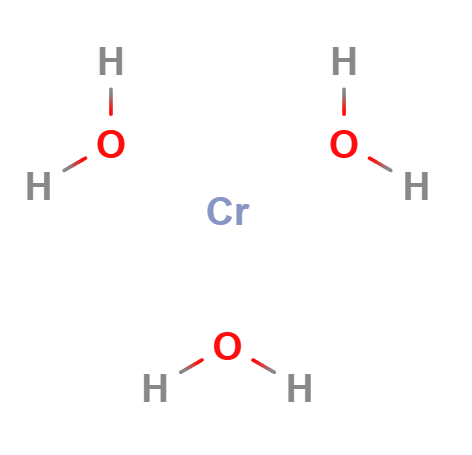 | 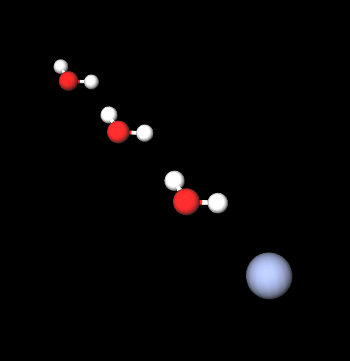 |
Molecular Formula Cr(OH)3
Molecular Weight 106.042 g/mol
CAS 1308-14-1 12001-99-9
EC number 215-158-8
UNII RV8FT8XF5R
DTXSID70894251
Synonyms:
Pigment Green 18
Chromium Hydroxide
Hydrated chromium sesquioxide
CI 77289

