RECENSIONE
Recensione

Al222 (25419 pt) • 09-May-2024 13:41
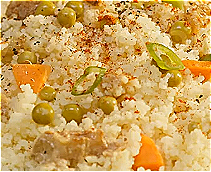
Il grano bulgur è una forma di grano che è stata parzialmente cotta e poi essiccata, lasciando i chicchi interi. I chicchi di grano vengono poi spezzati o lasciati interi, a seconda del grado di macinazione, e sono una base importante nelle cucine del Medio Oriente, del Mediterraneo e di altri luoghi. È noto per essere un alimento versatile e nutriente, ricco di fibre, proteine e vitamine essenziali.
Profilo Nutrizionale (per 100 grammi):
- Calorie Circa 342 kcal.
- Proteine Circa 12,3 grammi, fornendo una buona fonte di proteine vegetali.
- Grassi Circa 1,3 grammi, con un basso contenuto di grassi.
- Carboidrati Circa 76 grammi, principalmente amidi.
- Fibre Circa 18 grammi, contribuendo significativamente alla salute digestiva.
- Vitamine e Minerali Ricco di vitamine del gruppo B come niacina e folati, oltre a manganese, magnesio, ferro e fosforo.
Il grano bulgur è apprezzato per la sua facilità di cottura e per il suo sapore leggermente nocciolato. È un alimento fondamentale per le insalate come il tabbouleh, le zuppe, i pilaf e altri piatti, ed è particolarmente apprezzato per i suoi benefici per la salute, inclusa la capacità di aiutare nella gestione del peso e nel supporto della salute cardiovascolare.
Considerazioni
Uso in cucina Versatile e rapido da preparare, può essere utilizzato in insalate, come il tabbouleh, in zuppe, stufati, o come base per piatti caldi e freddi.
Benefici. Supporta la digestione, la salute cardiovascolare e aiuta nella gestione del peso grazie all'elevato contenuto di fibre ed ai composti fenolici (2).
Conservazione Conservare in un contenitore ermetico in un luogo fresco e asciutto per preservare la freschezza e la qualità.
Bibliografia_____________________________________________________________________
(1) Dorra ST, Farah D, Nesrine H, Wafa A, Youkabed Z. Drying Behavior of Bulgur and Its Effect on Phytochemical Content. Foods. 2022 Apr 6;11(7):1062. doi: 10.3390/foods11071062. PMID: 35407147; PMCID: PMC8997585.
Abstract. The objective of this study was to determine the influence of two types of dryers (hot air oven and vacuum dryer) and the yellow berry percentage (1.75%, 36.25%, 43.25%) on the drying process and phytochemical content of bulgur. Results showed that the Midilli model successfully described the moisture diffusion during drying at 60 °C in all bulgur samples, where an increase in yellow berry percentage generated an increase in moisture content. Effective diffusion coefficient (Deff) increased significantly (p ≤ 0.05) from 7.05 × 10⁻¹¹ to 7.82 × 10⁻¹¹ (m2.s-1) and from 7.73 × 10⁻¹¹ to 7.82 × 10⁻¹¹ (m2.s-1) for the hot air oven and vacuum dryer, respectively. However, it decreased significantly with a decrease of yellow berry percentage. It was concluded that the vacuum dryer provided faster and more effective drying than the hot air oven. Total polyphenol (TPC), total flavonoid (TFC), and yellow pigment contents (YPC) of bulgur were investigated. TPC ranged between 0.54 and 0.64 (mg GAE/g dm); TFC varied from 0.48 to 0.61 (mg QE/g dm). The YPC was found to be between 0.066 and 0.079 (mg ß-carotene/100g dm). Yellow berry percentage positively and significantly affected the TPC, TFC, and YPC contents due to the hard separation of the outer layers from the starchy grain during the debranning step.
(2) Tacer Caba Z, Boyacioglu MH, Boyacioglu D. Bioactive healthy components of bulgur. Int J Food Sci Nutr. 2012 Mar;63(2):250-6. doi: 10.3109/09637486.2011.639748.
Abstract. Bulgur has been one of the most important traditional Durum wheat products in Turkey and Middle Eastern countries for ages. The objective of this study was to reveal the composition of some healthy components of industrial bulgur samples produced in Turkey. Total starch, resistant starch, dietary fibre and total phenolic contents and their high-performance liquid chromatography (HPLC) profile and antioxidant capacity of bulgur samples using 2,2-diphenyl-1-picrylhydrazyl (DPPH) and 2,2'-azino-bis(3-ethylbenzthiazoline-6-sulphonic acid (ABTS) radical scavenging activity methods were investigated. The results showed that total dietary fibre ranged between 5.8 ± 0.7 and 8.2 ± 0.7% and resistant starch between 2.1 ± 0.2 and 2.8 ± 0.2%. Moreover, phenolic content with an average of 59.5 ± 5.2 mg Gallic acid/100 g dry matter and a moderate level of antioxidant capacity with an average of 22.2 ± 2.4% DPPH scavenging activity and 563.3 ± 60.7 μmol Trolox Equivalent Antioxidant Capacity/100 g dry matter of ABTS scavenging activity add value to the health benefits of bulgur product.




