



Beets powder is made by drying and grinding red beets. This superfood is nutrient-rich, known for its high content of nitrates, fiber, vitamins, and minerals. It is commonly used in cooking to add color and flavor to dishes, as well as for its health benefits, including improved blood circulation and enhanced physical performance.
Nutritional Profile (per 100 grams):
- Calories Approximately 354 kcal.
- Protein About 10 grams.
- Fat About 0.2 grams.
- Carbohydrates About 75 grams.
- Fiber About 8 grams.
- Vitamins and Minerals Rich in potassium, magnesium, and iron. It also contains B vitamins, vitamin C, and antioxidants such as betalains, which give beets their characteristic red color.
Industrial Production Process
The production of beet powder involves processing fresh beets to create a versatile and nutrient-rich powder that is widely used in culinary applications, natural food coloring, and dietary supplements. The process retains the health benefits of beets, such as their high fiber, vitamin, and mineral content.
- Beet selection and cleaning. Beets are carefully selected and cleaned to remove soil and other impurities.
- Cutting. The cleaned beets are cut into uniform pieces to ensure even drying.
- Blanching (optional). The beets may be briefly blanched to preserve color and reduce enzymatic activity that might degrade the product during drying.
- Drying. The cut beets are dried using hot air dryers or ovens until they reach very low moisture content.
- Grinding. The dried beets are then ground into a fine powder.
- Sifting. The powder is sifted to remove any clumps and ensure uniform particle size.
- Packaging. Finally, the beet powder is packaged in airtight containers to maintain freshness and protect it from moisture and oxygen.
Considerations
Beet powder is valued not only for its nutritional value but also for its anti-inflammatory properties and support for detoxification. It is a popular addition to smoothies, juices, and in the preparation of functional foods.
Culinary Use Ideal for naturally coloring foods and drinks without the use of artificial dyes. Adds an earthy and sweet flavor to desserts and savory dishes.
Health Benefits Helps improve blood oxygenation during physical activity and may reduce blood pressure.
Storage Should be stored in an airtight container in a cool, dry place to preserve its nutritional qualities and color.
Beetroot or sugar beet or red beet (Beta vulgaris L.) belongs to the Chenopodiaceae family. It can be sown from March to July. The plant is about 30 cm high. and 15 cm wide. It is used for animal feed, but also in the kitchen.
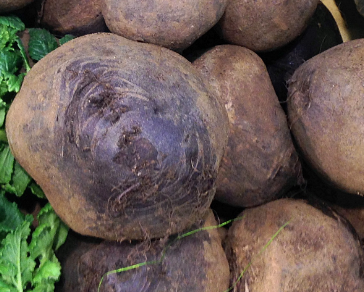
It grows in temperate climates and supplies about 20% of the world sugar production in the world (1).
The plant is very sensitive to water and needs, for its complete development and correct maturation, some biostimulant supports to speed up growth. Chlorella vulgaris and Scenedesmus quadricauda have demonstrated biological activities compatible with Beta vulgaris in the early stages of growth.
The red beet has a good content of polyphenols, the leaves and the juice of the stem have been shown to reduce high density lipoprotein cholesterol (2).
From sugar beet is obtained pectin that has a beneficial impact on the microbiota in vivo in humans as a beneficial modulation of the intestinal microbiota (3).

