



Milk whey
(liquid whey from cow’s milk; sweet whey or acid whey, dairy food ingredient)
Description
Milk whey is the liquid fraction that separates from milk during cheese or casein production. It contains most of the lactose, a portion of whey proteins, minerals and water-soluble vitamins.
Appearance: pale yellow to light greenish liquid, turbid or slightly opalescent, with a mild, milky flavour that is slightly sweet (sweet whey, from rennet coagulation) or more tangy/sour (acid whey, from acid coagulation).
It can be used as is (whey drinks), concentrated, fermented, or further processed into whey powder, whey protein concentrates (WPC) and other ingredients.
Indicative nutritional values (per 100 g liquid product)
(Average values for cow’s milk sweet/acid whey)
Energy: 24–30 kcal
Water: 93–94 g
Protein: 0.7–1.0 g
Total fat: 0.1–0.4 g
First occurrence: SFA/MUFA/PUFA = saturated/mono-/polyunsaturated fatty acids; in liquid whey total fat is very low and consists mainly of saturated milk fat with small amounts of mono- and polyunsaturated fats. The impact on total dietary fat is minimal, but in general it remains advisable to keep overall saturated fat intake moderate in the diet.
Total carbohydrates: 5.0–5.5 g
of which lactose: ≈ 5 g
Dietary fibre: 0 g
Ash (minerals): 0.5–0.7 g
Calcium: ≈ 100 mg
Phosphorus: ≈ 75–80 mg
Potassium: ≈ 140–150 mg
Sodium: ≈ 45–50 mg
Values vary with milk quality, cheesemaking technology and whether whey is sweet or acid.
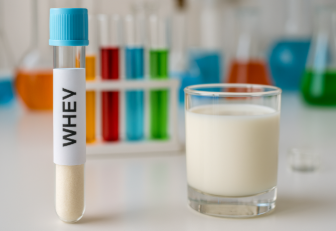
Some products:
- Concentrated serum protein. Retried (WPC, WPI)
- Lactosis used in pediatrics and as a prebiotic.
- Salt
- Demineralized serum used in pediatrics
- Serum protein (WPI) isolates used for sports or clinical nutrition
In the United States, whey and its derivatives are also highly valued in the food industry, particularly for their nutritional and sports benefits. Whey is the liquid remaining after milk has been curdled and strained during cheese production. This byproduct is rich in high-biological-value proteins, vitamins, minerals, and immunoglobulins, making it a popular dietary supplement, especially among athletes and those looking to increase their protein intake.
Whey derivatives include whey protein concentrate, whey protein isolate, and whey protein hydrolysate. These derivatives differ in protein content, absorption, and digestibility and are widely used in various products, from dietary supplements to meal replacements, protein shakes, and functional foods.
In the United States, the safety and marketing of whey and its derivatives are regulated by the Food and Drug Administration (FDA). Regulations ensure food quality and safety, including clear labeling of ingredients and nutritional information and verification of the absence of harmful substances.
The trend toward more natural and less processed food products has also affected the whey market, with increasing demand for products derived from non-denatured whey or processed in a way that preserves its nutritional and functional qualities. Additionally, whey is valued for its reduced environmental impact compared to other protein sources, contributing to sustainability in the food sector.
The most recent scientific literature has re-evaluated whey proteins and confirmed that they have antioxidant properties (1).
Key constituents
Whey proteins (globular proteins): β-lactoglobulin, α-lactalbumin, serum albumin, immunoglobulins, traces of lactoferrin; these have high biological value, although the absolute amount per 100 g of liquid whey is modest.
Lactose: the main carbohydrate, responsible for sweetness, a fermentation substrate for lactic acid bacteria and a key participant in Maillard reactions when whey is concentrated or dried.
Milk salts (minerals): calcium, phosphorus (mainly phosphates), potassium, sodium, magnesium; they provide buffering capacity and influence ionic strength and functionality.
Water-soluble vitamins: mainly B-group vitamins (riboflavin, pantothenic acid, B₆, small amounts of B₁₂) and traces of vitamin C.
Lipids: only traces of milk fat (small droplets and fragments of milk fat globule membrane).
Production process
Coagulation of milk:
Sweet whey: from rennet coagulation for cheese (hard/semi-hard cheeses), pH ~6.0–6.6.
Acid whey: from acid coagulation for fresh cheeses or casein, pH ~4.5–5.0.
Separation: curd (solid phase) is separated from whey by cutting, draining and pressing/spurge.
Clarification: whey passes through centrifuges and filters to remove residual fat, fines of curd and coarse particles.
Cooling: rapid cooling to typically ≤ 6–8 °C to limit microbial growth and enzymatic activity.
Downstream use:
direct use as liquid ingredient (whey drinks, base for ricotta);
concentration and drying to whey powder;
membrane filtration (ultrafiltration) to obtain WPC/WPI;
fermentation to produce whey-based beverages or other fermented products.
Physical properties
Physical state: low-viscosity liquid.
Colour: pale yellow to light green, influenced by riboflavin content and type of whey.
pH:
sweet whey: ≈ 6.0–6.6;
acid whey: ≈ 4.5–5.0.
Density: slightly below that of milk (≈ 1.02–1.03 g/mL).
Very high water activity (aw ≈ 1) → high microbial perishability.
Sensory and technological properties
Flavour: mild dairy flavour, sometimes with “cooked/caramelised” notes if heat treated; acid whey has a more fresh, tart profile.
Taste: light sweetness from lactose, with variable acidity; overall sweet–acid–salty balance depends on cheese type, thermal treatment and concentration.
Technological functionality:
provides milk solids (lactose + minerals + proteins) at relatively low cost;
enhances body and mouthfeel in dairy beverages and desserts;
acts as a good fermentation medium for lactic cultures in whey-based drinks and fermented products;
when concentrated or dried, contributes to browning and flavour development during heating via Maillard reactions.
Food applications
Direct and fermented use:
whey drinks, sometimes flavoured and sweetened;
bases for fermented whey beverages combined with fruit juices, herbs or flavours.
Dairy:
production of ricotta (heat–acid coagulation of whey proteins);
addition to yogurts, fermented milks, ice creams and creamy desserts to adjust solids content and texture.
Bakery and snacks:
replacement of part of water or milk in bread, focaccia, cakes, biscuits;
improves softness, crust colour and dairy notes.
Intermediate ingredient:
liquid feedstock for whey powder, whey protein ingredients and other functional dairy derivatives;
sometimes used in feed where permitted, as a source of energy and protein.
Nutrition & health
Milk whey is a low-energy, low-fat liquid with meaningful amounts of lactose and minerals.
Whey proteins, although present at relatively low concentration in liquid whey, have high biological value, are rich in BCAA and sulphur amino acids, and can support protein synthesis and metabolic functions when consumed in adequate amounts.
Provides useful levels of calcium, phosphorus and potassium, which support bone health and muscle function as part of a balanced diet.
Fat content is very low; the small amount present is mostly saturated milk fat but contributes negligibly to daily fat intake.
May be unsuitable or must be consumed with caution by:
individuals with cow’s milk protein allergy;
individuals with lactose intolerance, especially at higher intakes.
Serving note: a typical serving as a drink is 200–250 g (one glass), providing roughly 50–70 kcal, 10–14 g lactose, less than 2–2.5 g protein, and useful amounts of minerals.
Allergens and intolerances
Milk whey is a milk-derived product and therefore a major allergen.
Contains whey proteins that can trigger reactions in people with cow’s milk protein allergy.
High lactose content:
can cause bloating, cramps and diarrhoea in lactose-intolerant individuals, especially at typical drink portions;
lactose-free whey products are obtained by enzymatic hydrolysis or membrane processes, but these do not remove protein allergens.
May contain traces of casein and other milk proteins, depending on cheesemaking conditions.
Quality and specifications (typical themes)
Chemical/physical:
total solids, protein, lactose and ash within specification;
pH and titratable acidity (e.g. °SH/°Dornic) monitored;
residual fat content controlled (usually fractions of a percent).
Microbiology:
low total bacterial count (especially if whey is pasteurised);
limits for coliforms, yeasts and moulds;
absence of pathogens (e.g. Salmonella in 25 g, Listeria monocytogenes in RTE products).
Contaminants:
veterinary drug residues and cleaning agents below legal limits;
heavy metals controlled;
very low foreign matter, ensured by filtration and separation.
Storage and shelf-life
Liquid whey is highly perishable due to its high aw and nutrient content.
Raw whey: should be chilled quickly to ≤ 6–8 °C and used or processed within hours to about one day, depending on initial microbial load.
Pasteurised whey:
stored at 0–4 °C;
shelf-life 2–5 days for direct food use, depending on process and packaging.
For packed whey beverages:
follow the label shelf-life (from several days for fresh products to weeks/months if pasteurised/sterilised);
avoid breaks in the cold chain.
Safety and regulatory
Covered by general regulations for milk and dairy products: hygiene requirements for milk collection, cheesemaking, whey handling and further processing.
Produced under GMP/HACCP, with control of:
processing and storage temperatures;
microbial loads;
heat treatments (pasteurisation/sterilisation) where applicable.
Mandatory clear indication of the “milk” allergen on labels when whey is used as an ingredient.
For whey intended for further transformation (powders, WPC/WPI), additional safety and quality requirements apply for filtration and drying plants.
Labeling
Typical ingredient declarations:
“whey”, “milk whey”;
where relevant: “sweet whey” or “acid whey”;
“milk (whey)” in multi-species products for clarity.
The allergen milk must be clearly highlighted according to local legislation.
Whey-based beverages may be labelled as “whey drink” or “whey-based beverage” with appropriate qualifiers, as defined in national regulations.
Troubleshooting
Sharp sour or unpleasant odour
Cause: microbial proliferation or excessive acidification due to prolonged storage or incorrect temperature.
Action: discard the lot; review time–temperature control and plant hygiene.
Unwanted flocculation/coagulation
Cause: pH too low, thermal shock, mixing with incompatible ingredients.
Action: control pH, stabilisers, mixing and heat-treatment conditions.
Sediment and phase separation
Cause: precipitation of proteins or salts, long storage times.
Action: gentle agitation before use; reformulate; add clarification or filtration steps.
Excess foaming in tanks or formulations
Cause: aeration, high agitation speed, surface-active whey proteins.
Action: reduce turbulence, adjust tank design, use compatible antifoam where allowed.
Sustainability and supply chain
Historically, whey was a problematic effluent with high BOD/COD; today it is increasingly valorised as a feedstock for food ingredients, feeds and other products.
Converting whey into drinks, powders, WPC/WPI reduces the environmental burden of cheesemaking by turning a potential waste stream into value-added products.
Key environmental points:
optimising energy use in evaporators, membrane systems and dryers;
adequate treatment of non-valorised whey streams and cleaning waters, with BOD/COD reduction;
efficient packaging and logistics, and FIFO stock rotation to minimise waste and expired product.
Main INCI functions (cosmetics)
Related cosmetic ingredients:
Lactis Serum, Whey, Lactoserum, Whey Filtrate, etc.
Functions:
skin conditioning, humectant and sometimes “nutritive” component thanks to proteins and minerals;
used in skin and hair care products (lotions, masks) with a “natural” or “dairy-derived” positioning.
Cosmetic use requires cosmetic-grade whey with strict specifications for microbiology, endotoxins, residues and stability.
Conclusion
Milk whey is a low-calorie, low-fat liquid dairy matrix rich in lactose, minerals and high-quality whey proteins. Once considered a waste from cheesemaking, it is now a versatile resource for functional beverages, bakery products, desserts, concentrated ingredients and protein powders. Proper control of hygiene, temperature and holding time is essential to ensure quality and safety, while industrial valorisation of whey improves both the nutritional value of many foods and the overall sustainability of the dairy sector.
Mini-glossary
SFA/MUFA/PUFA – Saturated/monounsaturated/polyunsaturated fatty acids; in liquid whey overall fat is very low, but in general diets should keep total saturated fat intake moderate.
BV (biological value) – Measure of how efficiently a dietary protein can be used for body protein synthesis; whey proteins have high BV.
Sweet whey / acid whey – Whey from rennet coagulation (sweet, near-neutral pH) vs. whey from lactic/acid coagulation (more acidic pH).
GMP/HACCP – Good Manufacturing Practices / Hazard Analysis and Critical Control Points; core systems for hygienic, safe and traceable food production.
BOD/COD – Biochemical/Chemical Oxygen Demand; indicators of organic load in effluents, key for wastewater treatment design and monitoring.
FIFO – First In, First Out; stock rotation principle that ensures older batches are used before newer ones, reducing waste and expiry issues.

