Moringa Oleifera Leaf Extract is a product of natural origin that comes from the leaves of the Moringa Oleifera tree, Belonging to the botanical family Moringaceae, often referred to as the "drumstick tree" or "horseradish tree".
Composition. Moringa Oleifera leaf extract is rich in vitamins (A, C, E), minerals, essential amino acids, and antioxidants, making it a powerful ally for skin health.
Industrial Production Process
- Leaf Harvesting. Moringa Oleifera leaves are harvested from the plants, preferably at times of the day when the active ingredient content is highest.
- Cleaning. The collected leaves are cleaned to remove any impurities and residues.
- Steam Distillation. The cleaned leaves undergo steam distillation. In this process, steam passes through the leaves, capturing the volatile compounds and active ingredients.
- Condensation. The steam carrying the active compounds is then cooled in a condenser, where it returns to a liquid state. This liquid, known as hydrosol or botanical water, contains the water-soluble substances of the Moringa Oleifera leaves.
- Collection of Moringa Oleifera Water. The water obtained from condensation is collected. This water retains the beneficial properties of the leaves, including antioxidants and moisturizing components.
- Filtration and Purification. Moringa Oleifera water can be further filtered to remove any impurities and ensure the purity of the final product.
- Quality Control. Before bottling, Moringa Oleifera leaf water undergoes quality control checks to ensure its composition, purity, and the absence of contaminants. These tests can include microbiological and chemical analyses.
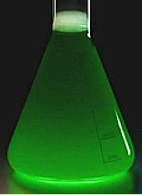
Moringa oleifera leaf water is typically a viscous liquid ranging in color from light brown to green.
What it is for and where
Medical
Traditionally, Moringa leaves and seeds have been used to treat edema, arthritis, epilepsy and other health problems.
Phytochemical analysis found beta-carotene, vitamin C, vitamin E, and polyphenols with antioxidant activity (1), lecithin with antibacterial activity (2), and the ethyl acetate fraction showed strong anti-inflammatory activity (3).
Cosmetics
Skin conditioning agent. It is the mainstay of topical skin treatment as it has the function of restoring, increasing or improving skin tolerance to external factors, including melanocyte tolerance. The most important function of the conditioning agent is to prevent skin dehydration, but the subject is rather complex and involves emollients and humectants that can be added in the formulation.
CAS 93165-54-9
EC number 296-941-1
Commercial Applications
Used in serums, creams, lotions, facial masks, and other skincare products, Moringa Oleifera leaf extract is valued for its ability to nourish and revitalize the skin.
Environmental Considerations
Sustainable use of Moringa Oleifera leaf extract requires attention to the cultivation and harvesting practices of the Moringa tree, promoting sustainability and environmental responsibility.
References_____________________________________________________________________
(1) Mahmood, K. T., Mugal, T., & Haq, I. U. (2010). Moringa oleifera: a natural gift-A review. Journal of Pharmaceutical Sciences and Research, 2(11), 775.
Abstract. Moringa oleifera, Lam {Syn M.pterygosperma Gaertn} usually mentioned in literature as Moringa, is a natural as well as cultivated variety of the genus Moringa belonging to family Moringaceae .It is one of the richest plant sources of Vitamins A ,B {1,2,3,6,7}, C,D,E and K. The vital minerals present in Moringa include Calcium, Copper, Iron, Potassium, Magnesium, Manganese and Zinc. It has more than 40 natural anti-oxidants. Moringahas been used since 150B.C. by ancient kings and queens in their diet for mental alertness and healthy skin. The leaves, pods, seeds, gums , bark and flowers of Moringa are used in more than 80 countries {including Pakistan} to relieve mineral and vitamin deficiencies, support a healthy cardiovascular system, promote normal blood-glucose levels, neutralize free radicals {thereby reducing malignancy}, provide excellent support of the body's anit-flammatory mechanisms, enrich anemic blood and support immune system. It also improveseyesight, mental alertness and bone strength. It has potential benefit in malnutrition, general weakness, lactatingmothers, menopause, depression and osteoporosis. It is also used to make an efficient fuel, fertilizer and livestock feed. Moringa is an edible extremely safe plant. Its tree could easily and cheaply be cultivated and grown in Pakistan.
(2) Moura MC, Napoleão TH, Coriolano MC, Paiva PM, Figueiredo RC, Coelho LC. Water-soluble Moringa oleifera lectin interferes with growth, survival and cell permeability of corrosive and pathogenic bacteria. J Appl Microbiol. 2015 Sep;119(3):666-76. doi: 10.1111/jam.12882.
(3) Arulselvan P, Tan WS, Gothai S, Muniandy K, Fakurazi S, Esa NM, Alarfaj AA, Kumar SS. Anti-Inflammatory Potential of Ethyl Acetate Fraction of Moringa oleifera in Downregulating the NF-κB Signaling Pathway in Lipopolysaccharide-Stimulated Macrophages. Molecules. 2016 Oct 31;21(11):1452. doi: 10.3390/molecules21111452.
Abstract. In the present investigation, we prepared four different solvent fractions (chloroform, hexane, butanol, and ethyl acetate) of Moringa oleifera extract to evaluate its anti-inflammatory potential and cellular mechanism of action in lipopolysaccharide (LPS)-induced RAW264.7 cells. Cell cytotoxicity assay suggested that the solvent fractions were not cytotoxic to macrophages at concentrations up to 200 µg/mL. The ethyl acetate fraction suppressed LPS-induced production of nitric oxide and proinflammatory cytokines in macrophages in a concentration-dependent manner and was more effective than the other fractions. Immunoblot observations revealed that the ethyl acetate fraction effectively inhibited the expression of inflammatory mediators including cyclooxygenase-2, inducible nitric oxide synthase, and nuclear factor (NF)-κB p65 through suppression of the NF-κB signaling pathway. Furthermore, it upregulated the expression of the inhibitor of κB (IκBα) and blocked the nuclear translocation of NF-κB. These findings indicated that the ethyl acetate fraction of M. oleifera exhibited potent anti-inflammatory activity in LPS-stimulated macrophages via suppression of the NF-κB signaling pathway.




