



Moringa Oleifera Leaf Powder is a product of natural origin that comes from the leaves of the Moringa Oleifera tree, belonging to the botanical family Moringaceae, often referred to as the "drumstick tree" or "horseradish tree".
Industrial Production Process
- Leaf Harvesting: Moringa Oleifera leaves are harvested from the plants, preferably in the morning to maximize nutrient preservation. Harvesting is done manually to preserve the integrity of the leaves.
- Washing: After harvesting, the leaves are washed with clean water to remove impurities and soil residues.
- Drying: The washed leaves are dried to reduce moisture content. Drying can occur in the shade or using controlled temperature dryers to best preserve the bioactive compounds.
- Grinding: The dried leaves are then ground into a fine powder. This process increases the contact surface, facilitating the powder's use in various food and cosmetic applications.
- Sifting: The leaf powder is sifted to ensure a uniform consistency and remove any unground leaf residues.
- Packaging: The Moringa Oleifera leaf powder is finally packaged in airtight containers to preserve its freshness and nutritional properties.
- Quality Control: Before packaging, the Moringa Oleifera leaf powder undergoes quality control checks to verify its purity, nutritional content, and the absence of contaminants. These tests can include microbiological and chemical analyses.
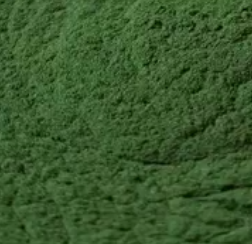
Moringa Oleifera leaf powder appears as a fine, dark green powder.
What it is for and where
Medical
Traditionally, Moringa leaves have been used to treat edema, arthritis, epilepsy and other health problems.
Phytochemical analysis found beta-carotene, vitamin C, vitamin E, and polyphenols with antioxidant activity (1), lecithin with antibacterial activity (2), and the ethyl acetate fraction showed strong anti-inflammatory activity (3).
Cosmetics
Antimicrobial agent. This ingredient is able to suppress or inhibit the growth and replication of a broad spectrum of microorganisms such as bacteria, fungi and viruses by making the stratum corneum temporarily bactericidal and fungicidal.
Antioxidant agent. Ingredient that counteracts oxidative stress and prevents cell damage. Free radicals, pathological inflammatory processes, reactive nitrogen species and reactive oxygen species are responsible for the ageing process and many diseases caused by oxidation.
Antiplaque agent. This ingredient has the property of preventing the onset of caries by fighting the bacteria responsible for acid corrosion of teeth.
Hair conditioning agent. A significant number of ingredients with specific and targeted purposes may co-exist in hair shampoo formulations: cleansers, conditioners, thickeners, matting agents, sequestering agents, fragrances, preservatives, special additives. However, the indispensable ingredients are the cleansers and conditioners as they are necessary and sufficient for hair cleansing and manageability. The others act as commercial and non-essential auxiliaries such as: appearance, fragrance, colouring, etc. Hair conditioning agents have the task of increasing shine, manageability and volume, and reducing static electricity, especially after treatments such as colouring, ironing, waving, drying and brushing. They are, in practice, dispersants that may contain cationic surfactants, thickeners, emollients, polymers. The typology of hair conditioning agents includes: intensive conditioners, instant conditioners, thickening conditioners, drying conditioners. They can perform their task generally accompanied by other different ingredients.
Oral care agent. This ingredient can be placed in the oral cavity to improve and/or maintain oral hygiene and health, to prevent or improve a disorder of the teeth, gums, mucous membrane. It provides cosmetic effects to the oral cavity as a protector, cleanser, deodorant.
Skin conditioning agent. It is the mainstay of topical skin treatment as it has the function of restoring, increasing or improving skin tolerance to external factors, including melanocyte tolerance. The most important function of the conditioning agent is to prevent skin dehydration, but the subject is rather complex and involves emollients and humectants that can be added in the formulation.
CAS 93165-54-9
EC number 296-941-1
Commercial Applications
Dietary Supplements. Moringa leaf powder is commonly used as a dietary supplement to enrich the daily diet with essential nutrients, enhancing energy, immune health, and overall well-being.
Cosmetic Products. In cosmetics, this powder is valued for its antioxidant and purifying properties. It is incorporated into facial masks, lotions, and hair care products to nourish and revitalize the skin and hair. Thanks to its anti-inflammatory and antimicrobial properties, moringa powder is used in skin care treatments to help reduce acne, irritation, and improve the overall appearance of the skin.
Functional Foods. Moringa leaf powder can be added to smoothies, juices, soups, and other foods to increase their nutritional value, providing a concentrated source of protein, vitamins, and minerals.

