



Clormequat è un regolatore di crescita delle piante comunemente usato in agricoltura per promuovere lo sviluppo più compatto delle piante e migliorare la resistenza al ribaltamento. È noto anche come cloruro di clormequat e appartiene alla classe dei regolatori di crescita chiamati ritardanti di crescita. Il suo uso è diffuso in colture come cereali, ortaggi e piante ornamentali per controllare l'altezza della pianta e facilitare la raccolta.
Composizione. Il clormequat è un composto chimico con formula C5H13ClN+. Agisce inibendo la biosintesi della gibberellina, un ormone vegetale che regola la crescita e lo sviluppo delle piante.
Proprietà. Riducendo la produzione di gibberellina, il clormequat limita l'allungamento delle cellule nelle piante, risultando in uno sviluppo più compatto e robusto. Questo aiuta a prevenire il lodging (ribaltamento) in colture come il grano, migliorando la stabilità delle piante e la resa (1).
Usi. Viene applicato come trattamento fogliare o al suolo in varie fasi di crescita della pianta per ottimizzare la struttura e la produttività della coltura.
Benefici e limitazioni. Mentre il clormequat offre vantaggi significativi nel controllo della crescita delle piante e nell'aumento delle rese, la sua efficacia può variare a seconda delle condizioni ambientali, del tipo di coltura e delle pratiche agricole.
Processo di sintesi chimica industriale
La sintesi chimica del Clormequat, al di là della sua forma più comune come cloruro di Clormequat, può seguire percorsi sintetici specifici per ottenere la molecola base. Ecco una panoramica generale del processo.
- Reagenti. La sintesi del Clormequat può partire da precursori chimici come il cloruro di etilene e la dimetilammina, che sono reagenti chiave per la formazione della struttura di base del Clormequat.
- Reazione. Il cloruro di etilene reagisce con la dimetilammina in presenza di un catalizzatore o di condizioni alcaline per formare il composto di base del Clormequat. Questa reazione può richiedere condizioni di temperatura e pressione controllate per ottimizzare il rendimento.
- Purificazione. Il prodotto della reazione, il Clormequat, viene purificato per rimuovere eventuali impurità o sottoprodotti. La purificazione può includere metodi come la distillazione, la cristallizzazione o la cromatografia.
- Controllo Qualità. Il Clormequat purificato è sottoposto a test di controllo qualità per assicurare che soddisfi le specifiche richieste. Questi test possono includere analisi spettroscopiche, cromatografiche e test di purezza.
Sicurezza
La sicurezza del clormequat per l'uso in agricoltura è stata valutata da varie autorità regolatorie. È importante seguire le indicazioni specifiche per l'uso e le dosi raccomandate per minimizzare i rischi per la salute umana e l'ambiente (2).
Come per molti agrochimici, l'uso del clormequat richiede attenzione per evitare contaminazioni dell'acqua e impatti negativi sugli ecosistemi non target. Le pratiche di gestione sostenibile e il rispetto delle normative possono ridurre questi rischi.
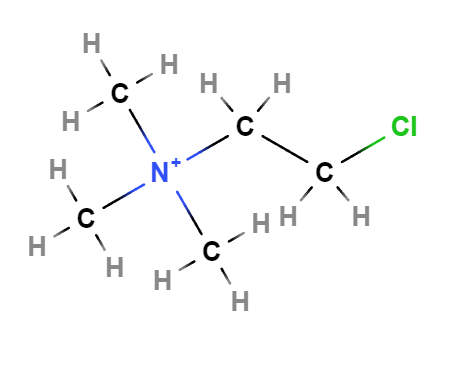 | 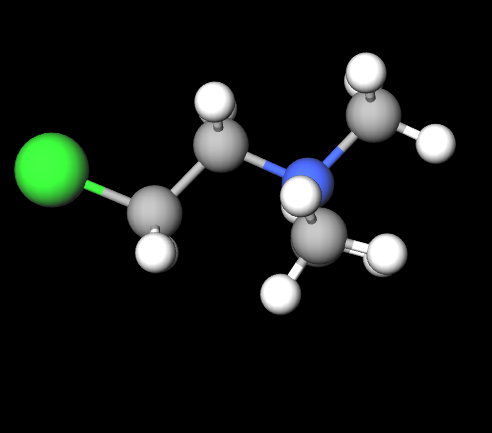 |
Molecular Formula C5H13ClN+
Molecular Weight 122.62 g/mol
CAS 7003-89-6
UNII 8SUZ1123XX
Nikkaji J933D
DTXSID4048064
Synonyms
- Cycocel

