Myristica Fragrans Fruit Powder è un prodotto di origine naturale ottenuto dalla pianta omonima, la noce moscata.
Materie prime utilizzate nella produzione:
Il seme di Myristica Fragrans, noto comunemente come noce moscata, è utilizzato in vari settori, tra cui l'alimentazione, la cosmetica e la medicina tradizionale. I semi sono noti per le loro proprietà aromatiche, antiossidanti e antinfiammatorie.
Processo di produzione industriale
- Raccolta. I semi di Myristica Fragrans vengono raccolti dai frutti maturi dell'albero di noce moscata. Dopo la raccolta, i semi vengono separati dal loro involucro esterno.
- Essiccazione. I semi vengono poi essiccati, un processo che concentra i loro oli essenziali e altri composti bioattivi. L'essiccazione può avvenire naturalmente al sole o in forni a temperatura controllata.
- Macinazione. Una volta essiccati, i semi possono essere macinati per produrre una polvere fine, utilizzata in varie applicazioni, inclusi prodotti alimentari e cosmetici.
- Controllo di qualità. I semi di Myristica Fragrans nella loro polvere vengono sottoposti a test di qualità per assicurare che soddisfino gli standard richiesti in termini di purezza, concentrazione di composti bioattivi e proprietà organolettiche.
Forma e colore
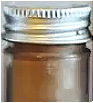
Myristica Fragrans Fruit Powder si presenta in forma di polvere marrone chiaro o marrone scuro a seconda del metodo di essicazione.
A cosa serve e dove si usa
Cosmetica
Agente condizionante della pelle. Rappresenta il perno del trattamento topico della pelle in quanto ha la funzione di ripristinare, aumentare o migliorare la tolleranza cutanea a fattori esterni, compresa la tolleranza dei melanociti. La funzione più importante dell'agente condizionante è prevenire la disidratazione della pelle, ma il tema è piuttosto complesso e coinvolge emollienti ed umettanti che possono essere aggiunti nella formulazione.
CAS 8007-12-3 8008-45-5
La Noce Moscata è il seme ovoidale della pianta sempreverde Myristica Fragrans nativa dell'Indonesia, India, Sri Lanka, South Africa, Southeast Asia ed altri. E' un albero sempreverde che produce due spezie: la noce moscata e il macis che è l'involucro della noce moscata.
La pianta è una fonte di zuccheri invertiti, cera, gomme, resine, flavonoidi, acidi organici, oli aromatici, acidi terpenici, alcaloidi, tannini, lignine, catechina e altri composti.
E' una delle spezie più diffuse al mondo per il suo gusto e l'aroma unico del suo olio e usata dalla medicina tradizionale cinese, tibetana e Ayurvedica.
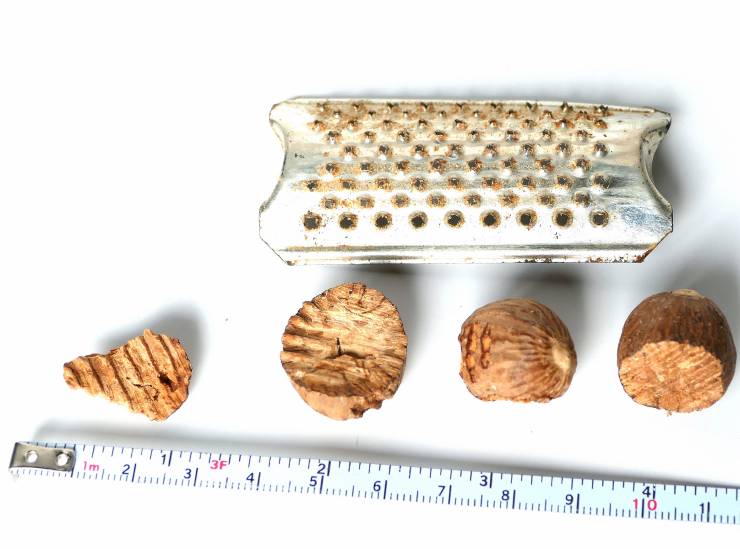
La medicina tradizionale le attribuisce proprietà toniche in quanto stimolerebbe il cervello e sarebbe in grado di curare stress, dolori, indigestione, pressione arteriosa alta. Gli studi scientifici hanno confermato solo alcune di queste proprietà.
Viene prevalentemente usata come insaporitore nei cibi e come agente cosmetico.
Studi
E' ampiamente utilizzata sia come spezia cibo, che nella medicina alternativa dove è stata segnalata per avere proprietà antidiarroiche, anti-infiammatorie, anti-tumorali, antiossidanti, antibatteriche e antimicotiche. Contiene una miscela di composti idrofobici e volatili, tra questi, i più rilevanti sono gli idrocarburi monoterpeni, seguiti da monoterpeni ossigenati e altri come sabinene, α-pinene, eugenol, myristicin (1) e il β-caryophyllene, con attività antimicrobica, antisettica, antiparassitaria, antinfiammatoria, antiossidante (2) e antifungina (3).
Diversi studi hanno dimostrato l'attività epatoprotettiva della miristicina contenuta nella noce moscata (4).
Dalla noce moscata si ricavano estratti, polveri e, in particolare, un olio essenziale in cui i componenti utili più noti presenti sono principalmente Limonene, Linalool, Eugenol.
Sicurezza
In genere la noce moscata è ben tollerata, ma in alcune persone l'ingestione di questa bacca può provocare intolleranza.
Noce moscata studi
Bibliografia_________________________________________________________________________
(1) Ashokkumar K, Simal-Gandara J, Murugan M, Dhanya MK, Pandian A. Nutmeg (Myristica fragrans Houtt.) essential oil: A review on its composition, biological, and pharmacological activities. Phytother Res. 2022 Jul;36(7):2839-2851. doi: 10.1002/ptr.7491. Epub 2022 May 13. PMID: 35567294; PMCID: PMC9541156.
(2) Matulyte I, Jekabsone A, Jankauskaite L, Zavistanaviciute P, Sakiene V, Bartkiene E, Ruzauskas M, Kopustinskiene DM, Santini A, Bernatoniene J. The Essential Oil and Hydrolats from Myristica fragrans Seeds with Magnesium Aluminometasilicate as Excipient: Antioxidant, Antibacterial, and Anti-inflammatory Activity. Foods. 2020 Jan 2;9(1):37. doi: 10.3390/foods9010037.
Abstract. Nutmeg (Myristica fragrans) essential oil has antimicrobial, antiseptic, antiparasitic, anti-inflammatory, and antioxidant properties. We have recently demonstrated that hydrodistillation of nutmeg essential oil by applying magnesium aluminometasilicate as an excipient significantly increases both the content and amount of bioactive substances in the oil and hydrolats. In this study, we aimed to compare the antioxidant, antimicrobial, and anti-inflammatory activity of hydrolats and essential oil obtained by hydrodistillation in the presence and absence of magnesium aluminometasilicate as an excipient. The 2,2-diphenyl-1-picrylhydrazyl (DPPH) radical scavenging method revealed that magnesium aluminometasilicate did not significantly improved antioxidant activity of both essential oil and hydrolat. Antibacterial efficiency was evaluated by monitoring growth of 15 bacterial strains treated by a range of dilutions of the essential oil and the hydrolats. Essential oil with an excipient completely inhibited the growth of E. faecalis, S. mutans (referent), and P. multocida, whereas the pure oil was only efficient against the latter strain. Finally, the anti-inflammatory properties of the substances were assessed in a fibroblast cell culture treated with viral dsRNR mimetic Poly I:C. The essential oil with an excipient protected cells against Poly I:C-induced necrosis more efficiently compared to pure essential oil. Also, both the oil and the hydrolats with aluminometasilicate were more efficient in preventing IL-6 release in the presence of Poly I:C. Our results show that the use of magnesium aluminometasilicate as an excipient might change and in some cases improve the biological activities of nutmeg essential oil and hydrolats.
(3) Rizwana H, Bokahri NA, S Alkhattaf F, Albasher G, A Aldehaish H. Antifungal, Antibacterial, and Cytotoxic Activities of Silver Nanoparticles Synthesized from Aqueous Extracts of Mace-Arils of Myristica fragrans. Molecules. 2021 Dec 20;26(24):7709. doi: 10.3390/molecules26247709.
Abstract. In the present study, mace-mediated silver nanoparticles (mace-AgNPs) were synthesized, characterized, and evaluated against an array of pathogenic microorganisms. Mace, the arils of Myristica fragrans, are a rich source of several bioactive compounds, including polyphenols and aromatic compounds. During nano synthesis, the bioactive compounds in mace aqueous extracts serve as excellent bio reductants, stabilizers, and capping agents. The UV-VIS spectroscopy of the synthesized NPs showed an intense and broad SPR absorption peak at 456 nm. Dynamic light scattering (DLS) analysis showed the size with a Z average of 50 nm, while transmission electron microscopy (TEM) studies depicted the round shape and small size of the NPs, which ranged between 5-28 nm. The peaks related to important functional groups, such as phenols, alcohols, carbonyl groups, amides, alkanes and alkenes, were obtained on a Fourier-transform infrared spectroscopy (FTIR) spectrum. The peak at 3 keV on the energy dispersive X-ray spectrum (EDX) validated the presence of silver (Ag). Mace-silver nanoparticles exhibited potent antifungal and antibacterial activity against several pathogenic microorganisms. Additionally, the synthesized mace-AgNPs displayed an excellent cytotoxic effect against the human cervical cancer cell line. The mace-AgNPs demonstrated robust antibacterial, antifungal, and cytotoxic activity, indicating that the mace-AgNPs might be used in the agrochemical industry, pharmaceutical industry, and biomedical applications. However, future studies to understand its mode of action are needed.
(4) Morita T, Jinno K, Kawagishi H, Arimoto Y, Suganuma H, Inakuma T, Sugiyama K. Hepatoprotective effect of myristicin from nutmeg (Myristica fragrans) on lipopolysaccharide/d-galactosamine-induced liver injury. J Agric Food Chem. 2003 Mar 12;51(6):1560-5. doi: 10.1021/jf020946n.
Abstract. To evaluate the hepatoprotective activity of spices, 21 different spices were fed to rats with liver damage caused by lipopolysaccharide (LPS) plus d-galactosamine (D-GalN). As assessed by plasma aminotranferase activities, nutmeg showed the most potent hepatoprotective activity. Bioassay-guided isolation of the active compound from nutmeg was carried out in mice by a single oral administration of the respective fractions. Myristicin, one of the major essential oils of nutmeg, was found to possess extraordinarily potent hepatoprotective activity. Myristicin markedly suppressed LPS/D-GalN-induced enhancement of serum TNF-alpha concentrations and hepatic DNA fragmentation in mice. These findings suggest that the hepatoprotective activity of myristicin might be, at least in part, due to the inhibition of TNF-alpha release from macrophages. However, further studies are needed to elucidate the hepatoprotective mechanism(s) of myristicin.




