Melaleuca Leucadendron Fruit Extract è un ingrediente utilizzato principalmente in cosmetici e prodotti per la cura della pelle.
Processo di produzione industriale
- Estrazione dei composti bioattivi dai frutti di Melaleuca Leucadendron. Questo può essere fatto utilizzando solventi come alcol etilico o acqua, a seconda della solubilità dei composti desiderati.
- Purificazione. Dopo l'estrazione, la soluzione contenente i composti bioattivi viene purificata per rimuovere impurità e residui di solvente.
- Controllo di qualità. L'estratto di frutto di Melaleuca Leucadendron viene sottoposto a test di qualità per assicurare che soddisfi gli standard richiesti, in termini di purezza e concentrazione dei composti bioattivi.
A cosa serve e dove si usa
Cosmetica
Agente condizionante della pelle. Rappresenta il perno del trattamento topico della pelle in quanto ha la funzione di ripristinare, aumentare o migliorare la tolleranza cutanea a fattori esterni, compresa la tolleranza dei melanociti. La funzione più importante dell'agente condizionante è prevenire la disidratazione della pelle, ma il tema è piuttosto complesso e coinvolge emollienti ed umettanti che possono essere aggiunti nella formulazione.
CAS 85480-37-1
EC Number 287-316-4
Forma e Colore
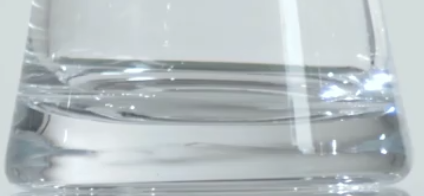
Questo composto di Melaleuca Leucadendron si presenta generalmente come un liquido di solito incolore o di colore molto chiaro.
Melaleuca Leucadendron comunemente noto come cajeput o cajaput è un albero appartenente alla famiglia delle Myrtaceae, conosciuto per le sue proprietà medicinali e aromatiche. È comunemente utilizzato per l'olio di cajeput, che viene estratto dalle sue foglie e utilizzato in vari trattamenti. Questo olio è noto per le sue proprietà antinfiammatorie, antiossidanti (1) e antimicrobiche (2). L'analisi fitochimica ha rivelato la presenza di terpeni, methyl eugenol ed altri interessanti composti utili per la salute umana (3) Viene spesso utilizzato in prodotti per la cura della pelle, in rimedi contro il raffreddore e la tosse, e come analgesico. Melaleuca Leucadendron è originaria dell'Australia e dell'Indonesia, ma viene coltivata anche in altre regioni tropicali.
Bibliografia_____________________________________________________________________
(1) Surh J, Yun JM. Antioxidant and Anti-inflammatory Activities of Butanol Extract of Melaleuca leucadendron L. Prev Nutr Food Sci. 2012 Mar;17(1):22-8. doi: 10.3746/pnf.2012.17.1.022.
Abstract. Melaleuca leucadendron L. has been used as a tranquilizing, sedating, evil-dispelling and pain-relieving agent. We examined the effects of M. leucadendron L. extracts on oxidative stress and inflammation. M. leucadendron L. was extracted with methanol (MeOH) and then fractionated with chloroform (CHCl3) and butanol (BuOH). Antioxidant activity of the MeOH extract and BuOH fraction were higher than that of both α-tocopherol and butyrated hydroxytoluene (BHT). Total phenol content in the extracts of M. leucadendron L., especially the BuOH fraction, well correlated with the antioxidant activity. The anti-inflammatory activity of BuOH extracts were investigated by lipopolysaccharide (LPS)-induced nitric oxide (NO) and prostaglandin E2 (PGE2) production, and cyclooxygenase-2 (COX-2) expression in RAW 264.7 macrophages. The BuOH fraction significantly inhibited LPS-induced NO and PGE2 production. Furthermore, BuOH extract of M. leucadendron L. inhibited the expression of COX-2 and iNOS protein without an appreciable cytotoxic effect on RAW264.7 cells. The extract of M. leucadendron L. also suppressed the phosphorylation of inhibitor κBα (IκBα) and its degradation associated with nuclear factor-κB (NF-κB) activation. Furthermore, BuOH fraction inhibited LPS-induced NF-κB transcriptional activity in a dose-dependent manner. These results suggested that M. leucadendron L. could be useful as a natural anti-oxidant and anti-inflammatory resource.
(2) Valdés AF, Martínez JM, Lizama RS, Vermeersch M, Cos P, Maes L. In vitro anti-microbial activity of the Cuban medicinal plants Simarouba glauca DC, Melaleuca leucadendron L and Artemisia absinthium L. Mem Inst Oswaldo Cruz. 2008 Sep;103(6):615-8. doi: 10.1590/s0074-02762008000600019. PMID: 18949336.
Abstract. In the present study, an extensive in vitro antimicrobial profiling was performed for three medicinal plants grown in Cuba, namely Simarouba glauca, Melaleuca leucadendron and Artemisia absinthium. Ethanol extracts were tested for their antiprotozoal potential against Trypanosoma b. brucei, Trypanosoma cruzi, Leishmania infantum and Plasmodium falciparum. Antifungal activities were evaluated against Microsporum canis and Candida albicans whereas Escherichia coli and Staphylococcus aureus were used as test organisms for antibacterial activity. Cytotoxicity was assessed against human MRC-5 cells. Only M. leucadendron extract showed selective activity against microorganisms tested. Although S. glauca exhibited strong activity against all protozoa, it must be considered non-specific. The value of integrated evaluation of extracts with particular reference to selectivity is discussed.
(3) Tsuruga T, Chun YT, Ebizuka Y, Sankawa U. Biologically active constituents of Melaleuca leucadendron: inhibitors of induced histamine release from rat mast cells. Chem Pharm Bull (Tokyo). 1991 Dec;39(12):3276-8. doi: 10.1248/cpb.39.3276.
Abstract. Chloroform and methanol extracts of the fruits of Melaleuca leucadendron strongly inhibited histamine release from rat mast cells induced by compound 48/80 or concanavalin A. Ursolic acid, a triterpene, was the most active compound contained in the chloroform extract and two stilbenes, piceatannol and oxyresveratrol, were isolated as active compounds from the methanol extract. Several other stilbenes and related compounds were examined to obtain information on the structure activity relationships of stilbenes.




