



Vetiveria zizanoides, also known as "vetiver grass" and as "Chrysopogon zizanioides" is a herb that belongs to the Poaceae botanical family .
Vetiveria Zizanoides Root Water. The name describes the structure of the molecule:
- Vetiveria Zizanoides refers to the botanical species "Vetiveria Zizanoides", commonly known as vetiver. Vetiver is a perennial grass belonging to the Poaceae family, famous for its long aromatic roots.
- Root indicates that the water is specifically extracted from the roots of the plant, which are known for their rich, earthy scent.
- Water refers to the aromatic water or hydrosol obtained from the steam distillation of the plant's roots. This process captures both the essential oil and the aromatic water, which contains water-soluble components of the plant.
Raw Materials and Their Functions
Roots of Vetiveria Zizanoides. The roots of this plant are rich in essential oils with a unique aromatic profile, which includes woody, earthy, and slightly smoky notes.
Industrial Production Process
- Distillation of Vetiveria Zizanoides roots. During this process, steam passes through the roots, extracting aromatic components and essential oils, which are then condensed to form root water.
- Purification. After distillation, Vetiveria Zizanoides root water is purified to remove any impurities.
- Quality Control. Vetiveria Zizanoides root water undergoes quality testing to ensure it meets the required standards in terms of purity and aromatic profile.
Form and Color
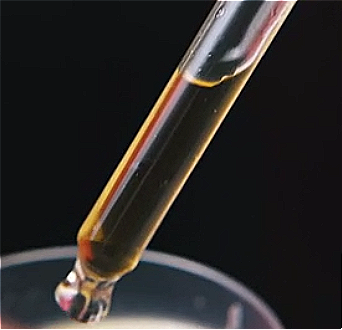
Vetiveria Zizanoides Root Water, also known as vetiver water, is typically a liquid. This essential oil has a color that ranges from light brown to dark brown.
What it is for and where
Cosmetics
"Vetiveria Zizanoides Root Water" is used in skincare products for its soothing, refreshing, and toning properties. It is valued for its earthy scent and its ability to soothe and hydrate the skin.
Skin conditioning agent. It is the mainstay of topical skin treatment as it has the function of restoring, increasing or improving skin tolerance to external factors, including melanocyte tolerance. The most important function of the conditioning agent is to prevent skin dehydration, but the subject is rather complex and involves emollients and humectants that can be added in the formulation.
CAS 8016-96-4 84238-29-9
EC number 282-490-8
Medical
Two bioactive constituents, khusenic acid and khusimol, have been isolated and characterized from the roots of Vetiveria zizanoides. These compounds have shown antimicrobial activity against drug-resistant strains of Mycobacterium smegmatis and Mycobacterium tuberculosis. In silico analysis revealed that these compounds have good binding affinity with the bacterial DNA gyrase subunits and a favorable ADME profile, suggesting their potential as therapeutic agents (1).
Other uses
Vetiveria zizanoides, also known as vetiver grass, has been identified as a suitable candidate for the phytoremediation of heavy metals. Studies have investigated arsenic (As) accumulation, translocation, and tolerance in V. zizanoides plants exposed to different concentrations of arsenic. These plants have been found effective in removing As, especially at higher concentrations. The activity of antioxidant enzymes such as superoxide dismutase (SOD), ascorbate peroxidase (APX), guaiacol peroxidase (GPX), catalase (CAT), and glutathione s-transferase (GST) increases in response to arsenic-induced oxidative stress, enhancing the plants' tolerance (2).
Another study evaluated the ability of Vetiveria zizanoides to remove antimony and other contaminants (2).
Lastly, the use of Vetiveria zizanoides in the remediation of cyanide soil contamination was examined. The findings indicated that vetiver grass might be useful in cleaning up cyanide-contaminated soils, especially in gold and silver mining sites (3).

