



Isoeugenol: properties, uses, pros, cons, safety, alternatives
Isoeugenol is a derivative of eugenol and has a chemical structure represented as C10H12O2. It is used in perfumery for its sweet, spicy scent and can also be used as a flavoring in some food products. However, isoeugenol is also known to be a potential allergen, and therefore its use in cosmetics and skincare products is restricted in some nations.
The name describes the structure of the molecule.
- Iso- is a prefix indicating a particular arrangement of atoms within a molecule. Generally, "iso" indicates that a functional group is in a different position compared to the standard structure of the molecule.
- eugenol is an aromatic compound found in various plants like nutmeg, cinnamon, and cloves. It is known for its antioxidant and anti-inflammatory properties and is used in various products, such as food flavorings and in dentistry as an antiseptic.
Raw Materials Used in Production.
Isoeugenol is often derived from eugenol, which can be extracted from essential oils such as clove oil.
Step-by-step Summary of Industrial Chemical Synthesis Process.
- Extraction of Eugenol. Eugenol is extracted from essential oils, primarily clove oil, through distillation and purification processes.
- Isomerization of Eugenol. Eugenol is converted into isoeugenol through an isomerization process, which may involve catalysts and specific heat conditions.
- Purification. The isoeugenol is further purified through methods such as distillation to ensure the utmost purity of the product.
Form and Color.
Isoeugenol is generally an oily liquid, pale yellow in color.
What it is for and where
Cosmetics
It is a restricted ingredient as III/73 a Relevant Item in the Annexes of the European Cosmetics Regulation 1223/2009. Substance or ingredient reported: Phenol, 2-methoxy-4-(1-propenyl); (E)-2-methoxy-4-(prop-1-enyl)phenol;(trans-Isoeugenol); (Z)-2-methoxy-4-(prop-1-enyl)phenol;(cis-Isoeugenol)
Maximum concentration in ready for use preparation b) 0,02 %
Other (a) (b) The presence of the substance shall be indicated in the list of ingredients referred to in Article 19(1), point (g), when its concentration exceeds: — 0,001 % in leave-on products — 0,01 % in rinse-off products.
Perfuming. Unlike fragrance, which can also contain slightly less pleasant or characteristic odours, the term perfume indicates only very pleasant fragrances. Used for perfumes and aromatic raw materials.
Flavoring agent. The purpose of this ingredient is to modify the solution to impart a certain flavour. Natural flavouring extracts are rather expensive, so the cosmetic and pharmaceutical industries resort to synthesised substances that have sensory characteristics mostly similar to natural flavourings or are naturally equivalent. This ingredient is isolated through chemical processes or is synthesised from chemicals. It is also referred to as Aroma.
Commercial Applications.
Isoeugenol is widely used in perfumery and aromatherapy, as well as employed as a food flavorant and component in personal care products due to its spicy and floral notes.
Food Industry. Isoeugenol is used as a flavor in some food products due to its sweet, spicy taste.
Perfumery. It is valued in perfumes for its sweet, spicy aroma, and is found in many floral fragrances.
Cosmetics. It can sometimes be used in cosmetic and skincare products for its aromatic properties.
Chemical Industry. Isoeugenol can be used in the synthesis of other chemical compounds.
Dental Industry. It might be used in some dental products as a flavoring.
Safety
Isoeugenol is an ingredient generally considered safe (1), however, in some individuals it may be poorly tolerated depending on the amounts included in formulations (2).
Alternatives
| Option (INCI) | Product type | Key advantages |
|---|---|---|
| Eugenol (from essential oils, e.g., clove) / Eugenol (nature-identical) | Fragrance raw material | Clove-like spicy note that can replace part of the olfactive signature (still an allergen to manage on label). |
| Vanillin / Ethyl Vanillin | Aroma materials | Adds warm sweetness and roundness, useful to compensate for the loss of phenolic spicy/floral facets. |
| Cinnamyl Alcohol / Cinnamal | Fragrance raw materials | Warm spicy/floral facets that can rebuild similar accords (note: also regulated allergens). |
| Anisyl Alcohol | Fragrance raw material | Sweet anisic/floral nuance (heliotrope-like), useful to rebalance allergen-reduced blends. |
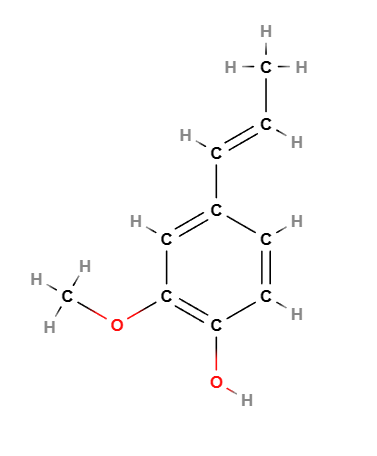 | 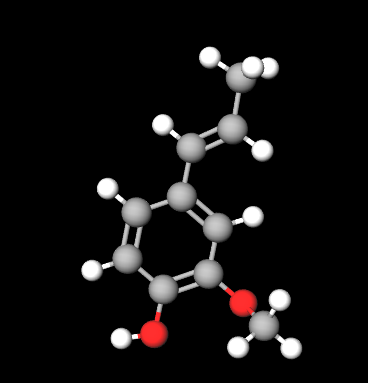 |
- Molecular Formula C10H12O2
- Molecular Weight 164.20 g/mol
- CAS 97-54-1
- UNII 28FSR1NAY4
- EC Number 202-590-7
- DTXSID50872350
Synonyms:
trans-Isoeugenol
2-Methoxy-4-propenylphenol

