Albume in polvere è un ingrediente alimentare derivato dalle chiare dell'uovo o dal bianco dell'uovo.
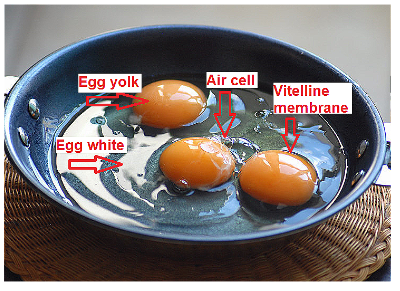
Descrizione delle materie prime utilizzate nella produzione.
- L'albume d'uovo è la materia prima principale per la produzione della polvere di albume d'uovo. Può provenire da uova di gallina fresche, raccolte in allevamenti avicoli allevate a terra o in gabbia.
Riassunto passo-passo del processo di produzione industriale.
- Separazione. Le uova vengono rotte e l'albume viene separato dal tuorlo.
- Pasteurizzazione. Gli albumi vengono pasteurizzati per eliminare eventuali patogeni.
- Spray Drying (Essiccazione a spruzzo). Gli albumi pasteurizzati vengono spruzzati in una torre di essiccazione ad alta temperatura per rimuovere l'acqua, trasformandoli in polvere.
Forma e colore.
La polvere di albume d'uovo ha una forma in polvere e un colore che varia dal bianco al giallo pallido.
Medicina
L'albume d'uovo contiene vitamine (biotina, riboflavina e tiamina) (1) e proteine come l'ovalbumina utilizzata come integratore alimentare, l'ovotransferrina come agente antimicrobico o antitumorale, ovomucina come agente di soppressione del tumore e lisozima come conservante alimentare, mentre ovomucoide è il principale allergene dell'uovo, ma può inibire la crescita dei tumori e quindi può essere usato come agente antitumorale (2).
Applicazioni commerciali.
Gli albumi d'uovo sono utilizzati in una vasta gamma di prodotti alimentari per le loro proprietà coagulanti, schiumogeni, e come agente legante. Sono utilizzati in pasticceria, nella preparazione di meringhe, cocktail, e anche in alcune preparazioni di cibi salati.
Industria Alimentare. Utilizzato come agente lievitante in prodotti da forno, stabilizzante in mousse e schiume, e come coagulante in prodotti come il flan.
Cucina. Applicato in ricette come meringhe, soufflés e cocktails come il Pisco Sour per creare una texture spumosa.
Industria Cosmetica. Impiegato in maschere facciali e trattamenti per la pelle grazie alle sue proprietà astringenti e rassodanti.
Dieta e Nutrizione. Spesso utilizzato in diete ad alto contenuto proteico e in sostituti dell'uovo.
Bibliografia_____________________________________________________________________
(1) Stevens L. Egg white proteins. Comp Biochem Physiol B. 1991;100(1):1-9. doi: 10.1016/0305-0491(91)90076-p. PMID: 1756612.
Abstract. 1. Egg white proteins are the principal solutes present in egg white, making up approximately 10% of its weight. 2. They are globular proteins and most have acidic isoelectric points. 3. Many are glycoproteins with carbohydrate contents ranging from 2 to 58%. 4. Of the major egg white proteins, lysozyme is the only one having catalytic activity, but many have specific binding sites, e.g. for vitamins such as biotin, riboflavin and thiamin, or for metal ions such as FeIII. 5. A major group are those showing proteinase inhibitory activity, and they include ovomucoid, ovoinhibitor, cystatin and ovostatin. 6. The synthesis of egg white protein occurs in the oviduct, and is hormonally controlled either by oestrogens or progesterone. 7. Extensive studies have been carried out in the genes coding for egg white proteins.
(2) Abeyrathne ED, Lee HY, Ahn DU. Egg white proteins and their potential use in food processing or as nutraceutical and pharmaceutical agents--a review. Poult Sci. 2013 Dec;92(12):3292-9. doi: 10.3382/ps.2013-03391.
Abstract. Egg white contains many functionally important proteins. Ovalbumin (54%), ovotransferrin (12%), ovomucoid (11%), ovomucin (3.5%), and lysozyme (3.5%) are among the major proteins that have high potentials for industrial applications if separated. The separation methods for these proteins from egg white have been developed since early 1900, but preparation methods of these proteins for commercial applications are still under development. Simplicity and scalability of the methods, use of nontoxic chemicals for the separation, and sequential separation for multiple proteins are very important criteria for the commercial production and application of these proteins. The separated proteins can be used in food and pharmaceutical industry as is or after modifications with enzymes. Ovotransferrin is used as a metal transporter, antimicrobial, or anticancer agent, whereas lysozyme is mainly used as a food preservative. Ovalbumin is widely used as a nutrient supplement and ovomucin as a tumor suppression agent. Ovomucoid is the major egg allergen but can inhibit the growth of tumors, and thus can be used as an anticancer agent. Hydrolyzed peptides from these proteins showed very good angiotensin I converting enzyme inhibitory, anticancer, metal binding, and antioxidant activities. Therefore, separation of egg white proteins and the productions of bioactive peptides from egg white proteins are emerging areas with many new applications.




