



Barley malt and corn extract: INCI functions, identifiers (CAS/EC), composition, cosmetic uses, and formulation notes
Barley malt and corn extract
Blend of extracts from Hordeum vulgare (family Poaceae) and Zea mays (family Poaceae)
Synonyms: barley malt extract & corn extract, barley malt extract + corn extract
INCI / functions: skin conditioning, antioxidant (grade-dependent), humectant (grade-dependent), hair conditioning (grade-dependent)
Definition
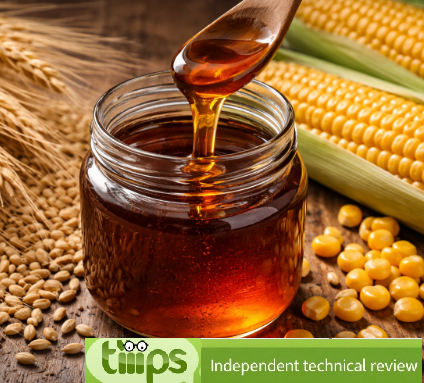
Barley malt and corn extract is a blend of botanical components obtained from Hordeum vulgare (barley malt) and Zea mays (corn), typically via aqueous or hydro-glycolic extraction followed by concentration/standardization. From a compositional standpoint, the “malt” fraction is typically rich in fermentable and non-fermentable sugars (e.g., maltose, glucose, dextrins), plus micro-components such as amino acids, mineral fractions, and minor compounds. The “corn” fraction (kernel/cob-kernel depending on grade) generally contributes soluble carbohydrates, polysaccharides, and minor botanical fractions; in some grades, components with potential antioxidant contribution are also emphasized. In cosmetics, use is primarily functional-sensorial: support for conditioning (skin/hair), improved feel, and—in certain concepts—supporting protection of the formula from oxidative phenomena (when the grade is designed for that purpose).
Main uses
Food: possible use as food ingredients (malt/derivatives), but the “INCI” framing is typically cosmetic.
Cosmetics: skin conditioning; in some grades also antioxidant, humectant, and hair conditioning.
Medicine: not typical as a standard ingredient; any use is niche and specification-dependent.
Pharmaceutical: not common as a broad-use excipient; any presence is dossier-dependent.
Industrial use: functional/technical botanical extract use, sector-dependent.
Calories (energy value)
| Parameter | Value |
|---|---|
| Energy value | Not applicable (cosmetic/technical ingredient; not intended for consumption) |
Identification data and specifications
In commercial practice, the blend is often declared as a mixture of two (or more) INCI entries. Below are common references for the two components.
| Blend component | Most common INCI | CAS number | EC/EINECS number |
|---|---|---|---|
| Barley malt | Malt Extract | 8002-48-0 | 232-310-9 |
| Corn (kernel) | Zea mays kernel extract | 84696-06-0 | not consistently reported (database/grade-dependent) |
Key constituents
| Fraction | Typical components | Technical note |
|---|---|---|
| Malt-derived | maltose, glucose, dextrins, amino acids, mineral salts | may increase tack at higher levels and requires microbiological attention |
| Corn-derived | sugars/polysaccharides, minor botanical fractions | variability depends on matrix and solvent |
| Minor fractions | phenolic compounds (variable level), organic acids | can affect color/odor and long-term stability |
Functional role and technical clarifications
| Function | What it does in the formula | Operational note |
|---|---|---|
| Skin conditioning | supports maintaining skin in good condition | vehicle- and dose-dependent |
| Humectant (if declared) | contributes to water retention and improved feel | more evident in leave-on systems |
| Antioxidant (if declared) | supports protection of aqueous phase/actives from oxidation | depends on grade standardization |
| Hair conditioning (if declared) | contributes to combability/sensory feel | often synergistic with compatible conditioning polymers |
Formulation compatibility
Compatibility depends mainly on the carrier (water, glycols, blends), solids content, and the intrinsic preservation status of the grade. In O/W emulsions and aqueous gels, the extract is typically added to the water phase or post-addition, controlling: color stability, potential increase in tack, and compatibility with the preservative system. In “clear” systems (transparent gels/clear cleansers), it may increase the risk of haze if solids content is significant or if pH/electrolytes/polymers are not optimized; it is recommended to verify stability over 24–48 h and under thermal cycling.
Allergen note: because it is derived from Hordeum vulgare, some grades may be associated with gluten presence or related traces; relevance depends on grade, process, and claims/positioning of the finished product. For “gluten-free” projects, supplier documentation is required.
Use guidelines (indicative)
| Application | Typical range | Technical note |
|---|---|---|
| Leave-on (creams, lotions, serums) | 0.2–3.0% | evaluate tack, color, and odor stability |
| Rinse-off (cleansers, shampoo) | 0.5–5.0% | verify clarity and preservative robustness |
| Conditioning hair care (conditioners, masks) | 0.2–3.0% | synergy with compatible conditioning polymers |
Typical applications
Skin care positioned for conditioning and improved aqueous-phase feel.
Hair care (shampoo and conditioner) for sensorial contribution and combability support (grade-dependent).
Cleansers and gels with a “botanical extract” concept (with targeted stability testing for transparency and color).
Quality, grades and specifications
| QC topic | What to verify |
|---|---|
| Identity | INCI consistency (blend components) and batch traceability |
| Solids/actives | solids %, carrier (water/glycols), batch-to-batch repeatability |
| Sensory profile | color/odor and changes under heat/light |
| Microbiology | initial bioburden, limits, and preservative compatibility |
| Impurities | insolubles, process residues, metals (if required) |
Safety, regulation and environment
As a blend of botanical extracts, the correct safety evaluation approach is the finished product assessment (use scenario, exposure, population). Operationally, the most relevant points are: (i) microbiological control (especially for aqueous/high-solids grades), (ii) potential irritation in sensitive individuals (dose- and formula-dependent), and (iii) long-term stability of color and odor. Environmentally, impact relates to organic load and process effluent management; apply good manufacturing practice and local regulatory requirements for wastewater handling.
Formulation troubleshooting
| Issue | Likely cause | Recommended action |
|---|---|---|
| Haze in clear systems | high solids, polymer incompatibility, pH/electrolytes | reduce dose, switch grade, optimize pH and rheology |
| Tackiness | sugar/dextrin fraction, high dosage | reduce dose, rebalance humectants and oil phase |
| Color/odor drift | oxidation or batch variability | barrier packaging, compatible antioxidants, tighten specifications |
| Microbiological instability | insufficient preservation or high initial bioburden | strengthen preservatives, run challenge test, tighten CoA requirements |
Conclusion
Barley malt and corn extract is a botanical blend positioned primarily for conditioning (skin/hair) and—in some grades—humectant or antioxidant contribution. Formulation success depends on grade selection (carrier and solids), validation of preservation, and control of clarity, color, and sensory performance at the intended use level.
Mini-glossary
| Term | Meaning | Note |
|---|---|---|
| INCI | international cosmetic ingredient nomenclature | used for labeling |
| Solvent extract | extract obtained using a solvent system | water/glycols/alcohols depending on grade |
| Skin conditioning | maintaining skin in good condition | cosmetic function |
| Humectant | substance helping to retain water | dose-dependent |
| GMP | Good Manufacturing Practice | process quality standard |
Studies
Barley and corn malt extract is traditionally used to flavor the foods and it is the product of the germination of barley. During germination, the non-starch polysaccharides (NSPs) in the cell wall of barley, constituting mainly arabinoxylans and β-glucans, are solubilised and partly degraded into smaller molecules (1).
Health
Barley and germinated barley contain large quantities of glutamine (2) an important substrate for colonic mucosa. Glutamine is easily degraded by the low pH in the stomach, but some of the glutamine is protected by the dietary fibre during digestion in the stomach (3) and therefore reaches the colon. In this study, starting from the premise that Butyric acid, one of the key products formed when β-glucans are degraded by the microbiota in the colon, has been proposed to be important for colonic health. Glutamine bound to the fibre may have similar effects once it has been liberated from the fibre in the colon. Both β-glucans and glutamine are found in high amounts in malted barley. Lactobacillus rhamnosus together with malt has been shown to increase the formation of butyric acid further in rats (4).

