Egg yolk powder
(from Gallus gallus domesticus)
Description
• Egg yolk powder is a food ingredient obtained by spray drying pasteurized egg yolk.
• It preserves the nutritional and functional profile of fresh yolk while offering long shelf life and excellent microbiological stability.
• Widely used in the food industry for baked goods, sauces, mayonnaise, egg pasta, desserts, and lipid-protein preparations.
Indicative nutrition values (per 100 g of product)
• Energy: 650–680 kcal
• Protein: 30–35 g
• Fat: 55–60 g
• SFA: ~16 g
• MUFA: ~25 g
• PUFA: ~10 g (mainly n-6)
• Carbohydrates: 1–3 g
• Cholesterol: 1800–2000 mg
• Sodium: 100–150 mg
• Vitamins and minerals: rich in vitamins A, D, E, B12, phosphorus, iron, zinc, selenium, and choline.
Key constituents
• Lipoproteins such as lipovitellin and phosvitin, providing strong emulsifying and stabilizing power.
• Phospholipids (lecithin, cephalin) with natural emulsifying properties.
• Carotenoids (lutein and zeaxanthin) responsible for the yellow color and antioxidant action.
• High-quality proteins containing all essential amino acids.
• Fat-soluble vitamins (A, D, E, K) and choline, essential for lipid metabolism and brain health.
Production process
• Breaking and separation of eggs by automated systems.
• Filtration and pasteurization of the liquid yolk at 60–65 °C.
• Spray drying at 160–180 °C with controlled temperature to preserve nutrients and color.
• Cooling and packaging under vacuum or inert atmosphere to maintain quality and stability.
Physical properties
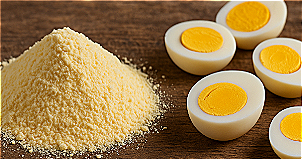
• Appearance: fine, bright yellow powder.
• Odor and flavor: typical of egg, free from rancid notes.
• Solubility: excellent in warm water.
• Residual moisture: ≤4%.
• pH: 6.0–6.8.
Sensory & technological properties
• Strong emulsifying and binding ability due to lipoproteins and phospholipids.
• Contributes color, richness, and flavor to food formulations.
• Enhances texture and stability in emulsions and doughs.
• Promotes Maillard browning and desirable flavor development during cooking.
Food applications
• Bakery: cookies, cakes, croissants, sponge cakes.
• Sauces and mayonnaise: stable and creamy emulsions.
• Egg pasta and gnocchi: improved color and cohesion.
• Ice cream and desserts: nutritional enrichment and creaminess.
• Instant preparations and food mixes.
Nutrition & health
Egg yolk powder is a nutrient-dense ingredient providing a balanced supply of proteins, lipids, and micronutrients.
• Contains complete proteins with all essential amino acids.
• High in choline, crucial for lipid metabolism and liver function.
• Vitamins A, D, and E support immune, visual, and antioxidant health.
• Carotenoids (lutein, zeaxanthin) help maintain eye health and protect against oxidative stress.
• Rich in unsaturated fats (MUFA, PUFA) beneficial for cardiovascular wellness when consumed moderately.
• Cholesterol content is significant; moderation is advised for hypercholesterolemic individuals.
Portion note: about 10 g of powder equals one medium fresh yolk (≈18 g).
Allergens & intolerances
• Egg is a major food allergen (EU Reg. 1169/2011).
• Yolk proteins (vitellogenins, lipovitellins) can trigger allergic reactions in sensitive individuals.
• Not suitable for people with egg allergy or intolerance.
• Cross-contamination with egg white may occur in production.
• Labels must clearly indicate “contains egg”.
Quality & specifications (typical topics)
• Moisture ≤4%.
• Fat ≥55%.
• Protein ≥30%.
• Solubility index >90%.
• Salmonella absent in 25 g.
• Total plate count <10³ CFU/g.
• Compliance with MRL for contaminants and residues.
Storage & shelf-life
• Store in a cool, dry place (<20 °C; RH <65%).
• Protect from light and heat.
• Shelf-life: 12–18 months unopened.
• After opening, keep sealed tightly and use within a few weeks.
Safety & regulatory
• Produced under EU Reg. 852/2004 and 853/2004 for hygiene and traceability.
• Pasteurized to ensure microbiological safety.
• Manufactured following GMP/HACCP and ISO 22000 standards.
Labeling
• Name: “egg yolk powder”.
• Mandatory: animal origin, allergen declaration, reconstitution instructions, lot number, and best-before date.
Troubleshooting
• Low solubility → excessive humidity or prolonged storage → sieve or rehydrate in warm water.
• Rancid odor → lipid oxidation → improve oxygen barrier in packaging.
• Faded color → exposure to light → use opaque or UV-protective packaging.
Sustainability & supply chain
• Derived from traceable eggs (often free-range or organic).
• Process water and emissions controlled to BOD/COD environmental standards.
• Packaging is recyclable, and by-products (shells, membranes) are recovered for feed or industrial uses.
INCI functions (cosmetics)
• Egg Yolk Powder / Hydrolyzed Egg Protein — provides emollient, conditioning, and strengthening properties for skin and hair.
• Used in nourishing masks, strengthening shampoos, and moisturizing treatments.
Conclusion
Egg yolk powder is a nutritionally rich and highly functional ingredient that combines excellent emulsifying, coloring, and texturizing capabilities with shelf stability and food safety. It is widely used in both food and cosmetic formulations for its versatility and reliability.
Mini-glossary
• SFA — saturated fatty acids.
• MUFA — monounsaturated fatty acids.
• PUFA — polyunsaturated fatty acids (n-6/n-3).
• MRL — maximum residue limit for contaminants and residues.
• GMP/HACCP — good manufacturing practice / hazard analysis and critical control points.
• BOD/COD — biochemical/chemical oxygen demand, environmental wastewater indicators.
Studies
Egg yolk is composed of 70% lipids and 30% proteins. It contains carotenoids such as zeaxanthin and lutein, vitamins.
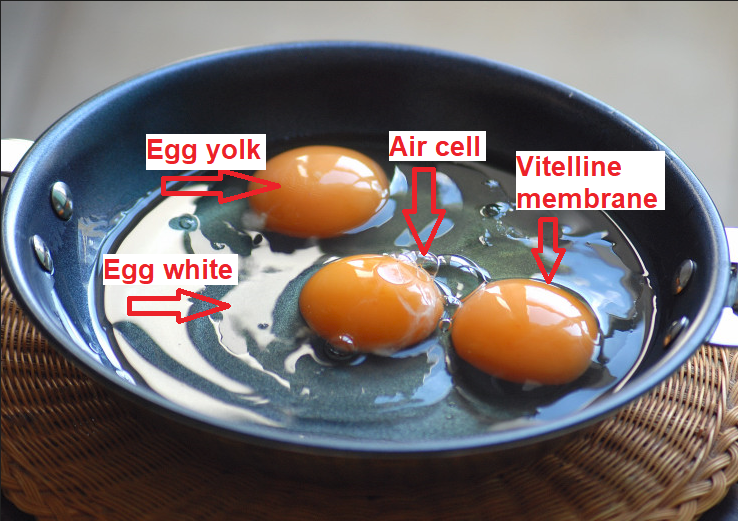
Egg yolk has a high content of cholesterol and saturated fatty acids, which can promote cardiovascular disease. One egg yolk contains between 200 mg and 300 mg of cholesterol/100 g (1).
Egg yolk can increase the risk of microbial contamination and reduce the shelf life of products (2) ; for this reason, there is more interest in introducing new emulsifiers as alternatives to egg yolk. Some suitable options are hydrocolloids and polysaccharides (3).
Hen egg yolk has been studied and the effects of its antibodies on the immune responses of the intestinal mucosa of laboratory animals with Salmonella typhimurium have been determined. The results suggest a positive immune response (4).
Oral administration of hen's egg yolk influenced behaviour and cognitive functions in young and aged rats. It primarily led to mitigating the behavioural symptoms of aging and supported cognitive and memory learning in rats of both age groups (5).
Egg yolk studies
References______________________________________________________________________
(1) Bautista Villarreal M, Gallardo Rivera CT, García Márquez E, Rodríguez Rodríguez J, Núñez González MA, Chávez Montes A, Báez González JG. Comparative Reduction of Egg Yolk Cholesterol Using Anionic Chelating Agents. Molecules. 2018 Dec 5;23(12). pii: E3204. doi: 10.3390/molecules23123204.
Abstract. Egg yolk is used as an emulsifying agent. Nevertheless, its high concentration of cholesterol is linked to chronic degenerative diseases that cause cardiovascular disease. In this study, three methods for reducing the level of cholesterol in egg yolks were studied. The first method consisted of physical separation of the granules contained in the yolk (NaG). The second method applied was the use of anionic chelating biopolymers, such as arabic gum solution (AG) and mesquite gum solution (MG), and the third method was extraction with a solvent (SA). For this purpose, the cholesterol present in egg yolks, the microstructure, particle size, zeta potential, and its emulsifying capacity were determined. The amount of cholesterol removed was 97.24% using 1% mesquite gum (MG1%), and 93.26% using 1% Arabic gum (AG1%). The zeta potential was determined, and the isoelectric point (ζ = 0) of egg yolk was identified as pH 4.6. While, at this pH, the zeta potential of mesquite gum was -14.8 mV, the zeta potential for the arabic gum was -16 mV. The emulsifying capacity of MG1% was 62.95%, while the emulsifying capacity of AG1% was 63.57%. The complex obtained can be used in the development of functional foods reduced in cholesterol.
(2) Abedinzadeh S, Torbati M, Azadmard-Damirchi S. Some Qualitative and Rheological Properties of Virgin Olive Oil- Apple Vinegar Salad Dressing Stabilized With Xanthan Gum - Adv Pharm Bull. 2016 Dec;6(4):597-606. doi: 10.15171/apb.2016.074.
Abstract. Purpose: Lipid oxidation and rheological properties are the main qualitative parameters determined in food emulsions. Salad dressings are food emulsions important in our daily diet, but conventional salad dressings have high amounts of cholesterol and saturated fatty acids because of egg yolk in their formulations. There are many studies on the modification of salad dressing formulations to replace egg yolk and saturated fats. The present study describes new formulation of salad dressing with olive oil and apple vinegar to produce a functional food product. Methods: This study investigated the qualitative properties, oxidative stability, rheological behavior and microstructure of the salad dressing without egg yolk. Oil-in-water emulsions were prepared with virgin olive oil and apple vinegar stabilized with various percentages of xanthan (T1: 0.25%, T2: 0.5%. T3: 0.75%). Samples were stored at refrigerator for 90 days and experiments were performed at production day and during storage. Results: The obtained results showed that peroxide value was increased for all samples during storage, but it was at an acceptable level. Fatty acid changes were not significant during storage. Droplet size was reduced by increasing xanthan gum. T2 had the best rheological properties during storage. Generally, T2 and T3 had higher scores and were more acceptable in organoleptic assay. Conclusion: Obtained results showed that T2 had suitable qualitative and rheological properties and can be a proper egg yolk free salad dressing to introduce to the market.
(3) Dickinson E. Hydrocolloids at interfaces and the influence on the properties of dispersed systems. Food Hydrocoll. 2003;17(1):25–39. doi: 10.1016/S0268-005X(01)00120-5
Abstract. Although traditionally associated with thickening and gelation behaviour, food hydrocolloids also influence the properties of dispersed systems through their interfacial properties. Hence, surface-active hydrocolloids may act as emulsifiers and emulsion stabilisers through adsorption of protective layers at oil–water interfaces, and interactions of hydrocolloids with emulsion droplets may affect rheology and stability with respect to aggregation and serum separation. A review of literature evidence suggests that much of the reported emulsifying capability of polysaccharides is explicable in terms of complexation or contamination with a small fraction of surface-active protein. To support this point of view, the specific cases of gum arabic, galactomannans and pectin are considered in some detail. In mixed protein+polysaccharide systems, associative electrostatic interactions can lead to coacervation or soluble complex formation depending on the nature of the biopolymers and the solution conditions (pH and ionic strength). Protein–hydrocolloid complexation at interfaces can be associated with bridging flocculation or steric stabilisation. As well as controlling rheology, the presence of a non-adsorbing hydrocolloid can affect creaming stability by inducing depletion flocculation.
(4) Li X, Yao Y, Wang X, Zhen Y, Chicken egg yolk antibodies (IgY) modulate the intestinal mucosal immune response in a mouse model of Salmonella typhimurium infection. Thacker PA, Wang L, Shi M, Zhao J, Zong Y, Wang N, Xu Y. - Int Immunopharmacol. 2016 Jul
(5) Lemieszewska M, Jakubik-Witkowska M, Stańczykiewicz B, Zambrowicz A, Zabłocka A, Polanowski A, Trziszka T, Rymaszewska Pro-Cognitive Properties of the Immunomodulatory Polypeptide Complex, Yolkin, from Chicken Egg Yolk and Colostrum-Derived Substances: Analyses Based on Animal Model of Age-Related Cognitive Deficits. J. Arch Immunol Ther Exp (Warsz). 2016 Oct
Abstract. The study aimed to assess the effect of the polypeptide Y complex (Yolkin), isolated from chicken egg yolk, on behavioural and cognitive functions. It also aimed to compare this activity with colostrum-derived substances (Colostrinin, Coloco), which have a confirmed impact on learning and memory. In the study, the effect of Yolkin, administered to rats of different ages, who performed various tasks involving spatial and episodic memory, motor functions and exploratory behavior, was assessed. The experiment was carried out in rats which were 6 and 12 months old. Two different doses of the studied specimens based on previous comparative studies and two different routes of administration (oral and retroperitoneal) were used. A series of behavioural tests were carried out, including an open field test, a novel object recognition test and a Morris water maze. They were used to evaluate the impact of the studied specimen on improving locomotor function and exploratory behaviour, preventing their decline and assess the functioning of episodic and spatial memory in aging rats. The administration of Yolkin gave distinct effects compared to colostrum-derived substances, although confirmed its suggested pro-cognitive action. Therefore, it may be used to enhance cognitive functions and inhibit the progression of dementia in the course of neurodegenerative disorders.




