



Natural Spices is a collective term for a variety of spices derived from plants.
Description of raw materials used in production.
- Natural spices are derived from various parts of plants, including seeds, berries, roots, flowers, leaves, and barks. The raw materials are generally grown in regions with specific climates favorable to spice plants, and may include pepper, nutmeg, turmeric, cloves, cinnamon, coriander, and many others.
Step-by-step summary of industrial chemical synthesis process.
- Cultivation and Harvesting: Spice plants are grown and harvested either by hand or mechanically.
- Drying: Post-harvest, spices are dried either under the sun or using industrial dryers.
- Cleaning: Dried spices are cleaned to remove impurities.
- Grinding: Spices are ground to the desired consistency.
- Sieving: Ground spices are sieved to ensure uniformity.
Form and color.
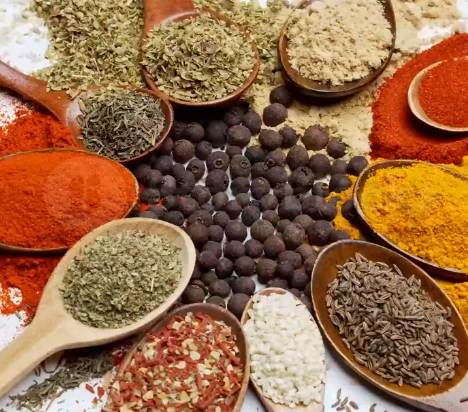
Spices can come in various forms, including whole, granulated, ground, or powdered, and their colors can vary widely, from yellow (like turmeric) to red (like red pepper) to brown (like cinnamon).
Commercial applications.
Natural spices are widely utilized across the food industry, in culinary arts, in the manufacturing of food and beverages, as well as in pharmaceutical and cosmetology for their aromatic profiles and sometimes for their antimicrobial properties.
Safety
Some spices can cause allergies, and the term "Natural Spices" is so generic that it does not shield the consumer from any health contraindications.

