

|

|
| App | Log in |
|
|
|
| App | Log in |

 | "Descrizione" by Ottika12 (1748 pt) | 2023-Sep-28 14:25 |
Review Consensus: 10 Rating: 10 Number of users: 1
| Evaluation | N. Experts | Evaluation | N. Experts |
|---|---|---|---|
| 1 | 6 | ||
| 2 | 7 | ||
| 3 | 8 | ||
| 4 | 9 | ||
| 5 | 10 |
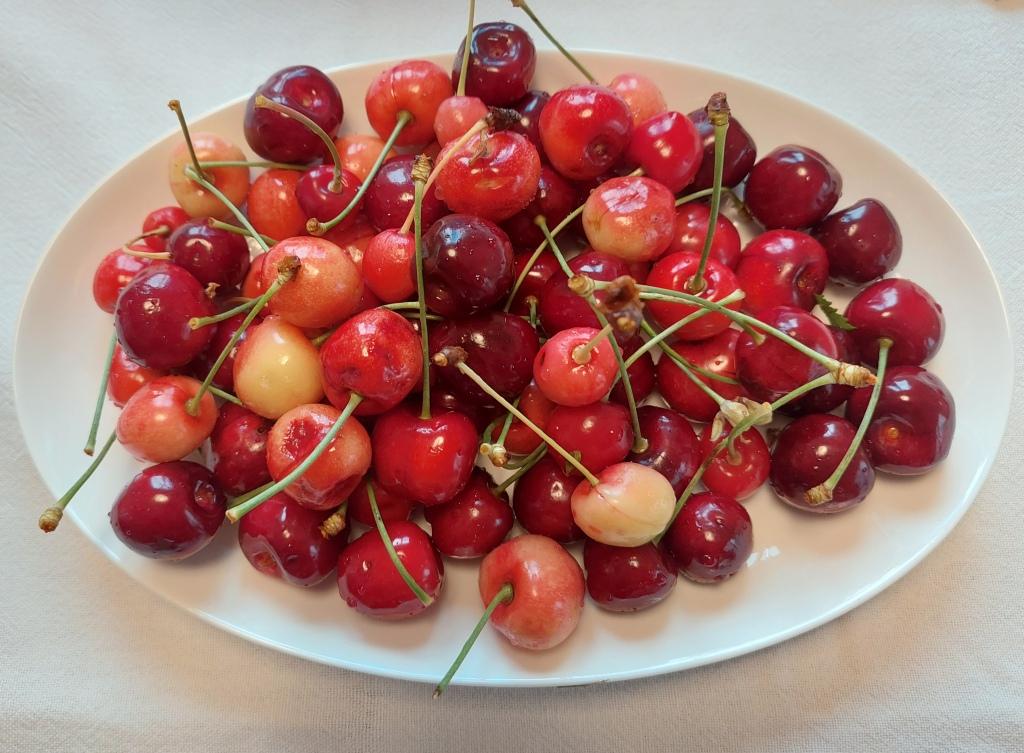
Cherries
Cherry comes from the tree Prunus avium L., which blooms in spring with small white flowers and belongs to the family Rosaceae. It is also called sweet cherry.
Many varieties of cherries: Sour, ferrovia, canada giant, lapins, germersdorfer etc.
Sour cherry (Prunus cerasus L.) among the cherries is the fruit that has the most attention for its content (1): anthocyanins, phenolic acids (hydrocinnamic acid, chlorogenic acid), flavonoids (catechin, epicatechin, epigallocatechin, gallocatechin, ursolic acis, oleanoic acid). All phenolic compounds have demonstrated antioxidant activity and curative effects on gastrointestinal tract, cancer, cardiovascular disease (1).
In a study on the possibility of Prunus avium extract to counteract the progression of cancer cells in prostate cancer, researchers found that the extract decreased the viability of neoplastic and non-neoplastic cells, while it increased apoptosis in neoplastic cells of the human prostate. These results broadened our knowledge of the mechanisms by which this extract modulates cell physiology, demonstrating a broad action on the characteristics of cancer (2).
Accumulation of uric acid (hyperuricemia) can cause inflammatory arthritis and gout especially in overweight or obese people. The daily intake of 240ml of tart cherry juice for 4 weeks has significantly reduced the accumulation of uric acid and may eliminate pro-inflammatory markers in individuals at risk (3). Fennel can therefore be attributed to the tart cherry, with anti-inflammatory, antiperuricemic and antiarthritic potential (3).
In a study of 22 participants, tart cherries intake significantly reduced post-prandial triglyceride levels (4).
The ability of tart cherry juice to reduce systolic blood pressure and LDL cholesterol in elderly people has also been confirmed. This may be partly due to its antioxidant and anti-inflammatory properties (5).
References_______________________________________________________________
(1) Anthocyanin-Rich Sour Cherry Extract Attenuates the Lipopolysaccharide-Induced Endothelial Inflammatory Response. Biro A, Markovich A, Homoki JR, Szőllősi E, Hegedűs C, Tarapcsák S, Lukács J, Stündl L, Remenyik J. Molecules. 2019 Sep 21;24(19). pii: E3427. doi: 10.3390/molecules24193427.
(2) Sweet Cherry Extract Targets the Hallmarks of Cancer in Prostate Cells: Diminished Viability, Increased Apoptosis and Suppressed Glycolytic Metabolism. Silva GR, Vaz CV, Catalão B, Ferreira S, Cardoso HJ, Duarte AP, Socorro S. Nutr Cancer. 2019 Sep 11:1-15. doi: 10.1080/01635581.2019.1661502.
(3) Consumption of 100% Tart Cherry Juice Reduces Serum Urate in Overweight and Obese Adults. Martin KR, Coles KM. Curr Dev Nutr. 2019 Feb 25;3(5):nzz011. doi: 10.1093/cdn/nzz011.
(4) Tart Cherry Consumption With or Without Prior Exercise Increases Antioxidant Capacity and Decreases Triglyceride Levels Following A High-Fat Meal. Polley KR, Oswell NJ, Pegg RB, Cooper JA. Appl Physiol Nutr Metab. 2019 Mar 27. doi: 10.1139/apnm-2018-0535.
(5) Effects of Tart Cherry Juice on Biomarkers of Inflammation and Oxidative Stress in Older Adults. Chai SC, Davis K, Zhang Z, Zha L, Kirschner KF. Nutrients. 2019 Jan 22;11(2). pii: E228. doi: 10.3390/nu11020228.

