Gli enzimi sono macromolecole complesse formate principalmente da proteine, ma possono anche includere componenti non proteici come coenzimi, metalli e gruppi prostetici. La loro specificità e attività catalitica sono determinate dalla loro struttura tridimensionale e dai siti attivi.
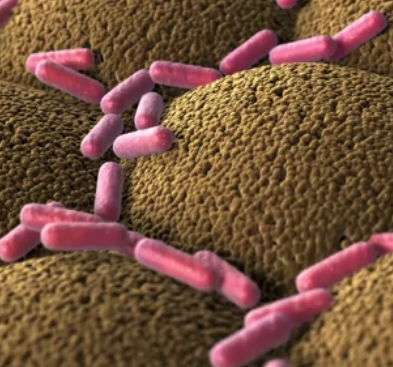
La produzione industriale di enzimi spesso utilizza microorganismi come batteri (es. Escherichia coli), funghi (es. Aspergillus) e lieviti (es. Saccharomyces cerevisiae). Questi microorganismi sono geneticamente modificati per esprimere l'enzima desiderato in grandi quantità.
Riassunto passo-passo del processo di sintesi chimica industriale.
- Selezione e ottimizzazione del microorganismo produttore di enzimi attraverso tecniche di ingegneria genetica.
- Coltivazione del microorganismo in bioreattori sotto condizioni controllate per massimizzare la produzione dell'enzima.
- Raccolta e lisi delle cellule microbiche per rilasciare gli enzimi intracellulari.
- Separazione dell'enzima dalle altre componenti cellulari attraverso vari processi come centrifugazione, ultrafiltrazione e cromatografia.
- Ulteriori passaggi di purificazione per ottenere preparazioni enzimatiche di alta qualità.
- Formulazione dell'enzima in forme stabili e convenienti per la conservazione e l'uso.
Gli enzimi sono generalmente incolori, ma la loro forma e consistenza possono variare da liquidi viscosi a polveri secche, a seconda della formulazione e del processo di produzione.
Applicazioni Mediche
Terapie Sostitutive. Per condizioni come la carenza di enzimi pancreatici (1), gli enzimi vengono somministrati per aiutare la digestione (2).
Diagnostica. Gli enzimi vengono utilizzati in test di laboratorio per diagnosticare varie condizioni, come un attacco di cuore.
Ricerca Biomedica. Gli enzimi sono essenziali per molte reazioni e processi in laboratorio, come la PCR (3).
Applicazioni Commerciali
Industria Alimentare. Gli enzimi vengono utilizzati nella produzione di molti alimenti, tra cui pane (per esempio, amilasi), formaggi (rennina) e birra (zimasi).
Prodotti di Pulizia. Gli enzimi, come le proteasi, vengono utilizzati in detersivi per migliorare l'efficacia nella rimozione delle macchie.
Produzione di Biocarburanti. Gli enzimi aiutano a spezzare la cellulosa in zuccheri che possono essere fermentati in etanolo.
Altre Applicazioni
Industria Tessile e Cartaria. Vengono utilizzati per modificare e migliorare le fibre.
Bibliografia_____________________________________________________________________
(1) Whitcomb DC, Lowe ME. Human pancreatic digestive enzymes. Dig Dis Sci. 2007 Jan;52(1):1-17. doi: 10.1007/s10620-006-9589-z.
Abstract. A primary function of the pancreas is to produce digestive enzymes that are delivered to the small intestine for the hydrolysis of complex nutrients. Much of our understanding of digestive enzymes comes from studies in animals. New technologies and the availability of the sequence of the human genome allow for a critical review of older reports and assumptions based on animal studies. This report updates our understanding of human pancreatic digestive enzymes with a focus on new insights into the biology of human proteases, lipases and amylases.
(2) Hoyle T. The digestive system: linking theory and practice. Br J Nurs. 1997 Dec 11-1998 Jan 7;6(22):1285-91. doi: 10.12968/bjon.1997.6.22.1285.
Abstract. This article, the second in the nutrition series, presents an outline of food chemistry and the digestion of energy-producing foods. It is hoped that this will facilitate understanding of some of the principles of nutrition. A number of 'clinical points' are highlighted to emphasize the link between theory and practice. The processes by which the chemical building blocks (carbon, oxygen, hydrogen and nitrogen) are formed into more complex molecules such as proteins, carbohydrates and fats are explained. The gross anatomy of the digestive system is outlined and the sites where digestive enzymes are secreted are identified. Regulation of the digestive system by endocrine secretions and the nervous system is described and tabulated.
(3) Dovgerd AP, Zharkov DO. Application of repair enzymes to improve the quality of degraded DNA templates for PCR amplification. Prikl Biokhim Mikrobiol. 2014 May-Jun;50(3):264-72. doi: 10.7868/s0555109914030210.
Abstract. PCR amplification of severely degraded DNA, including ancient DNA, forensic samples, and preparations from deeply processed foodstuffs, is a serious problem. Living organisms have a set of enzymes to repair lesions in their DNA. In this work, we have developed and characterized model systems of degraded high-molecular-weight DNA with a predominance of different types of damage. It was shown that depurination and oxidation of the model plasmid DNA template led to a decrease in the PCR efficiency. A set of enzymes performing a full cycle of excision repair of some lesions was determined. The treatment of model-damaged substrates with this set of enzymes resulted in an increased PCR product yield as compared with that of the unrepaired samples.




