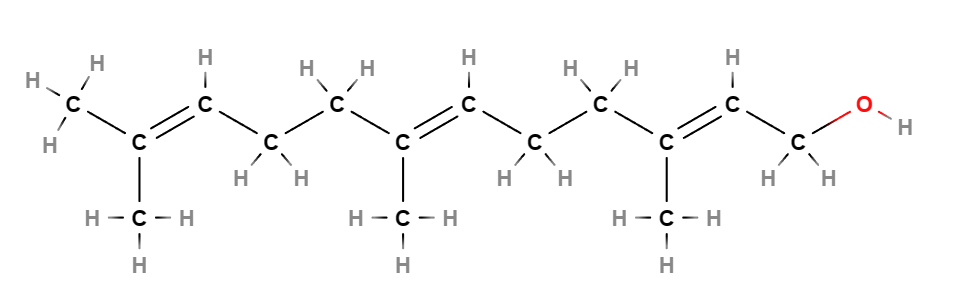
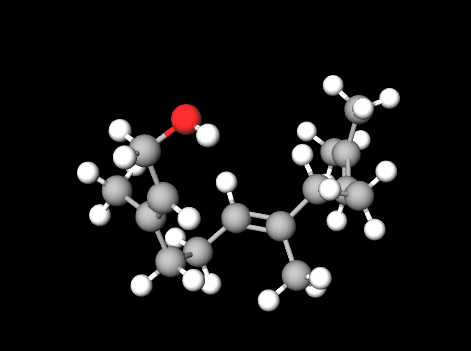
Farnesol è un alcol sesquiterpenico naturale, un componente di molti oli essenziali come citronella, ciclamino, limone e rosmarino.
Descrizione delle materie prime utilizzate nella produzione e loro funzioni.
- Isoprene. Un blocco di costruzione chiave per molti terpeni naturali, tra cui il farnesol. Si trova naturalmente in varie piante e può essere prodotto anche sinteticamente.
Processo di sintesi chimica industriale passo per passo.
- Produzione di isoprene. L'isoprene può essere prodotto sia da fonti naturali, come durante la distillazione della gomma naturale, sia attraverso metodi sintetici.
- Polimerizzazione. L'isoprene subisce una polimerizzazione per formare il farnesene, un precursore diretto del farnesol.
- Idrogenazione. Il farnesene viene idrogenato per produrre farnesol.
- Purificazione. Il farnesol prodotto viene purificato attraverso varie tecniche come la distillazione per garantire un prodotto di alta qualità.
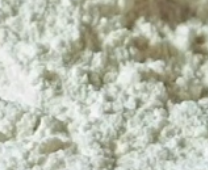
Si presenta in forma di polvere bianca.
A cosa serve e dove si usa
Medicina
Agente Antimicrobico. Il Farnesol ha dimostrato attività antimicrobica, che può essere utile nel prevenire la crescita di certi batteri e funghi (1).
Salute Dentale. Alcuni studi suggeriscono che il Farnesol, combinato con altri agenti, può inibire la formazione di placca dentale (2).
Cosmetica
E' un ingrediente soggetto a restrizioni III/82 come Voce pertinente negli allegati del regolamento europeo sui cosmetici n. 1223/2009. Sostanza o ingrediente segnalato: 2,6,10-Dodecatrien-1-ol, 3,7,11-trimethyl-
Agente deodorante. Quando in formulazioni cosmetiche sono inserite sostanze che emanano un odore sgradevole (tipici esempi sono il metil mercaptano e l'idrogeno solforato derivati dall'aglio) i deodoranti attenuano o cancellano le esalazioni sgradevoli. Contribuisce a contrastare la formazione di cattivi odori sulle superfici corporee.
Profumo. A differenza della fragranza che può contenere anche odori leggermente meno gradevoli o caratteristici, la dizione profumo indica soltanto le profumazioni molto gradevoli. Utilizzato per profumi e materie prime aromatiche.
Applicazioni Commerciali
Cosmetici. Il Farnesol è frequentemente utilizzato nei deodoranti per le sue proprietà antibatteriche, che aiutano a inibire la crescita di batteri che causano cattivi odori sulla pelle. Si trova anche nei profumi a causa del suo piacevole e delicato profumo.
Profumeria. Il Farnesol è un componente naturale di molti oli essenziali, tra cui rosa, fior d'arancio e citronella. Viene utilizzato in molti profumi come ingrediente profumante e per la sua capacità di miscelare e potenziare altre fragranze.
Altre Applicazioni
Strumento di Ricerca. Il Farnesol viene utilizzato nella ricerca scientifica come molecola di sensing del quorum, in particolare negli studi relativi a Candida albicans, un tipo di fungo.
Pesticidi. Le proprietà antimicrobiche del Farnesol hanno portato alla sua esplorazione come potenziale componente in pesticidi naturali o meno tossici.
Sicurezza
Si ritiene che Farnesol abbia un potenziale di sensibilizzazione e richiede l'etichettatura nell'Unione europea se viene utilizzato in un prodotto di consumo (3).
- Molecular Formula C15H26O
- Molecular Weight 222.37 g/mol
- CAS 106-28-5
- UNII X23PI60R17
- EC Number 225-004-1
- DTXSID2040789
- FEMA 2478
Synonyms:
trans,trans-Farnesol
Bibliografia_____________________________________________________________________
(1) Polke M, Leonhardt I, Kurzai O, Jacobsen ID. Farnesol signalling in Candida albicans - more than just communication. Crit Rev Microbiol. 2018 Mar;44(2):230-243. doi: 10.1080/1040841X.2017.1337711.
Abstract. Candida albicans is a successful colonizer of the human host, which can, under certain circumstances cause a range of clinically diverse infections. Important virulence-associated traits of the fungus, such as the dimorphic switch and biofilm formation, are controlled by the quorum sensing molecule farnesol. Given the potential of farnesol as a novel antifungal drug, there has been increasing research into the mechanism underlying farnesol sensing and action in C. albicans. However, despite the identification of various factors involved in farnesol signalling, its exact mode of action remains largely unclear. This review provides an overview of the currently known aspects of farnesol production, sensing and action within C. albicans. We also illustrate the characteristic of C. albicans to simultaneously produce and tolerate high farnesol concentrations that are lethal to other microbes. Furthermore, we summarize new literature on the role of farnesol in the interaction of C. albicans with the human host and highlight its action as a potent immunomodulatory molecule.
(2) Leyva Del Rio D, Sartori N, Tomblin NB, Phark JH, Pardi V, Murata RM, Duarte S Jr. Bioactive Dental Adhesive System With tt-Farnesol: Effects on Dental Biofilm and Bonding Properties. Front Bioeng Biotechnol. 2020 Jul 23;8:865. doi: 10.3389/fbioe.2020.00865.
(3) Gilpin S, Maibach H. Allergic contact dermatitis caused by farnesol: clinical relevance. Cutan Ocul Toxicol. 2010 Dec;29(4):278-87. doi: 10.3109/15569527.2010.511369.
Abstract. Context: The fragrance material farnesol is cited as an infrequent but important cause of allergic contact dermatitis (ACD). It is included in the fragrance mix II patch series and requires labeling in the European Union if it is used in a consumer product. Objective: To review the existing literature to determine the causative role of farnesol in clinical contact allergy. Materials and methods: Survey of the literature on farnesol studies; predictive and clinical elicitation tests in case reports, reviews, and abstracts. Results: Predictive animal studies demonstrated in most cases that farnesol was a nonsensitizer. However, 2 local lymph node assays (LLNAs) indicated strong sensitization potential. Predictive human test data indicated a low potential, if any, for sensitization in human tests with farnesol at 10% or 12%. A few clinical reports indicated low-level allergy or questionable reactions to farnesol, with 5% being the most commonly used. There were also reports in which no reactions were seen. Discussion: Predictive testing on farnesol in animals shows conflicting results depending on the study methodology used. Human predictive patch-test data also had gaps that prevented it from being definitive in pointing to a causative relationship between farnesol and contact dermatitis. The real sensitizing potential of a material can best be determined by evaluating the clinical and epidemiological data so as to help resolve the conflicting animal and human predictive test data. Conclusions: This literature and scoring exercise showed that predictive and clinical elicitation data do not document a clear causative determination that farnesol is a frequent contact allergen. Detailed clinical relevance and patient studies should clarify the clinical problem farnesol represents.