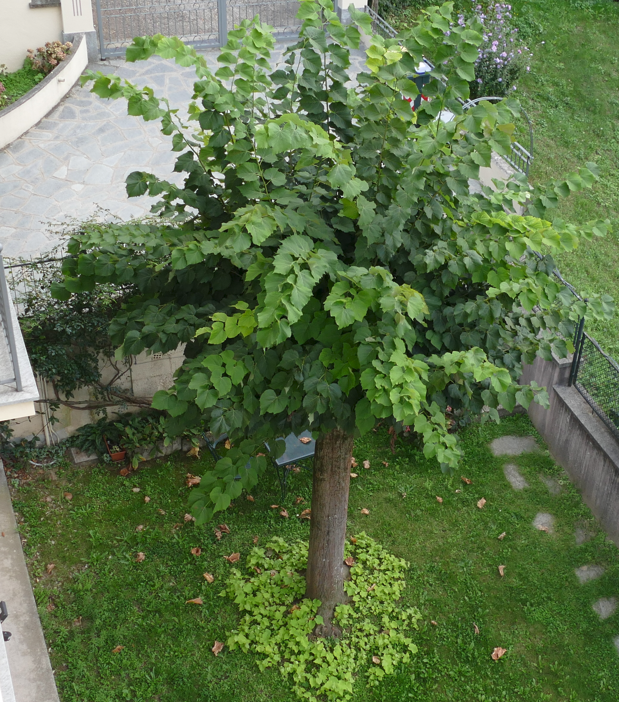
Tilia Platyphyllos Flower Extract is a natural compound extracted from the flowers of the Lime tree, botanical family Tilia platyphyllos, Tiliaceae.
The name describes the structure of the molecule
- "Tilia": the botanical genus to which the plant belongs. Plants of this genus are commonly known as linden or lime trees.
- "Platyphyllos": the specific species within the Tilia genus. This plant is commonly known as "Large-leaved Lime" or "Large-leaved European Linden".
- "Flower Extract": the product is an extract derived from the flowers of this plant.
Description of raw materials used in production
- Tilia Platyphyllos Flowers. Fresh or dried flowers are the primary raw material.
- Solvent. Water, alcohol, or other organic solvents may be used to extract the desired compounds from the flowers.
- Preservatives. Sometimes added to extend the shelf life of the extract.
Detailed summary of the production process.
- Harvesting. Tilia Platyphyllos flowers are harvested, preferably when they are fully bloomed.
- Preparation. The flowers can either be used fresh or dried for preservation.
- Extraction. The flowers are soaked in the solvent for a specified period, allowing the desired compounds to get extracted.
- Filtration. The liquid is filtered to remove solid particles and impurities.
- Evaporation. If used, alcohol or other organic solvents are evaporated off, leaving behind the concentrated extract.
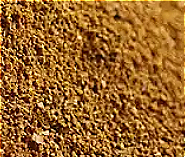
It appears in the form of a brown powder
What it is for and where
Medical
The hydroethanolic extracts of Tilia platyphyllos are rich in phenolic compounds and have shown in vitro antioxidant, anti-inflammatory, and anticancer properties (1). Epicatechin, phenolic acid, and protocatechuic acid present in more abundant amounts appeared to have antioxidant, anti-inflammatory, and antitumor potential (2).
Medical Applications
Soothing Properties. In herbal medicine, Tilia Platyphyllos Flower Extract is sometimes used for its soothing properties, especially in preparations meant to help relax and calm the mind and body.
Cosmetics
Skin conditioning agent. It is the mainstay of topical skin treatment as it has the function of restoring, increasing or improving skin tolerance to external factors, including melanocyte tolerance. The most important function of the conditioning agent is to prevent skin dehydration, but the subject is rather complex and involves emollients and humectants that can be added in the formulation.
CAS 91770-16-0
EC number 294-800-9
Commercial Applications
Cosmetics and Skin Care. Tilia Platyphyllos (Linden) Flower Extract is known for its soothing and refreshing properties. It can be used in lotions, creams, and toners.
Bath Products. Owing to its calming attributes, it can be found in bath gels and soaps.
Hair Care Products. The extract may be added to shampoos and conditioners for its emollient properties.
Bibliografia_____________________________________________________________________
(1) Ferreira T, Nascimento-Gonçalves E, Macedo S, Borges I, Gama A, M Gil da Costa R, Neuparth MJ, Lanzarin G, Venâncio C, Félix L, Gaivão I, Alvarado A, Pires MJ, Bastos MMSM, Medeiros R, Nogueira A, Barros L, Ferreira ICFR, Rosa E, Oliveira PA. Toxicological and anti-tumor effects of a linden extract (Tilia platyphyllos Scop.) in a HPV16-transgenic mouse model. Food Funct. 2021 May 11;12(9):4005-4014. doi: 10.1039/d1fo00225b. PMID: 33978005.
Abstract. Tilia platyphyllos Scop. is a popular broad-leaved tree, native to Central and Southern Europe. Hydroethanolic extracts rich in phenolic compounds obtained from T. platyphyllos Scop. have shown in vitro antioxidant, anti-inflammatory and antitumor properties. The aim of this work was to evaluate the therapeutic properties of a hydroethanolic extract obtained from T. platyphyllos in HPV16-transgenic mice. The animals were divided into eight groups according to their sex and phenotype. Four groups of female: HPV+ exposed to linden (HPV linden; n = 6), HPV+ (HPV water; n = 4), HPV- exposed to linden (WT linden; n = 5) and HPV- (WT water; n = 4) and four groups of male: HPV+ exposed to linden (HPV linden; n = 5), HPV+ (HPV water; n = 5), HPV- exposed to linden (WT linden; n = 5) and HPV- (WT water; n = 7). The linden (Tilia platyphyllos Scop.) extract was orally administered at a dose of 4.5 mg/10 mL per animal (dissolved in water) and changed daily for 33 days. The hydroethanolic extract of T. platyphyllos consisted of protocatechuic acid and (-)-epicatechin as the most abundant phenolic acid and flavonoid, respectively, and was found to be stable during the studied period. In two male groups a significant positive weight gain was observed but without association with the linden extract. Histological, biochemical, and oxidative stress analyses for the evaluation of kidney and liver damage support the hypothesis that the linden extract is safe and well-tolerated under the present experimental conditions. Skin histopathology does not demonstrate the chemopreventive effect of the linden extract against HPV16-induced lesions. The linden extract has revealed a favourable toxicological profile; however, additional studies are required to determine the chemopreventive potential of the linden extract.
(2) Jabeur I, Martins N, Barros L, Calhelha RC, Vaz J, Achour L, Santos-Buelga C, Ferreira IC. Contribution of the phenolic composition to the antioxidant, anti-inflammatory and antitumor potential of Equisetum giganteum L. and Tilia platyphyllos Scop. Food Funct. 2017 Mar 22;8(3):975-984. doi: 10.1039/c6fo01778a.
Abstract. Naturally-occurring phytochemicals have received pivotal attention in the last few years, due to the increasing evidence of biological activities. Thus, in the present study, the antioxidant, anti-inflammatory and antitumor potentials of hydroethanolic extracts rich in phenolic compounds obtained from Equisetum giganteum L. and Tilia platyphyllos Scop. were assessed and directly correlated with their content of phenolic compounds, by using HPLC-DAD-ESI/MS analysis. T. platyphyllos showed the higher bioactive potential, evaluated in terms of antioxidant (radical scavenging effects - 105 μg mL-1, reducing power - 123 μg mL-1, β-carotene bleaching inhibition - 167 μg mL-1, and lipid peroxidation inhibition - 56 μg mL-1), anti-inflammatory (225 μg mL-1 inhibited 50% of nitric oxide production) and antitumor (breast - 224 μg mL-1; lung - 247 μg mL-1; cervical - 195 μg mL-1 and hepatocellular - 173 μg mL-1 carcinoma cells) activity, without having cytotoxic effects (>400 μg mL-1). These biological properties were positively correlated with its content and composition of phenolic compounds. Flavonoid contents were markedly higher than the content of phenolic acids, in both samples, being respectively 50.4 mg g-1 and 11.65 mg g-1 for T. platyphyllos, and 21.7 mg g-1 and 4.98 mg g-1 for E. giganteum. Moreover, while in E. giganteum extract, kaempferol-O-glucoside-O-rutinoside was the most abundant flavonoid, in T. platyphyllos extract protocatechuic acid and (-)-epicatechin were the most abundant phenolic acid and flavonoid, respectively. In relation to their content of phenolic acids, protocatechuic and caffeic acids existed in higher abundance in T. platyphyllos and E. giganteum hydroethanolic extracts, respectively. However, it would be interesting to evaluate the in vivo efficacy of both plant extracts to unveil the involved modes of action and to establish effective therapeutic doses.




