



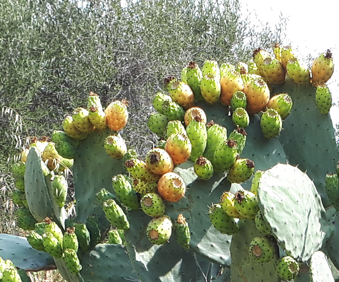
Opuntia ficus-indica seed oil is a compound of natural origin obtained from the oil of the seeds of the prickly pear plant (Opuntia ficus-indica ((L.) Mill., 1768) belonging to the botanical family Cactaceae.
The name describes the structure of the ingredient
- "Opuntia Ficus-Indica" refers to the scientific name of the plant commonly known as prickly pear, a species of cactus.
- "Seed" indicates that the oil is extracted from the seeds of the Opuntia Ficus-Indica plant.
- "Oil": the product is an oil, a fatty substance that is liquid at room temperature.
Description of raw materials used in production
- Opuntia Ficus-Indica Seeds. These are the seeds of the prickly pear cactus, native to Mexico but cultivated in various arid and semi-arid regions around the world.
Step-by-step summary of industrial extraction process
Harvesting and Seed Collection.
- The prickly pear fruit is harvested and then processed to extract the seeds.
Oil Extraction.
- Once the seeds are collected, they are cleaned and then cold pressed to extract the oil. Cold pressing ensures the oil retains its natural properties, nutrients, and antioxidants.
Refining.
- The extracted oil may undergo a refining process to remove any impurities and to achieve a desired consistency and clarity.

What it is for and where
Cosmetics
Skin conditioning agent - Emollient. Emollients have the characteristic of enhancing the skin barrier through a source of exogenous lipids that adhere to the skin, improving barrier properties by filling gaps in intercorneocyte clusters to improve hydration while protecting against inflammation. In practice, they have the ability to create a barrier that prevents transepidermal water loss. Emollients are described as degreasing or refreshing additives that improve the lipid content of the upper layers of the skin by preventing degreasing and drying of the skin. The problem with emollients is that many have a strong lipophilic character and are identified as occlusive ingredients; they are oily and fatty materials that remain on the skin surface and reduce transepidermal water loss. In cosmetics, emollients and moisturisers are often considered synonymous with humectants and occlusives.
CAS 90082-21-6
EC number 290-109-1
Commercial Applications
Cosmetics. Utilized in skincare products for its hydrating and anti-aging properties.
Hair products. Employed in oils and conditioners to nourish and soften the hair.
Nail products. Can be used in nail care products to promote stronger and healthier nails.
Medical Applications
Skin health. Could be utilized in medical treatments to enhance skin health due to its antioxidant and anti-inflammatory properties.

