



Hydroxypinacolone Retinoate: properties, uses, pros, cons, safety
Hydroxypinacolone Retinoate is a vitamin A derivative mainly used in skincare products for its anti-aging properties. It is known for being less irritating compared to other forms of retinoids and for its ability to stimulate collagen production and promote cell turnover without causing redness and irritation.
The name describes the structure of the molecule
- Hydroxy refers to a -OH (hydroxyl) functional group present in the molecule.
- Pinacolone is a type of ketone, which is an organic compound characterized by a carbonyl group (a carbon atom double-bonded to an oxygen atom) bonded to two alkyl groups.
- Retinoate indicates an ester of retinoic acid, which is a form of vitamin A. Esters are compounds formed from the reaction between an acid and an alcohol.
Description of raw materials used in production
- Retinoic acid - The base compound from which Hydroxypinacolone Retinoate is derived.
- Pinacolone - Used to esterify retinoic acid.
Step-by-step summary of industrial chemical synthesis process
- Preparation of Retinoic Acid. Retinoic acid, usually sourced from beta-carotene (found in carrots and other orange vegetables), undergoes isomerization.
- Synthesis of HPR. Through esterification, retinoic acid is reacted with hydroxypinacolone, creating hydroxypinacolone retinoate.
- Purification. The HPR is purified through various methods like recrystallization or chromatography to achieve the desired purity.
- Testing. Rigorous testing for purity and efficacy is performed.
- Formulation. HPR is incorporated into various cosmetic formulations.
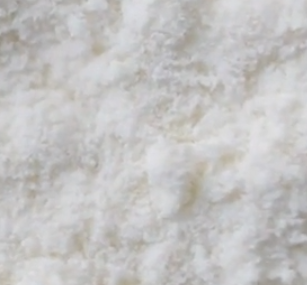
It is often found as a light yellow to orange viscous liquid or white powder.
What it is for and where
Cosmetics
Skin conditioning agent. It is the mainstay of topical skin treatment as it has the function of restoring, increasing or improving skin tolerance to external factors, including melanocyte tolerance. The most important function of the conditioning agent is to prevent skin dehydration, but the subject is rather complex and involves emollients and humectants that can be added in the formulation.
Medical Applications
Dermatological Treatments. It might be used in treatments meant to enhance the appearance of scars, hyperpigmentation spots, and other age-related skin conditions.
Acne Products. Owing to its comedolytic properties, it's used in products aimed at treating acne. (1).
Commercial Applications
- Cosmetics and Skincare. Leveraged for its anti-aging properties, it assists in reducing wrinkles, stimulating collagen production, and renewing the skin.
- Serums and Lotions. Often featured in serums and lotions for its ability to brighten the skin and improve skin texture.
- Exfoliating Products. Acts as a chemical exfoliant to slough off dead skin cells and reveal brighter, more youthful skin.
Potential Health Concerns
- Skin Sensitivity. Some individuals might experience skin sensitivity, irritation, or allergic reactions. Patch testing before widespread use is recommended.
- Pregnancy and Breastfeeding. The use of retinoids is generally discouraged during pregnancy and breastfeeding due to potential risk, though HPR is considered a milder form.
Regulations
Different regions (like the EU, USA, or Asia) may have specific guidelines and regulations concerning the usage levels, labeling, and claims of skincare products containing retinoids, including HPR.
In the cosmetic industry, products containing HPR should adhere to cosmetic regulation and should pass safety assessments.
Storage and Stability
Stable under ordinary conditions but may degrade with exposure to light and air. Products containing HPR should be stored in air-tight, light-protective packaging.
Environmental Impact
The impact largely depends on the manufacturing processes and sourcing of raw materials, which may involve the use of solvents and create by-products.
Packaging of cosmetic products and sustainability of ingredients might also be considered in an overall environmental impact assessment.
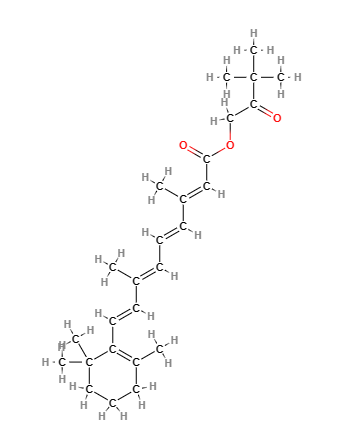 | 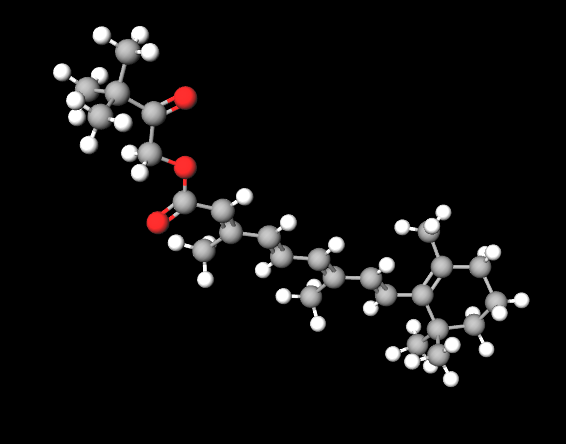 |
- Molecular Formula C26H38O3
- Molecular Weight 398.6 g/mol
- CAS 893412-73-2
- UNII NJ3V2F02E1
- EC Number 826-245-0
- Nikkaji J3.287.028G
Synonyms:
Granactive retexture T
Retinoic acid, 3,3-dimethyl-2-oxobutyl ester

