Sigesbeckia Orientalis Extract è un estratto ottenuto dalle foglie della piantina Sigesbeckia orientalis L., famiglia Asteraceae.
Il nome definisce la struttura della molecola
- "Sigesbeckia Orientalis" si riferisce a una pianta erbacea perenne che cresce in molte parti dell'Asia. È conosciuta anche con nomi comuni come "St. Paul's wort" o "erba di San Paolo".
- "Extract" indica che il prodotto è una sostanza ottenuta estraendo componenti desiderati dalla pianta, solitamente attraverso processi come l'infusione, la decozione o la percolazione.
Descrizione delle materie prime utilizzate nella produzione
- Sigesbeckia Orientalis - La pianta da cui viene estratto l'ingrediente attivo.
- Solventi - Tipicamente l'acqua, l'etanolo o una combinazione di entrambi sono utilizzati per estrarre i componenti benefici dalla pianta.
Processo di sintesi chimica industriale passo per passo
- Raccolta - La Sigesbeckia Orientalis viene raccolta.
- Pulizia e preparazione - La pianta viene pulita da impurità e preparata per l'estrazione.
- Estrazione - La pianta viene immersa in un solvente per estrarre i componenti benefici.
- Filtrazione - La soluzione estratta viene filtrata per rimuovere particelle solide.
- Concentrazione - Il filtrato viene poi concentrato per ottenere l'estratto desiderato.
- Essiccazione - Se necessario, l'estratto viene essiccato per ottenere una polvere.
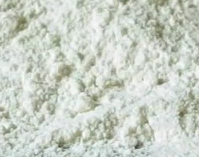
Si presenta in forma di polvere bianca.
A cosa serve e dove si usa
Medicina
Sigesbeckia orientalis L. è utilizzata dalla medicina tradizionale cinese come antinfiammatorio (1) e neuroprotettivo (1).
Cosmetica
Agente condizionante della pelle. Rappresenta il perno del trattamento topico della pelle in quanto ha la funzione di ripristinare, aumentare o migliorare la tolleranza cutanea a fattori esterni, compresa la tolleranza dei melanociti. La funzione più importante dell'agente condizionante è prevenire la disidratazione della pelle, ma il tema è piuttosto complesso e coinvolge emollienti ed umettanti che possono essere aggiunti nella formulazione.
Tonic. E' un prodotto che viene utilizzato per il trattamento dei capelli quando il cuoio capelluto è pulito o dopo lo shampoo. Stimola la crescita dei capelli, rivitalizza il cuoio capelluto per una crescita sana dei capelli, ne riduce la caduta. Produce una sensazione di benessere su pelle e capelli.
CAS 90106-87-9
EC number 290-313-0
Applicazioni Commerciali
Cosmetica. L'estratto di Sigesbeckia orientalis è incorporato in prodotti per la cura della pelle per le sue proprietà anti-infiammatorie e lenitive.
Applicazioni Mediche
Antidolorifico. Usato in alcuni balsami e gel per il sollievo dal dolore muscolare e articolare.
Trattamenti Anti-infiammatori. Tradizionalmente utilizzato per trattare affezioni infiammatorie come l'artrite.
Ricerca. Studiato per i suoi potenziali benefici nel trattamento di diverse condizioni della pelle e per le sue proprietà antiossidanti.
Terapie per la pelle. Utilizzato in trattamenti per affezioni cutanee come eczemi e psoriasi a causa delle sue proprietà lenitive e rigeneranti.
Bibliografia_____________________________________________________________________
(1) Chen CM, Houng JY, Ko TL, Juan SH, Chou HC. Sigesbeckia orientalis Extract Ameliorates the Experimental Diabetic Nephropathy by Downregulating the Inflammatory and Oxidative Stress Signaling Pathways. Evid Based Complement Alternat Med. 2022 Aug 5;2022:3323745. doi: 10.1155/2022/3323745.
Abstract. Diabetes in children and its complications are on the rise globally, which is accompanied by increasing in diabetes-related complications. Oxidative stress and inflammation induced by elevated blood sugar in diabetic patients are considered risk factors associated with the development of diabetes complications, including chronic kidney disease and its later development to end-stage renal disease. Microvascular changes within the kidneys of DM patients often lead to chronic kidney disease, which aggravates the illness. Sigesbeckia orientalis extract (SOE), reported to have strong antioxidative and excellent anti-inflammatory activities, is used in the modern practice of traditional Chinese medicine. Kidneys from three groups of control mice (CTR), mice with streptozotocin (STZ)-induced diabetes (DM), and mice with STZ-induced DM treated with SOE (DMRx) were excised for morphological analyses and immunohistochemical assessments. Only mice in the DM group exhibited significantly lower body weight, but higher blood sugar was present. The results revealed more obvious renal injury in the DM group than in the other groups, which appeared as greater glomerular damage and tubular injury, sores, and plenty of connective tissues within the mesangium. Not only did the DM group have a higher level of cytokine, tumor necrosis factor, and the oxidative stress marker, 8-hydroxyguanosine expression, but also factors of the nuclear factor pathway and biomarkers of microvascular status had changed. Disturbances to the kidneys in DMRx mice were attenuated compared to the DM group. We concluded that SOE is an effective medicine, with antioxidative and anti-inflammatory abilities, to protect against or attenuate diabetic nephropathy from inflammatory disturbances by oxidative stress and to cure vessel damage in a hyperglycemic situation. Copyright © 2022 Chung-Ming Chen et al.
(2) Chu JMT, Abulimiti A, Wong BSH, Zhao GD, Xiong SH, Zhao MM, Wang Y, Chen Y, Wang J, Zhang Y, Chang RCC, Yu H, Wong GTC. Sigesbeckia orientalis L. Derived Active Fraction Ameliorates Perioperative Neurocognitive Disorders Through Alleviating Hippocampal Neuroinflammation. Front Pharmacol. 2022 Mar 17;13:846631. doi: 10.3389/fphar.2022.846631. PMID: 35370714; PMCID: PMC8969099.
Abstract. Neuroinflammation is closely related to the pathogenesis of perioperative neurocognitive disorders (PNDs), which is characterized by the activation of microglia, inflammatory pathways and the release of inflammatory mediators. Sigesbeckia orientalis L. (SO) is a traditional Chinese medicine which demonstrates anti-inflammatory activities in different models. In this study, we aim to isolate the active fraction from the extract of SO with higher anti-inflammatory potential and confirm if the selected fraction exerts neuroprotection against the development of PND in an animal model. Moreover, the components in the selected fraction would be determined by UPLC-PDA analysis. Three fractions were prepared by column chromatography packed with three different macroporous resins. Anti-inflammatory activities of prepared fractions were accessed in microglial BV2 cultures by nitric oxide release, gene expression of inflammatory cytokines and activation of inflammatory JNK and NF-kB pathway molecules. Our results demonstrated that the fraction prepared from D101 macroporous resin (D101 fraction) exhibited a more potent anti-neuroinflammatory effect. The neuroprotective effect of D101 fraction was further examined in postoperative mice. Our results showed that surgery-induced cognitive dysfunction was attenuated by the D101 fraction treatment. This fraction also reduced microglial activation, inflammatory cytokines and inhibiting JNK and NF-kB pathway molecules in the hippocampus. In addition, surgery induced dendritic spine loss while D101 fraction ameliorated the spine loss in the hippocampus. For safety concerns, anti-thrombotic effect was examined by tail bleeding assay and no significant change of the bleeding pattern was found. UPLC-PDA analysis indicated that flavonoids (rutin, isochlorogenic acid A, isochlorogenic acid C) and terpenoid (darutoside) were the most important components in the D101 fraction. Our results support a therapeutic, as well as the translational potential for D101 fraction in ameliorating postoperative neuroinflammation and subsequent PND in the clinical setting without increasing bleeding tendencies. Copyright © 2022 Chu, Abulimiti, Wong, Zhao, Xiong, Zhao, Wang, Chen, Wang, Zhang, Chang, Yu and Wong.




