



Ocimum basilicum Leaf Extract
Decomposition of the name and function of the components
- Ocimum - Genus of aromatic plants to which basil belongs.
- basilicum - The specific species of basil, commonly used in cooking as a herb and in herbal medicine.
- Leaf Extract - Specifies that the extract is obtained from the leaves of the plant.
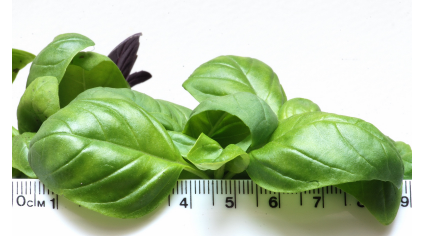
Description and function of the raw materials used in production
- Basil leaves - The main part from which the extract is obtained. They contain essential oils (like linalool and eugenol) that have antimicrobial and antioxidant properties.
- Solvents (like ethanol or water) - Used to extract active compounds from the leaves.
Summary of its industrial synthesis or extraction process step by step
- Harvesting - Basil leaves are either manually or mechanically harvested from the plant.
- Cleaning - The harvested leaves are washed to remove impurities, bugs, and contaminants.
- Grinding - The cleaned leaves are ground to increase surface area and improve extraction efficiency.
- Extraction - The ground leaves are exposed to a solvent (like ethanol or water) to extract active compounds.
- Filtration - Once extracted, the compounds are filtered out to separate them from the solid leaf parts.
- Evaporation - If a solvent is used, it's removed to obtain a concentrated extract.
- Storage - The concentrated extract is then stored in suitable containers, often under nitrogen, to prevent oxidation and ensure freshness.
What it is for and where
Cosmetics
Skin conditioning agent. It is the mainstay of topical skin treatment as it has the function of restoring, increasing or improving skin tolerance to external factors, including melanocyte tolerance. The most important function of the conditioning agent is to prevent skin dehydration, but the subject is rather complex and involves emollients and humectants that can be added in the formulation.
CAS 84775-71-3
EC number 283-900-8
Applications:
- Culinary: Beyond traditional uses in Italian cuisine, such as in pesto, basil extract can be infused into sauces, marinades, and beverages to enhance flavor profiles.
Cosmetics:
- Skin Care: Due to its antimicrobial properties, it can aid in preventing acne and other skin infections.
- Anti-aging: Its antioxidant properties make it useful in anti-aging products.
Medical:
- Stress: Basil extract is known for its adaptogenic properties, helping combat stress.
- Oral Health: It can be employed in mouthwashes or toothpastes for its antimicrobial benefits.
Properties:
- Antimicrobial: Shields against various pathogens, encompassing both bacteria and fungi.
- Antioxidant: Basil extract is abundant in polyphenols, which guard cells from oxidative damage.
- Anti-inflammatory: Contains compounds that might reduce inflammation in the body, like eugenol.
Studies
Due to its polyphenolic and flavonoid content, basil can be considered an important ingredient in diets aimed at a healthy result (1).
References________________________________________________________________________
(1) Sestili P, Ismail T, Calcabrini C, Guescini M, Catanzaro E, Turrini E, Layla A, Akhtar S, Fimognari C. The potential effects of Ocimum basilicum on health: a review of pharmacological and toxicological studies. Expert Opin Drug Metab Toxicol. 2018 Jul;14(7):679-692. doi: 10.1080/17425255.2018.1484450.

