



Osmanthus fragrans leaf extract, estratto di foglie di Osmanthus fragrans, un arbusto appartenente alla famiglia delle Oleaceae, noto anche come Osmanto odoroso, è un ingrediente comune in cosmetici e prodotti per la cura della pelle, nonché in alcune bevande e prodotti alimentari. L'osmanto odoroso è noto per le sue proprietà aromatiche, spesso descritte come un mix di gelsomino e albicocca.
Il nome definisce la struttura della molecola
- "Osmanthus" è il genere della pianta
- "fragrans" indica la specie, ed è anche un riferimento al profumo distintivo e piacevole delle sue fioriture.
- "Leaf extract" indica che l'ingrediente è derivato dalle foglie dell'osmanto.
Descrizione delle materie prime utilizzate nella produzione -
Le foglie dell'Osmanthus fragrans sono la materia prima principale per questo estratto. Vengono raccolte, essiccate e poi sottoposte a un processo di estrazione per ottenere i composti benefici.
Processo di sintesi
- Raccolta delle foglie - Le foglie mature vengono raccolte dalla pianta.
- Essiccazione - Le foglie vengono essiccate per preservarne gli oli essenziali e gli altri composti.
- Estrazione - Le foglie secche vengono poi immerse in un solvente, come alcol o acqua, per estrarre i composti benefici.
- Separazione - Dopo un certo periodo di tempo, il solvente viene separato, lasciando dietro l'estratto concentrato delle foglie.
- Purificazione - L'estratto viene purificato per rimuovere eventuali impurità.
- Confezionamento - L'estratto purificato viene poi confezionato per la vendita o utilizzato come ingrediente in vari prodotti.
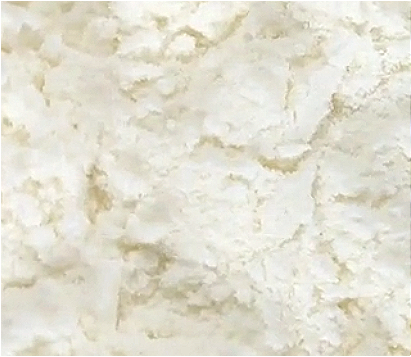
Si presenta in forma di polvere giallastra
A cosa serve e dove si usa
Cosmetica
Umettante. Composto igroscopico utilizzato per ridurre al minimo la perdita d'acqua nella pelle e per prevenirne l'essiccazione facilitando un più rapido e maggiore assorbimento di acqua nello strato corneo dell'epidermide. L'epidermide è il più superficiale dei tre strati con cui è composta la pelle umana (epidermide, derma e ipoderma) ed è lo strato che provvede al mantenimento dell'idratazione in tutti e tre gli strati. A sua volta l'epidermide è composta da cinque strati: corneo, il più superficiale, granulare, spinoso, lucido, basale. Gli umettanti hanno la capacità di trattenere nello strato corneo l'acqua che attirano dall'aria ed hanno la funzione di idratare la pelle. Meglio utilizzarli prima degli emollienti che sono a base d'olio.
Agente condizionante della pelle. Rappresenta il perno del trattamento topico della pelle in quanto ha la funzione di ripristinare, aumentare o migliorare la tolleranza cutanea a fattori esterni, compresa la tolleranza dei melanociti. La funzione più importante dell'agente condizionante è prevenire la disidratazione della pelle, ma il tema è piuttosto complesso e coinvolge emollienti ed umettanti che possono essere aggiunti nella formulazione.
Applicazioni
Prodotti Cosmetici e per la Cura della Pelle - Grazie alle sue proprietà antiossidanti e idratanti, l'estratto di foglie di Osmanthus fragrans può essere utilizzato in creme, lozioni e altri prodotti per la cura della pelle.
Prodotti per Capelli - Alcuni prodotti per la cura dei capelli possono contenere questo estratto per beneficiare delle sue proprietà nutrienti e condizionanti.
Profumeria - Anche se le foglie non sono fragranti come i fiori, l'estratto potrebbe ancora essere utilizzato in alcune formulazioni per dare una nota verde o per sfruttare le sue proprietà terapeutiche.
Medicina Tradizionale
In alcune medicine tradizionali l'estratto di foglie è utilizzato per trattare una varietà di disturbi, anche se la ricerca scientifica a volte non ha confermato alcuni di questi usi. In effetti gli studi sulle attività positive biologiche di Osmanthus fragrans si riferivano ai principi bioattivi di questa pianta, e il meccanismo responsabile di questi estratti e ingredienti non è stato ben identificato (1).
Studi
Yang J, Gu T, Lu Y, Xu Y, Gan RY, Ng SB, Sun Q, Peng Y. Edible Osmanthus fragrans flowers: aroma and functional components, beneficial functions, and applications. Crit Rev Food Sci Nutr. 2023 Jun 7:1-14. doi: 10.1080/10408398.2023.2220130.
Abstract. Osmanthus fragrans (O. fragrans) has been cultivated in China for over 2,500 years as a traditional fragrant plant. Recently, O. fragrans has drawn increasing attention due to its unique aroma and potential health benefits. In this review, the aroma and functional components of O. fragrans are summarized, and their biosynthetic mechanism is discussed. The beneficial functions and related molecular mechanism of O. fragrans extract are then highlighted. Finally, potential applications of O. fragrans are summarized, and future perspectives are proposed and discussed. According to the current research, O. fragrans extracts and components have great potential to be developed into value-added functional ingredients with preventive effects on certain chronic diseases. However, it is crucial to develop efficient, large-scale, and commercially viable extraction methods to obtain the bioactive components from O. fragrans. Furthermore, more clinical studies are highly needed to explore the beneficial functions of O. fragrans and guide its development into functional food products.
Le DD, Lee YE, Lee M. Triterpenoids from the leaves of Osmanthus fragrans var. aurantiacus with their anti-melanogenesis and anti-tyrosinase activities. Nat Prod Res. 2022 Dec;36(24):6414-6420. doi: 10.1080/14786419.2022.2035384.
Abstract. Excessive production of melanin causes various dermatological disorders including hyperpigmentation. To search for anti-melanogenesis candidates from natural products, we discovered that leaves of Osmanthus fragrans var. aurantiacus (OFA) suppressed melanin production. The extract of OFA leaves and its fractions were subjected to bioactivity-guided separation by targeting active constituents and a total of four triterpenoids were obtained: 3α,24-dihydroxyurs-12-en-28 oic acid (1), pomolic acid (2), maslinic acid (3), and corosolic acid (4). Compounds 1 and 2 were isolated from this plant for the first time. All compounds were evaluated for their inhibitory activities against melanin production and tyrosinase activity. Active compounds were further investigated to understand their mechanisms of action. Results revealed that they significantly down-regulated TYRP-1 and TYRP-2 expression levels. Our results clarified the whitening property of this plant and provided evidence that active constituents of this plant possessed anti-melanogenesis effect and anti-tyrosinase activity for the first time.
Song HY, Jeong DE, Lee M. Bioactivity-Guided Extract Optimization of Osmanthus fragrans var. aurantiacus Leaves and Anti-Inflammatory Activities of Phillyrin. Plants (Basel). 2021 Jul 28;10(8):1545. doi: 10.3390/plants10081545.
Abstract. The aim of this study was to identify the optimal extraction conditions for leaves of Osmanthus fragrans var. aurantiacus. Inhibitory effects of various extracts on NO production were compared. Antioxidant evaluations for total phenol and flavonoid contents were carried out using various extracts of O. fragrans var. aurantiacus leaves obtained under optimal extraction conditions that showed the greatest effect on NO production. The optimal method for extracting O. fragrans var. aurantiacus leaves resulted in an extract named OP OFLE. OP OFLE showed DPPH and ABTS radical scavenging activities in a concentration-dependent manner. Phillyrin (PH) was isolated as a major compound from OP OFLE by HPLC/DAD analysis. OP OFLE and PH reduced inducible nitric oxide (iNOS) and cyclooxygenase (COX)-2 protein expression and downregulated proinflammatory cytokines such as interleukin (IL)-1β, IL-6, IL-8, and tumor necrosis factor (TNF)-α in LPS-stimulated RAW 264.7 and HT-29 cells. To determine the signal pathway involved in the inhibition of NO production, a Western blot analysis was performed. Results showed that OP OFLE decreased phosphorylation of extracellular regulated kinase (pERK) 1/2 and the expression of nuclear factor-kappa B (NF-κB). Our results suggest that extracts of O. fragrans var. aurantiacus leaves and its major components have biological activities such as antioxidative and anti-inflammatory properties.

