Polyvinylpolypyrrolidone (PVPP) è un polimero sintetico reticolato di polyvinylpyrrolidone.
Scomposizione del nome e funzione dei componenti
- Polyvinyl - Si riferisce alla presenza di unità ripetitive derivanti dal monomero vinile.
- Polypyrrolidone - Indica la presenza di unità ripetitive derivanti dalla pirrolidone.
Descrizione e funzione delle materie prime utilizzate nella produzione
- Vinylpyrrolidone (VP) - È il monomero principale utilizzato nella produzione di polivinilpirrolidone (PVP). VP è un composto organico incolore o leggermente giallo con un odore leggermente ammuffito.
- Iniziatori - Sostanze chimiche che iniziano la reazione di polimerizzazione. Questi possono includere perossidi e altri composti radicalici.
Riassunto del suo processo di sintesi industriale passo per passo
- Preparazione della miscela di reazione - Vinylpyrrolidone viene miscelato con un iniziatore adeguato e altri componenti della reazione, come stabilizzanti.
- Polimerizzazione - La miscela viene sottoposta a polimerizzazione, spesso in presenza di calore, per formare polivinilpirrolidone (PVP). Durante questo processo, le molecole di VP si legano tra loro formando lunghe catene polimeriche.
- Cross-linking - Per formare polyvinylpolypyrrolidone, il PVP viene ulteriormente trattato per creare legami trasversali tra le catene polimeriche, rendendo la struttura più rigida e insolubile.
- Purificazione - Una volta completata la reazione, il prodotto viene purificato per rimuovere eventuali monomeri non reagiti, iniziatori e altre impurità.
- Essiccazione - L'umidità residua viene rimossa attraverso processi di essiccazione.
- Granulazione o polverizzazione - Il prodotto può essere poi granulato o polverizzato a seconda delle esigenze dell'applicazione finale.
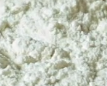
Si presenta in forma di polvere bianca, insolubile in acqua, idrofila.
A cosa serve e dove si usa
Alimentazione
Ingrediente inserito nella lista degli additivi alimentari europei come E1202 con funzione antiagglomerante ed agente legante. E' un agente chiarificante nella produzione vinicola con caratteristiche simili alle proteine (1) ed è uno stabilizzatore dei polifenoli. Nell'industria della birra è un elemento filtrante.
Sicurezza
Il Gruppo di esperti scientifici dell'EFSA sugli additivi alimentari e gli aromatizzanti dell'EFSA ritiene che non vi è alcuna necessità di dosi giornaliere numeriche accettabili (DGA) per PVP e PVPP e che non vi sono preoccupazioni per la sicurezza per gli usi e i livelli d'uso dichiarati di PVP e PVPP come additivi alimentari. Il gruppo di esperti scientifici ha inoltre concluso che l'estensione d'uso proposta non dovrebbe destare preoccupazioni per la sicurezza al livello massimo consentito (MPL) proposto e al livello di consumo raccomandato (2).
Altri usi
Isolamento fenolico
- Formula molecolare (C6H9NO)n
- Peso molecolare
- CAS
- UNII
- EC Number
Bibliografia_____________________________________________________________________
(1) Chen, K., Escott, C., Loira, I., Del Fresno, J.M., Morata, A., Tesfaye, W., Calderon, F., Benito, S. and Suárez-Lepe, J.A., 2016. The effects of pre-fermentative addition of oenological tannins on wine components and sensorial qualities of red wine. Molecules, 21(11), p.1445.
Abstract. Today in the wine industry, oenological tannins are widely used to improve wine quality and prevent oxidation in wine aging. With the development of tannin products, new oenological tannins are developed with many specific functions, such as modifying antioxidant effect, colour stabilization and aroma modifications. The aim of this work is to investigate effects of pre-fermentative addition of oenological tannins on wine colour, anthocyanins, volatile compounds and sensorial properties. In this case, Syrah juice was extracted with classic flash thermovinification from fresh must in order to release more colour and tannins. Three types of oenological tannins, which are, respectively, derived from grape skin, seed (Vitis vinifera) and French oak (Quercus robur and Querrus petraea), were selected to carry out the experiments with seven treatments. Results indicated that tannin treatments significantly improved wine aroma complexity and sensorial properties. However, the concentration of some stable pigments such as Vitisin A, Vitisin A-Ac and Vitisin B was negatively affected by tannin additions. Nevertheless, by means of cluster analysis and principal component analysis, it was observed that higher alcohols were significantly promoted by grape seed tannin while most anthocyanins can be improved by addition of grape tannins. In conclusion, low amount of oenological tannin derived from grape seed is a promising method to be applied especially for young red wine making.
Jeantet, R. and Perrocheau, L., 2016. From barley to beer. Handbook of Food Science and Technology 3: Food Biochemistry and Technology, pp.205-230.
Abstract. Barley (Hordeum vulgare), a member of the grass family originating in the Middle East, is a major cereal grain. It is possible to make beer from any cereal grain containing starch, but barley has advantages that make it ideal for beer production. Two-row (Hordeum distichum) or six-row barley (Hordeum hexastichum) is commonly used for making beer. The barley used in malting has well-defined botanical, biological and biochemical characteristics. Most malt is produced from barley, but it is possible to produce malt from wheat, rye, oats, triticale, corn, sorghum or rice. Processing barley into malt involves three main steps: steeping, germinating and kilning. Barley, water, hops and yeast are the basic ingredients of beer. These elements are gradually transformed into beer during four main stages - malting, brewing, fermentation and packaging. To ensure the proper preservation of beer, pasteurization can be carried out in bulk (flash pasteurization) or after packaging (pasteurization).
(2) EFSA Panel on Food Additives and Flavourings (FAF), Younes, M., Aquilina, G., Castle, L., Engel, K.H., Fowler, P., Fürst, P., Gürtler, R., Gundert‐Remy, U., Husøy, T. and Manco, M., 2020. Re‐evaluation of polyvinylpyrrolidone (E 1201) and polyvinylpolypyrrolidone (E 1202) as food additives and extension of use of polyvinylpyrrolidone (E 1201). EFSA Journal, 18(8), p.e06215.
Abstract. The present opinion deals with the re-evaluation of polyvinylpyrrolidone (E 1201, PVP) and polyvinylpolypyrrolidone (E 1202, PVPP) when used as food additives. One request for extension of use of PVP (E 1201) in foods for special medical purposes was also considered in this assessment. The Panel followed the conceptual framework under Commission Regulation (EU) No 257/2010 and considered that: the exposure assessment was based on the reported use and use levels (one food category out of the two food categories in which PVP and PVPP are authorised); the 95th percentile of exposure to PVP and PVPP of maximally 23.7 and 25 mg/kg body weight (bw) per day in children, respectively, was overestimated, because it was assumed that 100% of the food supplements consumed contained PVP or PVPP at the maximum reported use levels; the extension of use of PVP (E 1201) to foods for special medical purposes (FC 13.2) would result in an exposure of PVP of 4.3 mg/kg bw per day for children; the absorption of PVP and PVPP is very low; sufficient toxicity data were available for PVP; there is no concern with respect to the genotoxicity of PVP and PVPP; no carcinogenic effects were reported in carcinogenicity studies in rats at a dose of 2,500 mg PVP/kg bw per day, the highest dose tested; there is no need for chronic toxicity/carcinogenicity data for PVPP for the safety assessment of PVPP given the chemical similarity between PVP and PVPP, and the lack of adverse effects in the available repeated dose toxicity studies. Therefore, the Panel concluded that there is no need for numerical acceptable daily intakes (ADIs) for PVP and PVPP, and that there is no safety concern for the reported uses and use levels of PVP and PVPP as food additives. The Panel further concluded that the proposed extension of use is not expected to be of safety concern at the proposed maximum permitted level (MPL) and recommended consumption level.




