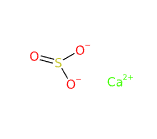
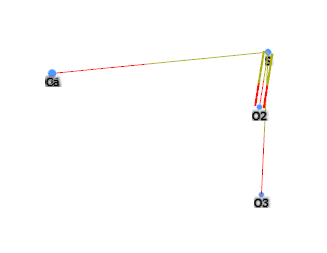
E226 (Calcio solfito) è un composto chimico piuttosto comune formato dalla reazione tra Ca(OH)2 e SO2. Appartiene al gruppo dei solfiti, componenti a base di zolfo che rilasciano anidride solforosa SO2, un composto attivo conservante. Può essere in forma anidra o idrata.
Si presenta in forma di polvere bianca.

Il gruppo dei solfiti comprende:
| Anidride solforosa | E220 | SO2 |
| Solfito di sodio | E221 | Na2SO3 |
| Bisolfito di sodio | E222 | NaHO3S |
| Metabisolfito di sodio | E223 | Na2O5S2 |
| Metabisolfito di potassio | E224 | K2O5S2 |
| Calcio Solfito | E226 | CaSO3 |
| Bisolfito di calcio | E227 | CaH2O6S2 |
| Potassio solfito acido | E228 | KHSO3 |
A cosa serve e dove si usa
Alimentazione
Ingrediente inserito nella lista degli additivi alimentari europei come E226, conservante sintetico. Ha anche funzione di decolorante, sbiancante. Battericida di fermentazione.
Altri usi
- trattamento delle acque per la rimozione del cloro (NH2CL, NHCL2, NCL3) in piscine, docce.
- reagente analitico
- decolorante per prodotti plastici
- produzione di materiali plastici di calcio
Sicurezza
I sintomi riconducibili ad una sensibilità ai solfiti possono essere di varia natura e importanza. I più diffusi sono il mal di testa e prurito o gonfiore generalizzato, ma si sono verificati casi di nausea, broncocostrizione, diarrea, ipotensione, shock (1).
Il Gruppo di esperti scientifici dell'EFSA sugli additivi alimentari e gli aromatizzanti ha valutato il rischio per gli elementi tossici presenti nel biossido di zolfo-solfito (E 220-228), sulla base dei dati presentati dagli operatori economici interessati, e ha concluso che i limiti massimi delle specifiche UE per arsenico, piombo e mercurio dovrebbero essere abbassati e dovrebbe essere introdotto un limite massimo per il cadmio (2).
Solfiti, studi
Formula molecolare CaSO3 CaO3S CaO4S
Peso molecolare 120.14
CAS 10257-55-3
UNII 7078964UQP
EC Number 233-596-8
DSSTox ID DTXSID10883104
IUPAC calcium;sulfite
InChl=1S/Ca.H2O3S/c;1-4(2)3/h;(H2,1,2,3)/q+2;/p-2
InChl Key GBAOBIBJACZTNA-UHFFFAOYSA-L
SMILES [O-]S(=O)[O-].[Ca+2]
MDL number MFCD00040663
Nikkaji J43.737I
Sinonimi:
- Calcium sulfite hydrate (1:1:1)
- Sulfurous acid calcium salt (1:1)
Bibliografia_____________________________________________________________
(1) Gunnison AF, Jacobsen DW. Sulfite hypersensitivity. A critical review. CRC Crit Rev Toxicol. 1987;17(3):185-214. doi: 10.3109/10408448709071208.
Abstract. Sulfiting agents (sulfur dioxide and the sodium and potassium salts of bisulfite, sulfite, and metabisulfite) are widely used as preservatives in foods, beverages, and pharmaceuticals. Within the past 5 years, there have been numerous reports of adverse reactions to sulfiting agents. This review presents a comprehensive compilation and discussion of reports describing reactions to ingested, inhaled, and parenterally administered sulfite. Sulfite hypersensitivity is usually, but not exclusively, found within the chronic asthmatic population. Although there is some disagreement on its prevalence, a number of studies have indicated that 5 to 10% of all chronic asthmatics are sulfite hypersensitive. This review also describes respiratory sulfur dioxide sensitivity which essentially all asthmatics experience. Possible mechanisms of sulfite hypersensitivity and sulfur dioxide sensitivity are discussed in detail. Sulfite metabolism and the role of sulfite oxidase in the detoxification of exogenous sulfite are reviewed in relationship to the etiology of sulfite hypersensitivity.
(2) EFSA Panel on Food Additives and Flavourings (FAF); Younes M, Aquilina G, Castle L, Engel KH, Fowler PJ, Frutos Fernandez MJ, Fürst P, Gundert-Remy U, Gürtler R, Husøy T, Manco M, Mennes W, Moldeus P, Passamonti S, Shah R, Waalkens-Berendsen I, Boon P, Cheyns K, Crebelli R, FitzGerald R, Lambré C, Mirat M, Ulbrich B, Vleminckx C, Mech A, Rincon AM, Tard A, Horvath Z, Wright M. Follow-up of the re-evaluation of sulfur dioxide (E 220), sodium sulfite (E 221), sodium bisulfite (E 222), sodium metabisulfite (E 223), potassium metabisulfite (E 224), calcium sulfite (E 226), calcium bisulfite (E 227) and potassium bisulfite (E 228). EFSA J. 2022 Nov 24;20(11):e07594. doi: 10.2903/j.efsa.2022.7594.
Abstract. Sulfur dioxide-sulfites (E 220-228) were re-evaluated in 2016, resulting in the setting of a temporary ADI of 0.7 mg SO2 equivalents/kg bw per day. Following a European Commission call for data, the present follow-up opinion assesses data provided by interested business operators (IBOs) and additional evidence identified in the publicly available literature. No new biological or toxicological data addressing the data gaps described in the re-evaluation were submitted by IBOs. Taking into account data identified from the literature search, the Panel concluded that there was no substantial reduction in the uncertainties previously identified in the re-evaluation. Therefore, the Panel considered that the available toxicity database was inadequate to derive an ADI and withdrew the current temporary group acceptable daily intake (ADI). A margin of exposure (MOE) approach was considered appropriate to assess the risk for these food additives. A lower confidence limit of the benchmark dose of 38 mg SO2 equivalents/kg bw per day, which is lower than the previous reference point of 70 mg SO2 equivalents/kg bw per day, was estimated based on prolonged visual evoked potential latency. An assessment factor of 80 was applied for the assessment of the MoE. At the estimated dietary exposures, when using a refined exposure scenario (Data set D), MOEs at the maximum of 95th percentile ranges were below 80 for all population groups except for adolescents. The dietary exposures estimated using the maximum permitted levels would result in MOEs below 80 in all population groups at the maximum of the ranges of the mean, and for most of the population groups at both minimum and maximum of the ranges at the 95th percentile. The Panel concluded that this raises a safety concern for both dietary exposure scenarios. The Panel also performed a risk assessment for toxic elements present in sulfur dioxide-sulfites (E 220-228), based on data submitted by IBOs, and concluded that the maximum limits in the EU specifications for arsenic, lead and mercury should be lowered and a maximum limit for cadmium should be introduced.