



Gleditsia triacanthos seed extract is a powder obtained from the invasive deciduous plant of the same name, which belongs to the Leguminosae family and grows in calcareous or moist soil.
The name describes the structure of the ingredient:
- Gleditsia Triacanthos is the botanical name of the plant from which the seeds are extracted. Gleditsia triacanthos is a species of tree known for its long thorns and pods.
- seed Extract indicates that the compound is an extract obtained from the seeds of the Gleditsia triacanthos tree. Seed extracts are commonly used in cosmetics and herbal medicine for their beneficial properties.
Description of Raw Materials and Their Functions
Gleditsia Triacanthos Seeds. The seeds of the Gleditsia Triacanthos tree, also known as the honey locust, are rich in bioactive compounds such as saponins, polyphenols, and flavonoids. These compounds give the extract beneficial properties for skin and hair.
Solvents and Reagents. Used to extract the bioactive compounds from Gleditsia Triacanthos seeds. Common solvents include water, ethyl alcohol, and other organic solvents.
Industrial Process
- Extraction. The extraction begins with the maceration or grinding of Gleditsia Triacanthos seeds, followed by the use of appropriate solvents to extract the bioactive compounds.
- Purification. After extraction, the extract is purified to remove impurities and concentrate the bioactive compounds.
- Quality Control and Packaging. Once purified, the Gleditsia Triacanthos seed extract undergoes quality checks to ensure it meets the required standards. After quality control, it is packaged for use in cosmetic and personal care products, where it utilizes its emollient, moisturizing, and conditioning properties.
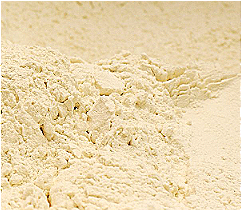
It appears in the form of a yellowish or brown powder:
What it is used for and where
Gleditsia Triacanthos Seed Extract is used in various cosmetic and skincare products for its moisturizing, emollient, and potentially antioxidant properties. It may also have applications in hair products and other topical treatments.
Cosmetics
Hair conditioning agent. A significant number of ingredients with specific and targeted purposes may co-exist in hair shampoo formulations: cleansers, conditioners, thickeners, matting agents, sequestering agents, fragrances, preservatives, special additives. However, the indispensable ingredients are the cleansers and conditioners as they are necessary and sufficient for hair cleansing and manageability. The others act as commercial and non-essential auxiliaries such as: appearance, fragrance, colouring, etc. Hair conditioning agents have the task of increasing shine, manageability and volume, and reducing static electricity, especially after treatments such as colouring, ironing, waving, drying and brushing. They are, in practice, dispersants that may contain cationic surfactants, thickeners, emollients, polymers. The typology of hair conditioning agents includes: intensive conditioners, instant conditioners, thickening conditioners, drying conditioners. They can perform their task generally accompanied by other different ingredients.
CAS 92128-64-8
EC number 295-761-0
Commercial applications:
Cosmetic Industry. Used in skincare and haircare products for its nourishing and moisturizing properties. Often employed in shampoos and conditioners to enhance hair shine and health.
Natural and Organic Products. Frequently used in natural and organic cosmetic formulations due to its plant origin.

