Mangifera indica seed is the product obtained from the plant of the same name, the mango.
Mangifera indica, commonly known as mango, is a tropical fruit native to South Asia and now grown in various tropical and subtropical regions worldwide. The seed extract is derived from the pit of the mango fruit and is used in a range of cosmetic and skincare products for its beneficial properties. The extract is known for its moisturizing, antioxidant, and anti-inflammatory effects.
Chemical Composition and Structure: The chemical composition of mango seed extract includes:
- Phytochemicals: Rich in polyphenols, flavonoids, and tannins, which provide antioxidant and anti-inflammatory benefits.
- Fatty Acids: Contains essential fatty acids such as oleic acid and linoleic acid, which are important for moisturizing and maintaining skin barrier function.
- Vitamins: Contains Vitamin E, known for its antioxidant properties and role in skin health.
- Minerals: Includes minerals like magnesium and potassium, which support skin hydration and overall skin health.
- Proteins and Enzymes: May contain proteins and enzymes that contribute to the extract's potential exfoliating and skin-rejuvenating properties.
The chemical structure of key compounds like polyphenols and fatty acids involves complex arrangements of carbon, hydrogen, and oxygen atoms, contributing to their antioxidant and moisturizing effects.
Physical Properties:
- Color: Typically ranges from light brown to beige, depending on the concentration and purity of the extract.
- Consistency: Usually appears as a powder or a viscous liquid, depending on the extraction method and formulation.
- Odor: Has a mild, earthy aroma characteristic of mango seeds.
- Solubility: Generally soluble in oil-based solvents, making it suitable for various cosmetic formulations.
Production Process:
- Harvesting: Mango seeds are collected from ripe mango fruits.
- Preparation: The seeds are cleaned and dried to remove any residual fruit material.
- Extraction: The dried seeds are processed to extract the oil or concentrate, using methods such as cold pressing or solvent extraction.
- Purification: The extract is filtered and purified to remove impurities and concentrate the active ingredients.
- Preservation: The extract is stored under controlled conditions to maintain its quality and prevent degradation.
Applications:
- Cosmetics: Used in skincare products for its moisturizing, antioxidant, and anti-inflammatory properties. It is found in creams, lotions, and serums.
INCI Functions:
Abrasive agent. It contains abrasive particles to remove stains or biofilm that accumulate on the stratum corneum or teeth. Baking soda, kieselguhr, silica and many others have abrasive properties. Peeling or exfoliating products used in dermatology or cosmetic applications contain abrasive agents in the form of synthetic microspheres, however these microspheres or abrasive particles are not biodegradable and create pollution in aquatic ecosystems.
CAS: 90063-86-8
EC number 290-045-4
- Hair Care: Incorporated into shampoos and conditioners for its nourishing and conditioning effects on hair.
- Supplements: Occasionally used in dietary supplements for its potential antioxidant and health-supporting benefits.
Environmental and Safety Considerations:
- Sustainability: Sustainable practices should be used in the cultivation and extraction processes to minimize environmental impact.
- Allergies: Generally regarded as safe for topical application. However, like all extracts, it should be used in accordance with established guidelines to minimize the risk of allergic reactions or skin irritations. People with allergies or very sensitive skin should use caution.
- Storage: The extract should be stored in cool, dry conditions to maintain its quality and efficacy.
Studies
Main cultivars: Carrie, Keitt, Glenn, Manzanillo, Maya, Rosa, Osteen, Tommy Atkins and Kensington Pride
Main vitamins and minerals n 100 grams:
- Potassium, 100 mg
- Phosphorus, 11 mg
- Calcium, 10 mg
- Magnesium, 9 mg
- Choline, 7.5 mg
- Vitamin A, 760 IU
- Vitamin C, 27 mg
It also has a good content of carotenoids (Neoxanthin, beta carotene) that have antioxidant activity.
Tannin and vanillin are present with 20% each, while gallic acid, coumarin, caffeic acid, ferroic acid and cinnamic acid are present in low percentages (1).
Mango peel extract demonstrated anti-tumor efficacy on cell lines of colon cancer by influencing cell viability and inhibited the colony formation trend (2).
An extract is obtained from the mango leaves that has demonstrated antibacterial activity against Staphylococcus aureus, a Gram-positive bacterium responsible for biofilm formation and infections (3).
Mango oil derived from the kernel has lower free fatty acids, carotenoid content, and peroxide value, and is usually used without any processing, which is otherwise mandatory for commercial vegetable oils. Palmitic, stearic and oleic acids are the main fatty acids, and the triglyceride composition and fatty acid profile suggest a wide range of trans free options (4).
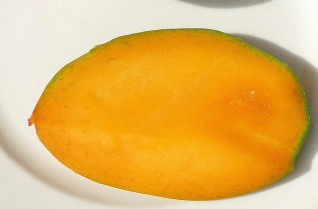
Mango studies
References________________________________________________________________________
(1) Sharma, D., Gupta, S., Kumar, R., Singh, P., Singh, A., & Khan, H. (2024). An ethnopharmacological, phytochemical and pharmacological review on Mangifera indica (Mango). Research Journal of Pharmacology and Pharmacodynamics, 16(1), 30-34.
Abstract. Traditional medicine is a body of knowledge, skills, and practices based on traditional cultures' presumptions, beliefs, and experiences in order to maintain their health. Traditional herbal treatments are highly valued among many rural or indigenous people in many underdeveloped nations. According to the World Health Organization, about 80% of the world's population relies on traditional medicine, with 60% of rural Indians using herbal treatments. During the previous five years, utilization of herbal supplements grew from 2.5 % to 12 percent. Mangifera indica, a plant that is frequently used in ayurvedic medicine. Although there have already been literature reviews on this plant, this one is presented to gather all the most recent data on its pharmacological and phytochemical activities, which have been widely studied using a variety of techniques. Mango is said to have antidiabetic, anti-oxidant, antiviral, cardiotonic, hypotensive, and anti-inflammatory properties, according to studies. Numerous effects have also been investigated, including hypolipidemia, antimicrobial, hepatoprotective, and gastroprotective properties. Other effects include antibacterial, antifungal, anthelmintic, antiparasitic, antitumor, anti-HIV, anti-bone demineralization, antispasmodic, antipyretic, antidiarrheal, and immunomodulatory properties. These studies are extremely positive and suggest that additional research on this herb is needed to confirm these findings and elucidate additional potential therapeutic effects. The use of mango in clinical trials for a range of ailments is also recommended.
(2) Lauricella M, Lo Galbo V, Cernigliaro C, Maggio A, Palumbo Piccionello A, Calvaruso G, Carlisi D, Emanuele S, Giuliano M, D'Anneo A. The Anti-Cancer Effect of Mangifera indica L. Peel Extract is Associated to γH2AX-mediated Apoptosis in Colon Cancer Cells. Antioxidants (Basel). 2019 Sep 22;8(10):422. doi: 10.3390/antiox8100422. PMID: 31546694; PMCID: PMC6826946.
Abstract. Ethanolic extracts from Mangifera indica L. have been proved to possess anti-tumor properties in many cancer systems. However, although most effects have been demonstrated with fruit pulp extract, the underlying molecular mechanisms of mango peel are still unclear. This study was designed to explore the effects of mango peel extract (MPE) on colon cancer cell lines. MPE affected cell viability and inhibited the colony formation trend of tumor cells, while no effects were observed in human dermal fibroblasts used as a non-cancerous cell line model. These events were a consequence of the induction of apoptosis associated to reactive oxygen species (ROS) production, activation of players of the oxidative response such as JNK and ERK1/2, and the increase in Nrf2 and manganese superoxide dismutase (MnSOD). Significantly, mango peel-activated stress triggered a DNA damage response evidenced by the precocious phosphorylation of histone 2AX (γH2AX), as well as phosphorylated Ataxia telangiectasia-mutated (ATM) kinase and p53 upregulation. Mango peel extract was also characterized, and HPLC/MS (High Performance Liquid Chromatography/Mass Spectrometry) analysis unveiled the presence of some phenolic compounds that could be responsible for the anti-cancer effects. Collectively, these findings point out the importance of the genotoxic stress signaling pathway mediated by γH2AX in targeting colon tumor cells to apoptosis.
(3) Manzur AG, Sm Junior V, Morais-Costa F, Mariano EG, Careli RT, da Silva LM, Coelho SG, de Almeida AC, Duarte ER. Extract of Mangifera indica L. leaves may reduce biofilms of Staphylococcus spp. in stainless steel and teatcup rubbers. Food Sci Technol Int. 2020 Jan;26(1):11-20. doi: 10.1177/1082013219858529.
Abstract. Human ingestion of antimicrobial residues in dairy products is a problem of public health. In this study we evaluated antibacterial effectiveness of aqueous and ethanolic leaf extracts of Mangifera indica L. as a natural alternative for reduction of Staphylococcus spp. biofilms. Eight Staphylococcus spp. strains from cows with mastitis and the Staphylococcus aureus strain (ATCC 25923) were evaluated. High performance liquid chromatography indicated the presence of phenolic compounds in the aqueous extract. Agilent Technologies gas chromatography revealed the presence of phenolic compounds, carbohydrates, and gallic acid in ethanolic extract. The tannin contents were 2.27 ± 0.01 and 2.67 ± 0.01% for ethanolic extract and aqueous extract, respectively. Extracts were evaluated in agar diffusion test and the size of inhibition zones were compared. The ethanolic extract was the most effective, showing minimum inhibitory concentrations and minimum bactericidal concentrations between 1.8-7.5 and 15.1-45.3 mg/ml, respectively. After tannin removal, the extracts were less effective, indicating these secondary metabolites as one of the main antibacterial compounds. The ethanolic extract at 45.3 mg/ml reduced mature biofilms in teat rubber (average: 3.91 log reduction) and stainless steel (average: 3.87 log reduction) after 5 min of contact. The extracts of M. indica leaves represent natural alternatives against Staphylococcus spp. strains and the ethanolic extract shows potential as a natural sanitizer.
(4) Nadeem M, Imran M, Khalique A. Promising features of mango (Mangifera indica L.) kernel oil: a review. J Food Sci Technol. 2016 May;53(5):2185-95. doi: 10.1007/s13197-015-2166-8. Epub 2016 Apr 29. PMID: 27407184; PMCID: PMC4921070.
Abstract. Mango kernel contains about 15 % good quality edible oil, that is comparable to soybean and cottonseed, which contain about 18-20 % oil. Mango kernel oil (MKO) has lower free fatty acids, carotenoid content and peroxide value, and is usually used without any processing, which is otherwise mandatory for commercial vegetable oils. Palmitic, stearic and oleic acids are the major fatty acids, triglyceride composition and fatty acid profile suggest wide range of trans free options. With 32-36 °C melting point, MKO is solid at room temperature, thus, does not require partial hydrogenation for application in foods. MKO can be used as an alternative of cocoa butter, which is used in chocolates and confectionaries. Total phenolic contents and induction period of MKO is greater than many commercial vegetable oils; thus, it can be used as an alternative of synthetic antioxidants for the preservation of fats and oils. Mangiferin, chlorogenic acid, quercetin and caffeic acid are the major phenolic compounds present in MKO. Functional properties of MKO can be further improved through fractionation, transesterification and interesterification for increased industrial applications.




