



Lavandula angustifolia flower/leaf/stem oil: properties, uses, pros, cons, safety
(Lavandula angustifolia; Lamiaceae)
Lavandula angustifolia flower/leaf/stem oil is the essential (volatile) oil obtained from the flowers, leaves, and stems of true lavender, typically by distillation. In cosmetics it is used primarily as a perfuming ingredient (the classic “lavender” note) and, in some classifications, it may also appear with functions such as flavouring and humectant, whose practical relevance depends on the formulation matrix and the product’s positioning.
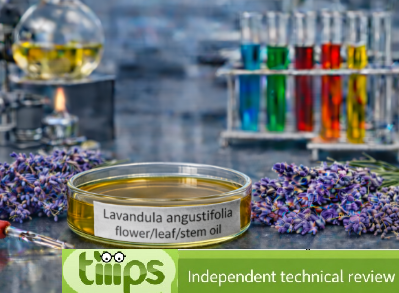
Definition
It is a UVCB mixture with variable composition: not a single molecule, but a set of volatile constituents whose distribution depends on botany, origin, harvesting conditions, distillation, and the producer’s specifications (including any standardization).
In formulation, real-world performance is driven by: intensity and cleanliness of the olfactory note, compatibility with the base (emulsions, surfactant systems, anhydrous systems), shelf-life stability (light/oxygen/temperature), and batch-to-batch repeatability.
Main uses
Cosmetics.
Used in perfumes, shower gels, cleansers, shampoos, body creams, “botanical” and aromatherapy-positioned products, where the primary function is perfuming. Some repertories for this specific entry also report flavouring and humectant functions, which should be interpreted operationally in relation to the formula and any claims.
INCI Functions
Flavoring agent. The purpose of this ingredient is to modify the solution to add flavour. Natural flavouring extracts are rather expensive, so the cosmetic and pharmaceutical industries resort to synthesised substances that have sensory characteristics mostly similar to natural flavourings or are naturally equivalent. This ingredient is isolated through chemical processes or is synthesised from chemicals. It is also referred to as Aroma.
Fragrance. It plays a very important role in the formulation of cosmetic products as it allows perfume to be enhanced, masked or added to the final product, improving its commercial viability. The consumer always expects to find a pleasant scent in a cosmetic product.
Humectant. Hygroscopic compound used to minimise water loss in the skin and to prevent it from drying out by facilitating faster and greater absorption of water into the stratum corneum of the epidermis. The epidermis is the most superficial of the three layers that make up human skin (epidermis, dermis and hypodermis) and is the layer that maintains hydration in all three layers. In turn, the epidermis is composed of five layers: horny, the most superficial, granular, spinous, shiny, and basal. Humectants have the ability to retain the water they attract from the air in the stratum corneum and have the function of moisturising the skin. They are best used before emollients, which are oil-based.
Medicine.
In traditional medical medicine lavender is used as a medical plant in the treatment of inflammation, depression and stress, due to its sedative and anxiolytic action, thrombotic and antimicrobial properties.
Cultivation
The reference plant is Lavandula angustifolia (Lamiaceae), cultivated in temperate regions. For an essential oil, agronomic variables (cultivar, climate, harvest timing) and process variables (distillation, fraction cuts, storage) can affect the aromatic profile and consistency. Industrial practice manages this through specifications, incoming controls, and supplier standards.
For more information: LAVENDER
Key constituents
Composition is variable and typically dominated by terpenes and terpenoids. In practical terms, profiles associated with true lavender often include linalool and linalyl acetate as characterizing constituents, with additional minor components (for example lavandulol/lavandulyl acetate, terpinen-4-ol, 1,8-cineole, and other monoterpene fractions). Relative proportions directly influence olfactory performance, shelf-life evolution, and the management of fragrance allergens in the finished product.
Nutritional use note and bioactive compounds
In cosmetics it is not a “nutritional” ingredient. The technical focus is on the sensory function and quality management (GC profile, olfactory consistency, oxidative stability). Any references to “bioactivity” should be handled cautiously and, if tied to claims, require evidence at the finished-product level.
Identification data and specifications
| Characteristic | Value |
|---|---|
| INCI name | Lavandula angustifolia flower/leaf/stem oil |
| INCI functions | flavouring; fragrance; humectant |
| CAS number | Commonly reported for lavender oils/related extracts: 90063-37-9 (some databases list alternative identifiers for related entries; verify the grade SDS) |
| EC/EINECS number | Commonly reported: 289-995-2 (verify the grade SDS) |
| Botanical family | Lamiaceae |
| Substance type | Essential oil (UVCB mixture) |
| Molecular formula | Not applicable (mixture) |
| Molecular weight | Not applicable as a single value (mixture) |
| Typical preparation | Essential oil / volatile lipophilic fraction |
| Typical commercial appearance | Colorless to pale yellow liquid, characteristic “lavender” odor (grade-dependent) |
Indicative physico-chemical properties
| Characteristic | Indicative value | Note |
|---|---|---|
| Chemical nature | Mixture of volatile terpenes/terpenoids | Depends on raw material and process |
| Solubility | Low in water; good in organic solvents and lipid systems | Compatibility depends on the base and solubilizers |
| pH stability | Not directly governed by pH, but by the matrix | In emulsions, pH can influence overall system stability |
| Light/oxygen stability | Oxidation-sensitive | Barrier packaging and compatible antioxidants may be useful |
| Thermal stability | Sensitive to prolonged stress | Controlled-temperature addition reduces note loss and degradation |
| Critical parameters | Olfactory profile, peroxides/oxidation, purity, impurities, fragrance allergens | Key drivers for quality and compliance |
Functional role and practical mechanism of action
The primary function is fragrance: it provides or modulates the “lavender” note and supports sensory positioning. Performance depends on dose, volatility, interactions with surfactants/emulsifiers, and protection of the aromatic profile over shelf life (oxidation and loss of top notes).
Formulation compatibility
Common attention points include: the need for solubilization in aqueous systems, risk of haze/instability if the oil is not properly carried, interactions with polymers and surfactants, and oxidation management (which can alter odor and increase sensitization risk). In leave-on formulas, alignment with the target olfactory profile and allergen compliance become central constraints.
Use guidelines
Use levels depend on sensory positioning and the regulatory/standard framework applicable to the category (including any IFRA standards for fragranced products). Good practice is to define organoleptic targets and validate with accelerated stability and final-packaging tests, including monitoring of olfactory evolution and oxidation markers when relevant.
Quality, grades, and specifications
Supplier variability can be significant. Robust control includes: GC profile (markers and ranges), purity/impurity requirements, limits on peroxides/oxidation, batch-to-batch organoleptic consistency, traceability, and storage conditions. Adoption of GMP (good manufacturing practice; benefit: reduces variability and contamination) improves repeatability and quality control.
Safety, regulatory, and environment
Safety must be assessed on the finished product considering concentration, exposure area, and target population. For an essential oil, operational topics include: potential irritation/sensitization, increased risk in case of oxidation, and compliance with fragrance-allergen labeling requirements in the destination market. In the European Union, the fragrance allergen framework has been updated with an expanded list of substances subject to labeling and transitional periods impacting formulation and packaging/labeling management for new launches, with a key deadline for placing new products on the market on 31 July 2026.
Allergen.
It may be relevant as a source of fragrance allergens (depending on composition and the finished-product level). Components commonly involved in allergen management include, operationally, fractions such as linalool and other terpenoids that may require regulatory and safety-assessment attention in the finished product.
Contraindications (brief).
Use caution on very sensitive or reactive skin, on delicate areas, and in high-exposure leave-on products; avoid use on compromised skin if risk assessment and testing indicate concerns. Also assess carefully use in products intended for sensitive populations (e.g., children) based on the finished-product safety assessment.
Formulation troubleshooting
Odor drift over time.
Action: reduce light/oxygen stress (barrier packaging), introduce compatible antioxidants if relevant, optimize storage conditions and controlled-temperature addition.
Haze or separation in aqueous systems.
Action: review solubilizer/surfactant system, order of addition, perfuming phase–solubilizer ratio, and confirm via accelerated stability.
Increase in “oxidized” notes or perceived irritancy.
Action: check batch freshness and specifications (oxidation markers), improve air protection, define raw-material shelf life, and set stricter rejection criteria.
Conclusion
Lavandula angustifolia flower/leaf/stem oil is a true lavender essential oil used primarily as a fragrance ingredient, with functions sometimes also reported as flavouring and humectant depending on repertories. Reliable use depends on: grade selection, solubilization strategy and oxidative stability management, batch-to-batch quality control, and a finished-product safety assessment that includes fragrance allergen management and practical contraindications.
Mini-glossary
UVCB. Substances of unknown or variable composition, complex reaction products, or biological materials.
Essential oil. Volatile mixture obtained from plant material, typically by distillation.
GMP. Good manufacturing practice; benefit: improves traceability and reduces contamination/variability.

