



Lavandula angustifolia flower/leaf/stem extract: properties, uses, pros, cons, safety
(Lavandula angustifolia; Lamiaceae)
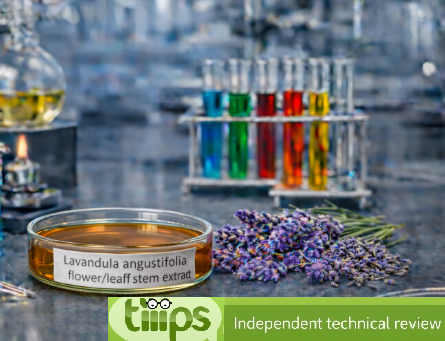
Lavandula angustifolia flower/leaf/stem extract is a botanical extract obtained from the flowers, leaves, and stems of true lavender. In cosmetics it is mainly used for sensory purposes and skin conditioning, with a use profile that depends significantly on the commercial grade (solvent/carrier, any standardization, color/odor, and microbiological specifications).
Definition
It is a variable-composition mixture, not attributable to a single molecule. Variability arises from the origin of the raw material, the actual plant parts processed, the extraction method (solvent, time, temperature), any concentration step, and the choice of final carrier.
In formulation, practical performance is driven by: compatibility with the base (aqueous, hydroalcoholic, emulsion, surfactant-based), stability (color/odor/haze), batch-to-batch repeatability, and microbiological robustness.
Main uses
Cosmetics.
Used in cleansers, toners, lotions, creams, fragranced products, and botanical concepts. Functions reported in cosmetic repertories for this specific entry typically include: flavouring, masking, oral care, perfuming, and skin conditioning (the practical relevance in formula depends on concentration, matrix, and the target).
INCI Functions
Flavoring agent. The purpose of this ingredient is to modify the solution to add flavour. Natural flavouring extracts are rather expensive, so the cosmetic and pharmaceutical industries resort to synthesised substances that have sensory characteristics mostly similar to natural flavourings or are naturally equivalent. This ingredient is isolated through chemical processes or is synthesised from chemicals. It is also referred to as Aroma.
Fragrance. It plays a very important role in the formulation of cosmetic products as it allows perfume to be enhanced, masked or added to the final product, improving its commercial viability. The consumer always expects to find a pleasant scent in a cosmetic product.
Oral care agent. This ingredient can be placed in the oral cavity to improve and/or maintain oral hygiene and health, to prevent or improve a disorder of the teeth, gums, mucous membrane.
Skin conditioning agent. It is the mainstay of topical skin treatment by restoring, increasing or improving skin tolerance to external factors, including melanocyte tolerance. The most important function of the conditioning agent is to prevent skin dehydration, but the subject is rather complex and involves emollients and humectants.
Medicine.
In traditional medicine Lavender is used as a medical plant in the treatment of inflammation, depression and stress, due to its sedative and anxiolytic action, thrombotic and antimicrobial properties.
Cultivation
The reference plant is Lavandula angustifolia (Lamiaceae), cultivated in temperate regions. For a “flower/leaf/stem” extract, agronomic and harvesting variability may affect color and aromatic fingerprint; therefore, specifications and batch-to-batch checks (organoleptic and, when available, analytical) are central for industrial use.
For more information: LAVENDER
Key constituents
Composition is process-dependent. In practical terms, the extract may contain: aromatic fractions consistent with lavender (in variable amounts), polar/semi-polar plant-matrix components, and, importantly, the supplier-declared carrier/solvent contribution.
Operationally, formulators focus on: odor, color, any declared standardization (markers/ranges), compatibility with the base, and consistency over time.
Nutritional use note and bioactive compounds
In a cosmetic context it is not a “nutritional” ingredient. Technical interest relates to sensory and conditioning functions, as well as quality management. Any references to “bioactivity” should be handled cautiously and, if tied to claims, require evidence at the finished-product level.
Identification data and specifications
| Characteristic | Value |
|---|---|
| INCI name | Lavandula angustifolia flower/leaf/stem extract |
| INCI functions | flavouring; masking; oral care; perfuming; skin conditioning |
| CAS number | 90063-37-9 and/or 84776-65-8 (depending on repertory/supplier; verify grade SDS) |
| EC/EINECS number | 289-995-2 and/or 283-994-0 (depending on repertory/supplier; verify grade SDS) |
| Botanical family | Lamiaceae |
| Substance type | Variable-composition botanical extract (mixture) |
| Molecular formula | Not applicable (mixture) |
| Molecular weight | Not applicable as a single value (mixture) |
| Typical commercial form | Solution or carrier-based extract (grade-dependent) |
Indicative physico-chemical properties
| Characteristic | Indicative value | Note |
|---|---|---|
| Chemical nature | Complex variable-composition extract | Depends on raw material and process |
| Solubility | Carrier/solvent-dependent | Check the grade technical sheet |
| pH stability | Matrix-dependent | Extreme pH may change color/odor |
| Light/oxygen stability | Variable | Possible organoleptic drift; barrier packaging may help if relevant |
| Thermal stability | Sensitive to prolonged stress | Prefer controlled-temperature addition when possible |
| Critical parameters | Odor, color, haze, microbiological specs, carrier residues | Main drivers for repeatability |
Functional role and practical mechanism of action
The main contribution is perfuming/masking (sensory profile) and skin conditioning (supporting sensoriality and product “feel”). In oral care, use is typically driven by organoleptic compatibility and finished-product safety requirements. Performance depends on the matrix, dose, interactions with surfactants/polymers/emulsifiers, and stability in the packaging.
Formulation compatibility
Common points of attention include: compatibility with preservatives and chelants, control of color/odor in clear or delicate formulas, risk of haze/precipitation (especially with electrolytes or specific polymers), and variability linked to the carrier (e.g., glycols, alcohols, glycerin, water). For leave-on and oral care products, microbiological management and supplier quality are central.
Use guidelines
Use levels depend on the grade and formulation objective. Good practice is to define measurable targets (odor, color, clarity, sensory performance) and validate through accelerated stability and final packaging tests, setting tolerances and batch acceptance criteria.
Quality, grades, and specifications
Supplier variability can be significant. Robust control includes: carrier/solvent specifications, organoleptic profile, microbiological limits aligned with final use, impurity/residue criteria, and traceability. Application of GMP (good manufacturing practice; benefit: improves traceability and reduces contamination/variability) is a positive indicator for repeatability and quality control.
Safety, regulatory, and environment
Safety must be assessed on the finished product considering concentration, exposure area, and target population. For variable-composition botanical extracts, operational topics include impurity control, managing compositional variability through specifications, microbiological robustness, and compliance with the requirements of the intended use (particularly in oral care).
Allergen.
It is not typically classified as an “allergen” per se; however, as a botanical extract it may contain potentially sensitizing components in predisposed individuals and, in some cases, odor-active components that can fall under declarable fragrance allergens depending on composition and finished-product level.
Contraindications (brief).
Use caution on very sensitive or reactive skin, on delicate areas, and in high-exposure leave-on products; in oral care, comply with finished-product safety and tolerability requirements. Avoid use on compromised skin if risk assessment and testing indicate concerns.
Formulation troubleshooting
Odor/color drift over time.
Action: reduce light/oxygen stress (packaging), adjust use level, select a grade with more stable organoleptic specifications, evaluate compatible antioxidants if relevant.
Haze or instability in emulsions/gels/surfactant bases.
Action: check the carrier, optimize order of addition and pH, evaluate a more filtered grade or a different solvent system, confirm via accelerated stability.
Perceptible batch-to-batch variability.
Action: tighten specifications (marker ranges when available, organoleptic criteria), implement incoming controls, and consider blending/standardization strategies with the supplier.
Conclusion
Lavandula angustifolia flower/leaf/stem extract is a variable-composition lavender extract used in cosmetics mainly for perfuming/masking and skin conditioning, with potential use in oral care depending on product specifications. Reliable use depends on grade selection, control of carrier and specifications (including microbiology), stability management, and finished-product safety assessment, including a concise note on sensitization potential and operational contraindications.
Mini-glossary
UVCB. Substances of unknown or variable composition, complex reaction products, or biological materials.
Masking. Cosmetic function aimed at covering or attenuating undesirable odors.
Oral care. Function associated with oral hygiene products, in compliance with finished-product safety requirements.
Skin conditioning. Cosmetic function aimed at keeping the skin in good condition.
GMP. Good manufacturing practice; benefit: improves traceability and reduces contamination/variability.

