



Lavandula angustifolia flower/leaf/stem water: properties, uses, pros, cons, safety
(Lavandula angustifolia; Lamiaceae)
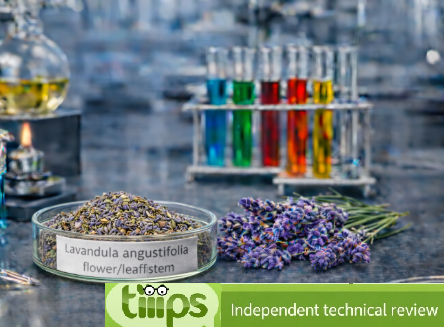
Lavandula angustifolia flower/leaf/stem water is an aromatic water (hydrosol) described as an aqueous solution of the steam distillate obtained from the flowers, leaves, and stems of true lavender. In cosmetics it is used to provide a softer “lavender” scent than the essential oil and, depending on the formulation positioning, to contribute to a humectant effect and a “botanical” sensory perception.
Definition
It is an aqueous mixture with variable composition, consisting mainly of water with traces of aromatic components carried over during distillation. Variability depends on origin and quality of the raw material, distillation parameters, filtration, and above all microbiological management (aqueous raw material). Operationally, in formulation the key parameters are: odor, clarity/opalescence, stability over time, and microbiological conformity of the commercial grade.
Main uses
Cosmetics.
Used in toners, mists, lotions, gels, and cleansers as a characterizing aqueous component. Functions reported for this specific entry include flavouring, fragrance, and humectant; some references also report masking (covering/attenuating undesirable odors).
INCI Functions
Antimicrobial agent. This ingredient is able to suppress or inhibit the growth and replication of a broad spectrum of microorganisms such as bacteria, fungi and viruses by making the stratum corneum temporarily bactericidal and fungicidal.
Antioxidant agent. Ingredient that counteracts oxidative stress and prevents cell damage. Free radicals, pathological inflammatory processes, reactive nitrogen species and reactive oxygen species are responsible for the ageing process and many diseases caused by oxidation.
Skin conditioning agent - Miscellaneous. This ingredient has the task of modifying the condition of the skin when it is damaged or dry by reducing its flakiness and restoring its elasticity.
Medicine.
It is not a therapeutic active within the scope of a cosmetic technical report. In traditional medical medicine lavender is used as a medical plant in the treatment of inflammation, depression and stress, due to its sedative and anxiolytic action, thrombotic and antimicrobial properties.
Cultivation
The reference plant is Lavandula angustifolia (Lamiaceae), cultivated in temperate regions. Origin and harvesting period may influence the aromatic profile of the hydrosol; therefore, specifications and incoming checks are central for industrial use.
For more information: LAVENDER
Key constituents
The matrix is predominantly aqueous, with traces of odor-active components consistent with lavender, at levels dependent on process and raw material. In practice, technical interest is focused on: consistency of the organoleptic profile, absence of “off-notes”, clarity, and stability (including microbiological stability).
Nutritional use note and bioactive compounds
In a cosmetic context it is not a “nutritional” ingredient. The technical value is linked to sensory performance, quality management, and preservative-system compatibility. Any claims beyond fragrance/humectancy must be supported by evidence at the finished product level.
Identification data and specifications
| Characteristic | Value |
|---|---|
| INCI name | Lavandula angustifolia flower/leaf/stem water |
| INCI functions | flavouring; fragrance; humectant (sometimes also masking) |
| CAS number | Not uniquely indicated in the consulted repertories for this specific entry; verify supplier SDS |
| EC/EINECS number | Not uniquely indicated in the consulted repertories for this specific entry; verify supplier SDS |
| Botanical family | Lamiaceae |
| Substance type | Hydrosol / aqueous solution of the steam distillate |
| Molecular formula | Not applicable (mixture) |
| Molecular weight | Not applicable as a single value (mixture) |
| Typical preparation | Steam distillate |
| Typical commercial appearance | Aqueous liquid, clear or slightly opalescent (grade-dependent) |
Indicative physico-chemical properties
| Characteristic | Indicative value | Note |
|---|---|---|
| Chemical nature | Aqueous phase with aromatic traces | Variable with raw material and distillation |
| Solubility | Miscible with water | Interactions depend on preservatives and polymers |
| pH stability | Matrix-dependent | Extreme pH may change odor/clarity |
| Light/oxygen stability | Generally good, but variable | Possible odor attenuation/drift over time |
| Thermal stability | Sensitive to prolonged stress | Risk of olfactory-note loss and microbiological issues if poorly managed |
| Critical parameters | Odor, clarity, microbial load, storage | Main drivers for repeatability and safety |
Functional role and practical mechanism of action
The role is primarily sensory (a soft “lavender” note) and, when consistent with the specific entry, it may contribute to a humectant effect in aqueous systems. Performance depends on concentration, presence of fragrance, surfactants and polymers, and above all microbiological stability and packaging over shelf life.
Formulation compatibility
The most relevant aspects are: preservative compatibility, risk of haze in the presence of electrolytes or specific polymers, control of olfactory variability, and microbiological management (raw material, bulk, and finished product). For leave-on products, it is advisable to set stricter acceptance criteria depending on target population and use area.
Use guidelines
Use levels depend on the grade and sensory objective. In practice it is useful to define targets for odor and clarity, validate with accelerated stability and final-packaging tests, and set organoleptic and microbiological tolerances in specifications, including batch traceability.
Quality, grades, and specifications
Supplier variability can be marked. Key control points include: odor/clarity specifications, microbiological requirements, storage and shelf-life guidance, and process consistency (filtration, any raw-material preservation, packaging conditions). Adoption of GMP is a positive indicator to reduce variability and contamination.
Safety, regulatory, and environment
Assessment must be performed on the finished product considering concentration, exposure area, and target population. For a hydrosol, the most frequent operational risk is microbiological; therefore, managing raw material quality and the preservative system in the formula is central.
Allergen.
It is not typically classified as an “allergen” per se; however, it may contain trace odor-active components that, under certain conditions (composition and finished-product level), may fall under declarable fragrance allergens.
Contraindications (brief).
Use caution on very sensitive or reactive skin and on delicate areas; avoid use on compromised skin if risk assessment and tolerability testing indicate concerns.
Formulation troubleshooting
Weak or batch-variable odor.
Action: tighten organoleptic specifications, select a more consistent grade, rebalance the overall fragrance system.
Haze or instability in formula.
Action: verify compatibility with polymers/electrolytes, optimize order of addition and pH, evaluate a more filtered grade.
Microbiological issues.
Action: strengthen acceptance criteria, verify preservative robustness in the matrix, apply good bulk-handling and packaging practices.
Conclusion
Lavandula angustifolia flower/leaf/stem water is a hydrosol obtained by steam distillation of the flowers, leaves, and stems of true lavender, used primarily for sensory functions (fragrance) and, in some classifications, also humectant and flavouring. Reliable use depends on quality control (odor/clarity), microbiological management, matrix compatibility, and stability in final packaging over shelf life.
Mini-glossary
UVCB. Biological materials or mixtures of unknown or variable composition, typical of many botanical raw materials.
Hydrosol. Aqueous phase of the steam distillate obtained by steam distillation; contains traces of aromatic components.
Humectant. Cosmetic function that supports moisture retention in the product and/or on the skin.
Masking. Cosmetic function aimed at covering or attenuating undesirable odors.
GMP. Good manufacturing practice; benefit: improves traceability and reduces contamination/variability.

