



3-O-Ethyl-L-ascorbic acid: properties, uses, pros, cons, safety
3-O-Ethyl-L-ascorbic acid (3-O-Ethyl ascorbic acid) is a stable, water-soluble derivative of vitamin C (ascorbic acid) that is commonly used in skincare products for its brightening, antioxidant, and anti-aging properties. It is valued for its ability to penetrate the skin more effectively than traditional vitamin C, delivering its benefits deep into the skin. This ingredient helps reduce hyperpigmentation, boost collagen production, and protect the skin from environmental damage caused by free radicals.
The difference between 3-O-Ethyl Ascorbic Acid and 3-O-Ethyl-L-ascorbic acid is mainly formal and nomenclatural.
3-O-Ethyl Ascorbic Acid
This is a generic or commercial designation referring to the ethylated derivative of ascorbic acid, without explicitly stating the stereochemical configuration.3-O-Ethyl-L-ascorbic acid
This specifies that the compound is derived from the L form of ascorbic acid, which is the only naturally occurring and biologically relevant form.
In practice: in cosmetic and formulation contexts, the two terms refer to the same ingredient, since ascorbic acid is always used in its L form. The distinction is mainly chemical and formal, not functional.
Chemical Composition and Structure
3-O-Ethyl ascorbic acid is an etherified form of ascorbic acid, with an ethyl group attached to the third carbon of the ascorbic acid molecule. This modification enhances its stability compared to regular vitamin C, which is prone to oxidation. The chemical structure allows it to maintain its effectiveness for longer periods, making it ideal for use in formulations that require a stable form of vitamin C.
Physical Properties
3-O-Ethyl ascorbic acid typically appears as a white to off-white powder. It is water-soluble and easily incorporated into aqueous-based skincare formulations such as serums, creams, and lotions. Due to its improved stability, it remains effective over time, even in the presence of air and light, which typically degrade other forms of vitamin C.
The name defines the structure of the molecule:
- 3-O-Ethyl refers to the ethyl group (a two-carbon chain) which is attached to the oxygen atom at the third position of the ascorbic acid molecule. The molecule is designed with an ethyl group attached, making it lipophilic (oil-soluble). This lipophilic nature allows it to be well-absorbed into the skin, ensuring deeper penetration and providing antioxidant protection at various skin depths.
- Ascorbic acid is the chemical name of vitamin C, a nutrient vital to health. It is known for its antioxidant properties and its role in collagen synthesis.
Description of raw materials used in production
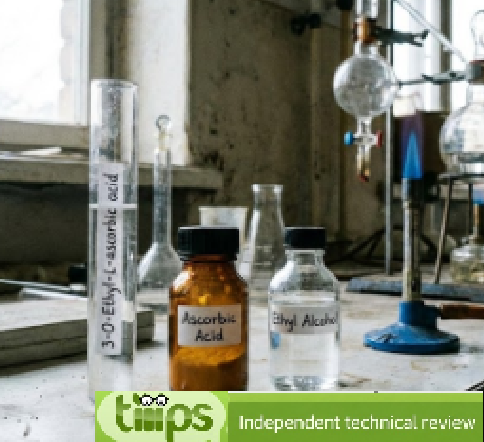
- Ascorbic acid. Vitamin C, used as the core molecule of the compound.
- Ethyl alcohol. Used to ethylate ascorbic acid.
- Catalysts. Used to facilitate the ethylation reaction.
The synthesis process takes place in several stages:
- Preparation. The process begins with the preparation of ascorbic acid, which is commercially available.
- Esterification. Ascorbic acid reacts with ethanol in the presence of an acid catalyst, often sulfuric acid. The reaction is heated and starts the esterification process. This reaction causes the formation of 3-O-ethyl ascorbic acid.
- Separation. The reaction mixture is allowed to cool. 3-O-ethyl ascorbic acid will separate from the reaction mixture.
- Purification. 3-O-ethyl ascorbic acid is then purified. This typically involves distillation, where 3-O-ethyl ascorbic acid is heated and the vapors are collected and condensed. This process helps to remove any remaining impurities.
- Quality control. The final product is tested to ensure it meets the specifications required for use in cosmetics and personal care products. This includes checking its purity, color and smell.
What it is used for and where
Ascorbic acid 3-O-ethyl is a compound that combines an ethyl group with ascorbic acid. It is often used in skin care products for its ability to brighten the skin, reduce the appearance of dark spots and help with the production of collagen. It is more stable and can penetrate the skin more easily than pure vitamin C, making it a popular choice for skin care formulations.
Medical
Dermatology. Employed in topical treatments for its anti-spot properties and to promote collagen production, enhancing skin texture and elasticity.
Cosmetics
Using a stable form of vitamin C like 3-O-Ethyl Ascorbic Acid ensures that the active ingredient remains effective, providing the desired skin benefits for a longer duration after application.
Skin conditioning agent. It is the mainstay of topical skin treatment as it has the function of restoring, increasing or improving skin tolerance to external factors, including melanocyte tolerance. The most important function of the conditioning agent is to prevent skin dehydration, but the subject is rather complex and involves emollients and humectants that can be added in the formulation.
CAS 86404-04-8
Molecular Formula C8H12O6
Molecular Weight 204.178 g/mol
Commercial Applications
Cosmetics. 3-O-Ethyl Ascorbic Acid is a key ingredient in many skincare formulations, hailed for its antioxidant, brightening, and anti-aging properties. Found in serums, creams, and sun protection products.
Hair Products. Due to its antioxidant properties, it can be included in hair products to shield hair from free-radical damage.
Research. Given its stability, it's also used in research to study the effects of vitamin C on the skin without the rapid degradation associated with ascorbic acid.
Studies
The aim of the work was the evaluation of selected biological and physicochemical, applicative properties of ethylated ascorbic acid (AAE) compared to ascorbic acid (AA). The antioxidant activity of AAE is significant. However, the reaction with 2,2-diphenyl-1-picrylhydrazyl (DPPH) indicates prolonged activity compared to AA. Variability in the antimicrobial activity of AAE may find practical application in the pharmaceutical and cosmetic industries. The potential for applicative aims may be supported by the relatively low in vitro toxicity of AAE (1).
3-O-ethyl ascorbic acid may be a good whitening ingredient in cosmetics. However, before it can be successfully used in cosmetics, its biofunctionality and stability need to be comprehensively investigated. The reduction and 2,2-Diphenyl-1-picrylhydrazyl (DPPH) free radical scavenging ability of this compound were analyzed to assess its antioxidant potential. In addition, the tyrosinase inhibitory ability was analyzed to show the whitening capacity of 3-O-ethyl ascorbic acid (2).
Safety
Some cases of allergy have been reported:
Romita P, Foti C, Barlusconi C, Mercurio S, Hansel K, Stingeni L. Allergic contact dermatitis to 3-O-ethyl-L-ascorbic acid: An underrated allergen in cosmetics? Contact Dermatitis. 2020 Jul;83(1):63-64. doi: 10.1111/cod.13528.
Victoria-Martínez AM, Mercader-García P. Allergic Contact Dermatitis to 3-o-Ethyl-L-Ascorbic Acid in Skin-lightening Cosmetics. Dermatitis. 2017 Jan/Feb;28(1):89. doi: 10.1097/DER.0000000000000260.
Mamodaly M, Dereure O, Raison-Peyron N. A new case of allergic contact dermatitis caused by 3-o-ethyl ascorbic acid in facial antiageing cosmetics. Contact Dermatitis. 2019 Oct;81(4):315-316. doi: 10.1111/cod.13307.

