



Lavandula angustifolia (Lavender) flower: properties, uses, pros, cons, safety
(Lavandula angustifolia; Lamiaceae)
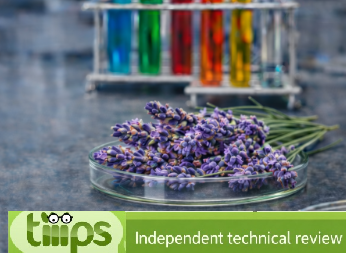
Lavandula angustifolia (Lavender) flower refers to dried lavender flowers used as a cosmetic ingredient, mainly in products positioned for skin conditioning and, more broadly, for a botanical/sensorial concept (visual and tactile contribution in certain formula types).
Definition
Lavandula angustifolia flower is a plant-derived ingredient and, from a technical standpoint, falls into the category of botanical materials with variable composition: it is not a single molecule, but a plant matrix whose performance depends on origin, seasonality, drying conditions, and supplier specifications. In formulation, the determining aspects are botanical quality, cleanliness/contaminants, batch-to-batch consistency, and management of organoleptic stability.
Main uses
Cosmetics.
Used in body and bath products (e.g., bath salts, scrubs, solid soaps, “botanical” cosmetics) where it may contribute to skin conditioning and sensorial features (a “natural” look, tactile perception). The outcome and acceptance depend on particle size (when present as flower/flower fragments), base type, and stability in the final packaging.
INCI functions (within the cosmetics chapter).
Skin conditioning agent. It is the mainstay of topical skin treatment by restoring, increasing or improving skin tolerance to external factors, including melanocyte tolerance. The most important function of the conditioning agent is to prevent skin dehydration, but the subject is rather complex and involves emollients and humectants.
Medicine.
Not a therapeutic active ingredient. In traditional medical medicine it is used as a medical plant in the treatment of inflammation, depression and stress, due to its sedative and anxiolytic action, thrombotic and antimicrobial properties.
Cultivation
Lavender (Lavandula angustifolia) is an aromatic species cultivated in temperate areas. For flowers intended for cosmetic use, the most relevant factors are: supply-chain traceability, harvesting and drying conditions, and selection criteria (cleanliness, foreign matter, residual moisture).
For more information: LAVENDER
Key constituents
As dried flowers, the matrix can contain a combination of plant components and naturally occurring substances. In general terms, aromatic fractions consistent with lavender and typical phytocomplex constituents may be present (grade-dependent). Operationally, for the formulator the more critical points are: moisture, cleanliness, foreign matter, and long-term organoleptic stability.
Nutritional use note and bioactive compounds
Not relevant within the cosmetic scope. If the material is used for a “botanical” positioning, the technical focus remains on quality, consistency, and compliance with specifications, rather than on a single isolated substance.
Calories (energy value)
Not practically applicable: for cosmetic ingredients not intended for ingestion, energy value is not an operational labeling parameter.
Identification data and specifications
| Characteristic | Value |
|---|---|
| INCI name | Lavandula angustifolia flower |
| INCI functions | skin conditioning |
| CAS number | 90063-37-9 |
| EC/EINECS number | 289-995-2 |
| Molecular formula | not applicable (botanical material / complex mixture) |
| Molecular weight | not applicable as a single value (botanical material / mixture) |
| Typical commercial form | dried flowers or flower fractions (grade-dependent: cut, cleanliness, moisture) |
| Practical quality note | specification for moisture, foreign matter, contaminants, and microbiological controls per supplier requirements |
Physico-chemical properties (indicative)
| Characteristic | Value | Note |
|---|---|---|
| Material nature | dried botanical | variable composition |
| Water solubility | not applicable as “solubility” | may release water-soluble fractions in aqueous systems |
| Oil-phase solubility | not applicable as “solubility” | may release lipophilic fractions in oily bases, in a limited and variable way |
| Light/oxygen stability | variable | potential odor/color drift over time |
| Moisture sensitivity | relevant | residual moisture can promote degradation and microbiological issues |
| Critical parameters | moisture, cleanliness, particle size, microbiology | determine repeatability and stability |
Functional role and practical mechanism of action
In cosmetics, Lavandula angustifolia flower is used mainly for skin conditioning and for its botanical contribution to the product concept. In systems where it remains visible or tactilely perceptible, particle size and compatibility with the base drive the user experience and acceptance.
Formulation compatibility
Most relevant practical points include:
management of microbiological stability (especially in aqueous or high-water formulas)
control of moisture and material quality to reduce alteration risks
packaging compatibility (migration, sedimentation, separation, or aesthetic changes)
potential sensorial impact (roughness, bottom deposition, color variation)
Use guidelines (indicative)
Use levels depend on the objective (decorative/sensorial vs functional) and formula type. During development it is advisable to validate: accelerated stability, aesthetic performance (sedimentation or distribution), and microbiological controls consistent with the matrix (leave-on vs rinse-off).
Quality, grades, and specifications
Standardization is managed through supply specifications: flower cut, foreign-matter percentage, residual moisture, microbial load, and contaminant limits. Batch-to-batch repeatability is often the key factor to prevent odor/color variability and shelf-life instability.
Safety, regulatory, and environment
Safety must be assessed on the finished product, considering concentration, use area, and target population. For dried botanical materials, practical topics include individual tolerability (reactive skin), contaminant control, and microbiological suitability depending on the formulation matrix. A GMP framework (good manufacturing practice; benefit: reduces variability and contamination) across the supply chain helps maintain a stable quality profile.
Formulation troubleshooting (reduced)
Sedimentation or uneven distribution.
Action: adjust base viscosity/rheology, change particle size or use level, and validate via accelerated stability.
Odor/color drift or microbiological issues.
Action: select a grade with tighter specifications (moisture/microbiology), optimize preservation, and reduce light/oxygen exposure through appropriate packaging.
Conclusion
Lavandula angustifolia flower is a botanical ingredient (dried flowers) used in cosmetics mainly for skin conditioning and a “natural” product positioning. For reliable use, the determining points are: grade quality and cleanliness, moisture and microbiology control, aesthetic stability in formula, and correct finished-product safety assessment, supported by a GMP-oriented supply chain.
Mini-glossary
UVCB: substances of unknown or variable composition, complex reaction products, or biological materials.
Particle size distribution: dimensional distribution of particles/fractions; it affects sensoriality and stability (sedimentation).
Skin conditioning: a cosmetic function that helps keep skin in good condition.
GMP: good manufacturing practice; benefit: improves quality control and reduces contamination/variability.

