



Lavandula angustifolia extract: properties, uses, pros, cons, safety
(Lavandula angustifolia; Lamiaceae)
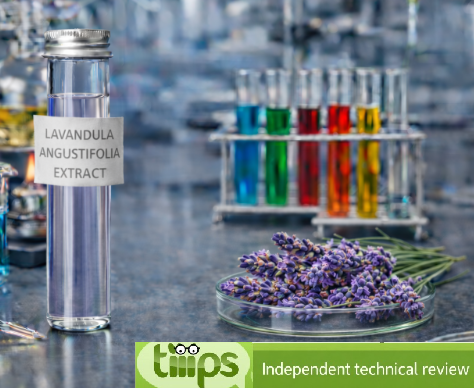
Lavandula angustifolia extract is a lavender cosmetic extract used mainly to support skin conditioning in face and body formulas, often in products oriented toward skin comfort and sensorial performance.
Definition
Lavandula angustifolia extract is a UVCB ingredient (variable composition) because it is derived from botanical material and its “signature” depends on the plant part used, origin, seasonality, and the supplier’s extraction/standardization specification. Practically, in-formula performance depends more on the commercial grade (assay/standardization, allowable residual solvent, organoleptic profile, and quality specs) than on the INCI name alone.
From a formulation perspective, the extract is handled as a supporting functional ingredient, with attention to long-term stability (pH, light, temperature), preservative compatibility, and batch-to-batch repeatability.
Main uses
Cosmetics.
Typical use in creams, lotions, serums, cleansers, and bodycare products where it contributes to keeping skin in good condition and to the overall sensorial profile. In leave-on formulas, grade choice (odor/color, purity, and compatibility) is often decisive to prevent organoleptic drift over shelf-life.
INCI functions
Skin conditioning agent. It is the mainstay of topical skin treatment by restoring, increasing or improving skin tolerance to external factors, including melanocyte tolerance. The most important function of the conditioning agent is to prevent skin dehydration, but the subject is rather complex and involves emollients and humectants.
Medicine.
Not a therapeutic active; any general references do not replace clinical guidance. In traditional medical medicine it is used as a medical plant in the treatment of inflammation, depression and stress, due to its sedative and anxiolytic action, thrombotic and antimicrobial properties.
Cultivation
Lavender (Lavandula angustifolia) is an aromatic species cultivated in temperate areas. Agronomic conditions and seasonality influence the composition of extractables; therefore, industrial practice commonly relies on standardized extracts and supplier-defined specifications.
For more information: LAVENDER
Key constituents
As an extract, composition is variable and depends on solvent and plant part. In general terms, it is reasonable to expect a combination of:
polyphenolic fractions (e.g., phenolic acids and flavonoids, grade-dependent)
trace aromatic components potentially related to lavender’s profile (if extraction conditions and raw material carry them through)
other water-soluble/lipophilic fractions consistent with the extract specification
Operationally, for formulators the most relevant aspects are: standardization (if declared), color/odor, and compliance with impurity and residue limits per SDS and technical sheet.
Nutritional use note and bioactive compounds
Not relevant within the cosmetic scope. Functionally, interest is linked to the extract’s overall contribution to skin condition and formula sensoriality, rather than to a single isolated compound.
Identification data and specifications
| Characteristic | Value |
|---|---|
| INCI name | Lavandula angustifolia extract |
| INCI functions | skin conditioning |
| CAS number | 90063-37-9 (commonly reported for Lavandula angustifolia extracts in supply chain contexts) |
| EC/EINECS number | 289-995-2 |
| Molecular formula | not applicable (UVCB/variable-composition extract) |
| Molecular weight | not applicable as a single value (UVCB/extract) |
| Typical commercial form | extract (grade-dependent: color/odor and carrier solvent per specification) |
| Practical quality note | specs on assay/standardization (if any), residues, contaminants, and organoleptic profile per supplier |
Physico-chemical properties (indicative)
| Characteristic | Value | Note |
|---|---|---|
| Chemical nature | UVCB / complex mixture | depends on botanical matrix and process |
| Solubility | vehicle-dependent (aqueous/glycolic/hydroalcoholic, etc.) | verify grade technical sheet |
| pH stability | generally better in moderate ranges | extremes may accelerate color/odor changes |
| Light/oxygen stability | variable | barrier packaging and accelerated testing are useful |
| Thermal stability | sensitive to prolonged stress | prefer addition at controlled temperatures |
| Critical parameters | color, odor, residual solvent, microbiology | drive repeatability and acceptability |
Functional role and practical mechanism of action
In cosmetics, Lavandula angustifolia extract is used mainly for skin conditioning, i.e., supporting the maintenance of skin in good condition and contributing to product use perception. Real-world “performance” is linked to grade quality (especially if standardized), use level, and compatibility with the formulation matrix.
Formulation compatibility
Most relevant practical points include:
compatibility with the preservative system (especially for extracts in aqueous/glycolic carriers)
management of color and odor in pale or delicately fragranced formulas
shelf-life stability with respect to light/oxygen, especially in permeable packaging
batch-to-batch consistency when the extract is “characterizing” for the finished product
Use guidelines (indicative)
Use levels are strongly grade-dependent. It is advisable to base decisions on supplier specs (assay and carrier), validate with accelerated stability, and confirm compatibility in final packaging, while also assessing sensorial impact at the target dose.
Quality, grades, and specifications
Quality is driven by: standardization (if any), control of residues/impurities, microbiological requirements, and organoleptic repeatability. For robust use, it is helpful to set tolerances for color/odor and require technical documentation aligned with the intended use (leave-on vs rinse-off).
Safety, regulatory, and environment
In cosmetics, safety must be assessed on the finished product considering concentration, use area, and target population. For botanical extracts, the most common practical issues are: compositional variability and individual tolerability (reactive skin), in addition to the vehicle contribution (solvents, preservatives) which can be a major driver of skin compatibility. A GMP framework (good manufacturing practice; benefit: reduces variability and contamination) supports traceability and batch control across the supply chain.
Formulation troubleshooting (reduced)
Color/odor instability over time.
Action: verify light/oxygen stress, retune packaging and dose, and select a grade with more stable organoleptic specs.
Preservative compatibility issues or haze.
Action: evaluate an alternative carrier (different grade), retune preservation, and confirm via accelerated stability in the final matrix.
Conclusion
Lavandula angustifolia extract is a botanical extract used mainly for skin conditioning. For reliable use, the determining factors are: grade quality and standardization, color/odor management, shelf-life stability, and finished-product safety assessment, supported by a GMP-oriented supply chain.
Mini-glossary
UVCB: substances of unknown or variable composition, complex reaction products, or biological materials.
Skin conditioning: a cosmetic function that helps keep skin in good condition.
Standardization: defining/controlling parameters (assay or markers) to reduce natural variability of an extract.
GMP: good manufacturing practice; benefit: improves quality control and reduces contamination/variability.

