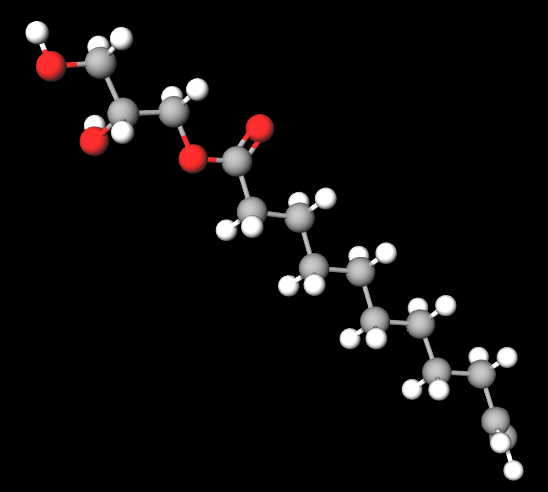
Glyceryl Undecylenate is an ester derived from glycerin and undecylenic acid, a fatty acid known for its antifungal properties. This ingredient is recognized for its multifunctional capabilities in cosmetic formulations, serving as an emulsifier, skin-conditioning agent, and preservative. Glyceryl Undecylenate helps to stabilize oil and water mixtures while providing moisturizing benefits. Its antifungal properties also make it beneficial in formulations aimed at maintaining skin health and preventing microbial growth.
Chemical Composition and Structure
Glyceryl Undecylenate consists of:
- Glycerin: A humectant that attracts moisture and helps maintain skin hydration.
- Undecylenic Acid: A fatty acid that possesses antifungal properties and enhances the emulsifying capabilities of the ingredient.
- Ester Linkage: The combination of glycerin and undecylenic acid through an ester bond contributes to its functional properties.
This unique composition allows Glyceryl Undecylenate to provide both emulsifying and conditioning effects in cosmetic formulations.
Physical Properties
Appearance: Typically a clear to pale yellow liquid.
Solubility: Soluble in oils and fats; limited solubility in water.
pH: Generally neutral, making it compatible with a wide range of cosmetic formulations.
Odor: Mild, often with a slightly fatty scent.
Stability: Stable under normal storage conditions; should be protected from excessive heat and moisture.
Production Process
Synthesis: Glyceryl Undecylenate is produced through the esterification of glycerin and undecylenic acid, typically using heat and catalysts to facilitate the reaction.
Purification: The resulting product is purified to remove any unreacted materials and by-products, ensuring a high-quality ingredient.
Formulation: Purified Glyceryl Undecylenate is then incorporated into various cosmetic products to enhance their emulsifying and skin-conditioning properties.
Applications
Medical: Occasionally used in topical formulations for its soothing properties and ability to prevent microbial growth on the skin.
Cosmetics: Commonly found in lotions, creams, hair conditioners, and deodorants for its emulsifying, moisturizing, and antifungal benefits. It enhances the texture and sensory experience of products.
INCI Functions:
Skin conditioning agent - Emollient. Emollients have the characteristic of enhancing the skin barrier through a source of exogenous lipids that adhere to the skin, improving barrier properties by filling gaps in intercorneocyte clusters to improve hydration while protecting against inflammation. In practice, they have the ability to create a barrier that prevents transepidermal water loss. Emollients are described as degreasing or refreshing additives that improve the lipid content of the upper layers of the skin by preventing degreasing and drying of the skin. The problem with emollients is that many have a strong lipophilic character and are identified as occlusive ingredients; they are oily and fatty materials that remain on the skin surface and reduce transepidermal water loss. In cosmetics, emollients and moisturisers are often considered synonymous with humectants and occlusives.
Surfactant - Emulsifying agent. Emulsions are thermodynamically unstable. Emulsifiers have the property to reduce the oil/water or water/oil interfacial tension, improve emulsion stability and also directly influence the stability, sensory properties and surface tension of sunscreens by modulating their filmometric performance.
Skin conditioning agent. It is the mainstay of topical skin treatment as it has the function of restoring, increasing or improving skin tolerance to external factors, including melanocyte tolerance. The most important function of the conditioning agent is to prevent skin dehydration, but the subject is rather complex and involves emollients and humectants that can be added in the formulation.
Environmental and Safety Considerations
Glyceryl Undecylenate is generally regarded as safe for use in cosmetics when applied according to recommended guidelines. It is well-tolerated by most skin types, including sensitive skin.
Responsible sourcing and formulation practices are essential to ensure that the ingredient is free from harmful contaminants and produced sustainably.
Molecular Formula C14H26O4
Molecular Weight 258.35 g/mol
CAS 62285-15-8 123759-97-7
UNII B68LJT9544
DTXSID10432858
EC Number
Synonyms:
Glyceryl 1-undecylenate
Bibliografia_________________________________________________________________________
(1) Final report of the amended safety assessment of Glyceryl Laurate, Glyceryl Laurate SE, Glyceryl Laurate/Oleate, Glyceryl Adipate, Glyceryl Alginate, Glyceryl Arachidate, Glyceryl Arachidonate, Glyceryl Behenate, Glyceryl Caprate, Glyceryl Caprylate, Glyceryl Caprylate/Caprate, Glyceryl Citrate/Lactate/Linoleate/Oleate, Glyceryl Cocoate, Glyceryl Collagenate, Glyceryl Erucate, Glyceryl Hydrogenated Rosinate, Glyceryl Hydrogenated Soyate, Glyceryl Hydroxystearate, Glyceryl Isopalmitate, Glyceryl Isostearate, Glyceryl Isostearate/Myristate, Glyceryl Isostearates, Glyceryl Lanolate, Glyceryl Linoleate, Glyceryl Linolenate, Glyceryl Montanate, Glyceryl Myristate, Glyceryl Isotridecanoate/Stearate/Adipate, Glyceryl Oleate SE, Glyceryl Oleate/Elaidate, Glyceryl Palmitate, Glyceryl Palmitate/Stearate, Glyceryl Palmitoleate, Glyceryl Pentadecanoate, Glyceryl Polyacrylate, Glyceryl Rosinate, Glyceryl Sesquioleate, Glyceryl/Sorbitol Oleate/Hydroxystearate, Glyceryl Stearate/Acetate, Glyceryl Stearate/Maleate, Glyceryl Tallowate, Glyceryl Thiopropionate, and Glyceryl Undecylenate.
Int J Toxicol. 2004;23 Suppl 2:55-94.
Abstract. The safety of 43 glyceryl monoesters listed as cosmetic ingredients was reviewed in a safety assessment completed in 2000. Additional safety test data pertaining to Glyceryl Rosinate and Glyceryl Hydrogenated Rosinate were received and served as the basis for this amended report. Glyceryl monoesters are used mostly as skin-conditioning agents--emollients and/or surfactant--emulsifying agents in cosmetics. The following 20 glyceryl monoesters are currently reported to be used in cosmetics: Glyceryl Laurate, Glyceryl Alginate, Glyceryl Arachidonate, Glyceryl Behenate, Glyceryl Caprylate, Glyceryl Caprylate/Caprate, Glyceryl Cocoate, Glyceryl Erucate, Glyceryl Hydroxystearate, Glyceryl Isostearate, Glyceryl Lanolate, Glyceryl Linoleate, Glyceryl Linolenate, Glyceryl Myristate, Glyceryl Oleate/Elaidate, Glyceryl Palmitate, Glyceryl Polyacrylate, Glyceryl Rosinate, Glyceryl Stearate/Acetate, and Glyceryl Undecylenate. Concentration of use data received from the cosmetics industry in 1999 indicate that Glyceryl Monoesters are used at concentrations up to 12% in cosmetic products. Glyceryl Monoesters are not pure monoesters, but are mostly mixtures with mono-, di-, and tri-esters. The purity of commercial and conventional Monoglyceride (Glyceryl Monoester) is a minimum of 90%. Glyceryl Monoesters (monoglycerides) are metabolized to free fatty acids and glycerol, both of which are available for the resynthesis of triglycerides. Glyceryl Laurate enhanced the penetration of drugs through cadaverous skin and hairless rat skin in vitro and has been described as having a wide spectrum of antimicrobial activity. A low-grade irritant response was observed following inhalation of an aerosol containing 10% Glyceryl Laurate by test animals. Glyceryl monoesters have little acute or short-term toxicity in animals, and no toxicity was noted following chronic administration of a mixture consisting mostly of glyceryl di- and mono- esters. Glyceryl Laurate did have strong hemolytic activity in an in vitro assay using sheep erythrocytes. Glyceryl Laurate, Glyceryl Isostearate, or Glyceryl Citrate/Lactate/Linoleate/Oleate were not classified as ocular irritants in rabbits. Undiluted glyceryl monoesters may produce minor skin irritation, especially in abraded skin, but in general these ingredients are not irritating at concentrations used in cosmetics. Glyceryl monoesters are not sensitizers, except that Glyceryl Rosinate and Hydrogenated Glyceryl Rosinate may contain residual rosin, which can cause allergic reactions. These ingredients are not photosensitizers. Glyceryl Citrate/Lactate/Linoleate/Oleate was not mutagenic in the Ames test system. Glyceryl Laurate exhibited antitumor activity and Glyceryl Stearate was negative in a tumor promotion assay. At concentrations higher than used in cosmetics, Glyceryl Laurate did cause moderate erythema in human repeat-insult patch test (RIPT) studies, but the other glyceryl monoesters tested failed to produce any significant positive reactions. Glyceryl Rosinate was irritating to animal skin at 50%, but did not produce sensitization in clinical tests at concentrations up to 10% and covered with semioccluded patches. There is reported use of Glyceryl Rosinate at 12%in mascara, which is somewhat higher than the concentration in the clinical testing. It was reasoned that the available data do support the safety of this use because there would be minimal contact with the skin and no occlusion. The safety of Arachidonic Acid was not documented and substantiated for cosmetic product use in an earlier safety assessment and those same safety questions apply to Glyceryl Arachidonate. Based on these data, the Cosmetic Ingredient Review (CIR) Expert Panel found that these glyceryl monoesters are safe as cosmetic ingredients in the present practices of use and concentration: except that the available data are insufficient to support the safety of Glyceryl Arachidonate. Additional data needed to support the safety of Glyceryl Arachidonate include (1) dermal absorption data; and, based on the results of the absorption studies, there may be a need for (2) immunomodulatory data; (3) carcinogenicity and photocarcinogenicity data; and (4) human irritation, sensitization, and photosensitization data.