



Sodium Magnesium Aluminum Silicate is a chemical compound, the complex silicate obtained by the reaction of Sodium Silicate and Sodium Aluminate in an aqueous solution of Magnesium Nitrate.
The name describes the structure of the molecule:
- Silicate refers to silicates, a class of minerals that contain silicon and oxygen, often in combination with other elements.
- Sodium Magnesium Aluminum indicates that the silicate in question contains sodium, magnesium, and aluminum in its structure. This combination of elements gives the compound unique properties, such as increased absorbency and mattifying capabilities.
Raw materials used in production.
Sodium, magnesium, aluminum, silica, clay minerals like montmorillonite or bentonite.
Step-by-step summary of industrial chemical synthesis process.
- Extraction of Clay Minerals. Minerals like bentonite or montmorillonite, rich in sodium, magnesium, and aluminum silicates, are extracted from the earth.
- Purification. The extracted minerals undergo purification to remove impurities and contaminants.
- Hydrolysis. Silica is fused with sodium hydroxide, yielding sodium silicate.
- Reaction with Magnesium and Aluminum. This sodium silicate is then made to react with magnesium and aluminum salts to form the sodium magnesium aluminum silicate.
- Precipitation and Filtration. The resulting compound is precipitated, separated, and then filtered to get a purified product.
- Drying. Finally, the compound is dried to remove any remaining water and attain the solid form of Sodium Magnesium Aluminum Silicate.
It appears in the form of a white powder.

What it is used for and where
Cosmetics
Absorbent. Absorbs substances dispersed or dissolved in aqueous solutions, water/oil, oil/water.
Commercial applications
Cosmetics and Personal Care. Sodium Magnesium Aluminum Silicate is used as an opacifying agent, stabilizer, and texture enhancer in various cosmetic and personal care products like foundations, creams, and lotions.
Opacifying Agent. Helps give products a matte finish.
Stabilizer. Assists in maintaining the stability of the formulation.
Texture Enhancer. Makes products more creamy and spreadable.
Industrial Applications. This compound is also used in some industrial applications as a stabilizing or thickening agent.
Pharmaceutical and Medical Fields. In some contexts, it may be used as an excipient or slip agent in pharmaceutical preparations.
Safety
Aluminium can interfere with different biological processes (cellular oxidative stress, calcium metabolism, etc.), so it can induce toxic effects in different organs and systems, and the nervous system is the main target of its toxicity.
Careful consideration should be given to the risk of cumulative aluminum intake, which cannot be ruled out because this ingredient can be found in both cosmetic products and widely consumed food products such as bread, various baked goods (1).
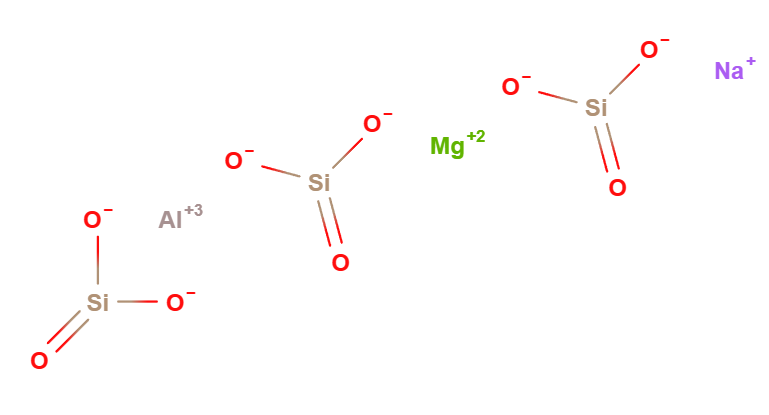 | 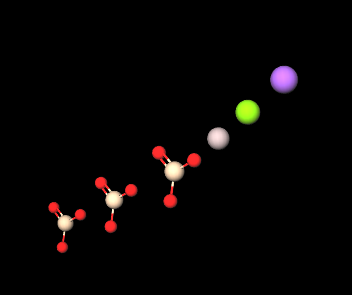 |
- Molecular Formula AlMgNaO9Si3
- Molecular Weight 302.53 g/mol
- CAS 12040-43-6
- UNII
- EC Number 234-919-5
- DTXSID70890672
Synonyms:
Sodium magnesium aluminosilicate

