



Polysilicone-24: properties, uses, pros, cons, safety
Polysilicone-24 is a synthetic silicone polymer used in cosmetics with three main functional roles: light stabilizer, skin conditioning, and skin protecting. In practical terms, it is used to improve the light stability of formulas containing photosensitive components and, at the same time, to contribute to a superficial film that supports skin comfort and protection from external stressors.
Silicones have high chemical stability but low biodegradability and high bioaccumulation potential.
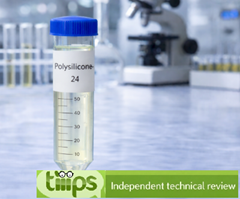
It is not a single molecule: it is a mixture/polymer belonging to the polysilicone (siloxane polymer) family, i.e., long-chain structures in which silicon atoms are linked through oxygen bridges (a Si–O–Si backbone). The “light stabilizer” function is generally connected to the material’s ability to reduce the impact of light on the cosmetic system (limiting photo-induced degradation of certain components), while the skin functions derive from the formation of a low-surface-energy film with conditioning/protective effects.
Main uses
Cosmetics
In leave-on formulations and, in some cases, rinse-off products, Polysilicone-24 is used to:
improve the product’s photostability (helping limit light-induced changes);
support a conditioning effect (improved feel and reduced perceived friction);
provide a protective contribution through a superficial film that can reduce the impact of external stressors and the sensation of dryness in certain bases.
INCI functions
Light stabilizer. It prevents light from degrading light-sensitive components and slows down degradation reactions that have already begun. The mechanism is, in a way, similar to antioxidants and the effectiveness depends on the.complexity of the formulation and the density of the product.
Skin conditioning agent. An ingredient that is the mainstay of topical skin treatment by restoring, increasing or improving skin tolerance to external factors, including melanocyte tolerance. The most important function of the conditioning agent is to prevent skin dehydration, but the subject is rather complex and involves emollients and humectants.
Skin protectant. It creates a protective barrier on the skin to defend it from harmful substances, irritants, allergens, pathogens that can cause various inflammatory conditions. These products can also improve the natural skin barrier and in most cases more than one is needed to achieve an effective result.
Industrial use
Primarily cosmetic. More generally, polymeric silicones can be used as functional additives (stabilization and performance enhancement) in compatible matrices, but actual use depends on the commercial grade and supplier specifications.
Identification data and specifications
| Characteristic | Value | Note |
|---|---|---|
| INCI name | Polysilicone-24 | Cosmetic denomination |
| Origin | synthetic | As indicated by ingredient databases |
| Classification | polysilicone (siloxane polymer) | Si–O–Si backbone |
| Functions | light stabilizer; skin conditioning; skin protecting | Cosmetic functions |
| CAS number | to be verified in supplier documentation / regulatory database | Not reliably retrievable from accessible sources in this session |
| EC number (EINECS) | to be verified in supplier documentation / regulatory database | Same as above |
| Molecular formula | not applicable (polymer) | Not a single defined species |
| Molecular weight | not applicable (polymer) | Distribution, not a single value |
Chemical-physical properties (indicative)
| Characteristic | Indicative value | Note |
|---|---|---|
| Physical state | polymeric material (often viscous or in a carrier) | Depends on commercial grade |
| Color | colorless to pale yellow | Batch/carrier-dependent |
| Odor | mild / characteristic | Usually not dominant |
| Water solubility | very low / insoluble | Typical of silicones |
| Oil-phase affinity | variable | Depends on base composition |
| Surface tension | low | Contributes to slip and film formation |
| Chemical stability | high | Criticalities more often tied to compatibility and impurities |
Functional role and mechanism of action
As a light stabilizer, Polysilicone-24 is used to increase the formula’s robustness to light: real-world performance depends on system complexity, the presence of photosensitive components, and how the ingredient distributes within the matrix. As a conditioning/protective agent, it contributes to a superficial film that improves sensorial perception (more “silky,” less friction) and can support a light physical barrier against external stressors.
Formulation compatibility
Performance is typically influenced by:
base type (emulsion, anhydrous, “hybrid” systems);
polarity and composition of the oil phase;
presence of polymers, UV filters, pigments, and surfactants;
processing (order of addition, shear, temperature).
If incompatibility occurs, instability (separation, unwanted opalescence) or texture drift over time may appear; verification should be done via targeted stress tests and batch-to-batch control.
Pros and cons
Pros
Supports product photostability, useful when light can degrade sensitive components.
Contributes to skin conditioning and skin protection with improved feel in many compatible bases.
Good chemical stability typical of silicone chemistry under standard cosmetic conditions.
Cons
Non-universal compatibility: may require optimization of the base and process to prevent instability.
Environmental profile: silicones are often persistent and biodegradability can be low; assessment depends on the specific polysilicone type and product life cycle.
If a “silicone-free” policy applies, it may be incompatible with a brand’s marketing positioning.
Safety, regulatory, and environmental aspects
In cosmetics, polysilicones are frequently regarded as having low dermal absorption and good tolerability under normal use conditions, but safety must always be evaluated on the finished product (concentration, matrix, application area, usage pattern).
Allergen.
It is not typically a classic “fragrance allergen”; reactions are more often related to the overall formula and individual sensitivity.
Contraindications (brief).
Use caution on very reactive skin and near particularly sensitive areas; for spray/aerosol products, evaluate incidental inhalation exposure risk depending on format and commercial grade.
Formulation troubleshooting
Photostability not improved over time.
Action: review the overall strategy (packaging, compatible antioxidants, UV filters if present, phase balance), verify concentration and correct distribution of the ingredient in the matrix.
Instability (haze/separation).
Action: optimize oil phase and emulsifier system; review order of addition and shear; consider a different commercial grade.
Feel too “film-forming.”
Action: reduce dosage or balance with less film-forming emollients/texture agents while maintaining the light-stability objective.
Conclusion
Polysilicone-24 is a multifunctional polysilicone used primarily as a light stabilizer and, in parallel, as a skin conditioning and skin protecting agent. Its technical value is highest in formulas where light stability and sensoriality are key drivers; real-world performance depends on compatibility and overall formulation design.

